A laboratory constant temperature magnetic stirring reactor serves as the primary control system for the in-situ reduction of silver nanoparticles. It provides the essential combination of precise thermal regulation and uniform mixing kinetics, ensuring that the chemical reduction of silver salts—such as silver nitrate—proceeds efficiently and homogeneously.
Core Takeaway: Success in nanoparticle synthesis relies on eliminating environmental variables. By maintaining exact temperatures and continuous motion, this reactor type ensures thorough reactant contact, resulting in a narrow particle size distribution that is critical for high antibacterial activity.
The Importance of Precise Thermal Regulation
Maintaining Reaction Stability
The chemical reduction process is highly sensitive to thermal fluctuations. A constant temperature reactor ensures that the reaction environment remains stable (e.g., at 130°C), preventing "hot spots" that could accelerate reaction rates unevenly.
Influencing Nucleation
Temperature directly controls how fast silver nuclei form and grow. By locking in a precise temperature, the reactor ensures that the nucleation rate is consistent, which is a prerequisite for achieving morphological uniformity.
Preventing Irregular Growth
Without constant temperature control, temperature drops could halt the reduction process prematurely. This device maintains the energy input required to fully convert precursors like silver nitrate into metallic silver.
The Role of Uniform Mixing Kinetics
Ensuring Thorough Contact
In-situ reduction requires that reducing agents and silver ions meet frequently and effectively. Magnetic stirring provides continuous agitation, forcing precursors such as oleylamine and oleic acid to mix thoroughly with the silver source.
Eliminating Concentration Gradients
Static reactions often suffer from concentration gradients, where the bottom of the vessel is more concentrated than the top. Constant stirring homogenizes the solution, ensuring every silver ion experiences the exact same chemical conditions.
Achieving Narrow Size Distribution
The combination of uniform heat and mixing restricts the variance in particle growth. This results in nanoparticles that fall within a tight size range (typically 20-50 nm), rather than a mix of very large and very small particles.
Optimizing In-Situ Reduction
Enhancing Surface Activity
In-situ reduction often implies generating particles directly onto a substrate or membrane. The reactor’s controlled environment ensures these particles form with high surface activity, allowing them to adhere effectively to the target surface.
maximizing Antibacterial Functionality
The ultimate goal of this synthesis is often biological application. By ensuring the particles are uniform and highly active, the reactor maximizes the silver's inherent antibacterial properties.
Understanding the Trade-offs
Sensitivity to Parameters
While these reactors offer precision, the outcome is heavily dependent on the specific settings used. If the stirring speed is too high, it can disrupt the surface formation; if too low, agglomeration occurs.
Batch Limitations
Laboratory reactors are ideal for small-scale, high-precision synthesis. However, parameters perfected in a lab reactor may not perfectly translate to industrial scales without adjusting for changes in heat transfer dynamics.
Making the Right Choice for Your Goal
- If your primary focus is Uniformity: Prioritize a reactor with digital feedback loops to ensure the temperature deviation is less than ±1°C, guaranteeing a narrow size distribution (20-50 nm).
- If your primary focus is Reactant Efficiency: Ensure the magnetic stirring capabilities are robust enough to handle the viscosity of your specific precursors (e.g., oleic acid) to guarantee thorough mixing.
The quality of your silver nanoparticles is a direct reflection of the stability of your reactor environment.
Summary Table:
| Feature | Role in Synthesis | Benefit for Silver Nanoparticles |
|---|---|---|
| Precise Thermal Control | Regulates nucleation and growth rates | Narrow size distribution and morphological uniformity |
| Magnetic Stirring | Eliminates concentration gradients | Thorough reactant contact and homogeneous reaction |
| Stable Environment | Prevents thermal fluctuations | Consistent particle quality and high surface activity |
| Agitation Kinetics | Maintains continuous motion | Prevents agglomeration and ensures 20-50 nm sizing |
Elevate Your Nanomaterial Precision with KINTEK
Achieving the perfect 20-50 nm silver nanoparticle distribution requires more than just chemistry; it requires the absolute control provided by KINTEK’s high-performance laboratory reactors.
Whether you are focused on antibacterial research or advanced material science, our comprehensive range of high-temperature high-pressure reactors, autoclaves, and crushing and milling systems are engineered to eliminate environmental variables and maximize your yield efficiency. From magnetic stirring reactors to specialized PTFE and ceramic consumables, KINTEK provides the tools needed for rigorous laboratory research and industrial scaling.
Ready to optimize your synthesis process? Contact our laboratory equipment experts today to find the perfect solution for your research goals.
References
- Xiujuan Chen, Baiyu Zhang. Perspectives on Surface Functionalization of Polymeric Membranes with Metal and Metal-Oxide Nanoparticles for Water/Wastewater Treatment. DOI: 10.3808/jeil.202200083
This article is also based on technical information from Kintek Solution Knowledge Base .
Related Products
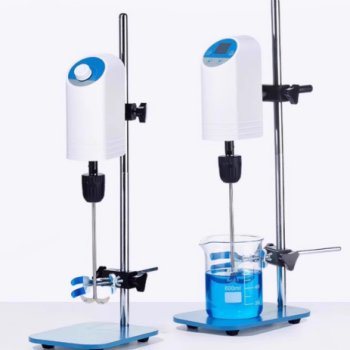
- Laboratory Small Constant Temperature Heated Magnetic Stirrer Heater and Stirrer
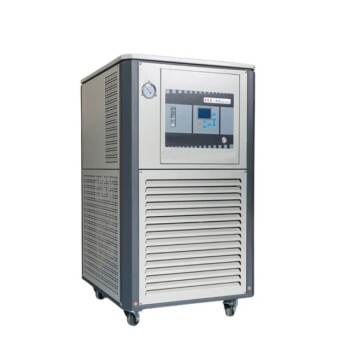
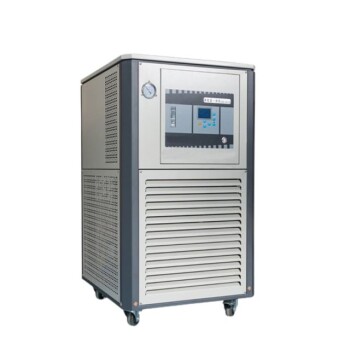
- High Temperature Constant Temperature Heating Circulator Water Bath Chiller Circulator for Reaction Bath
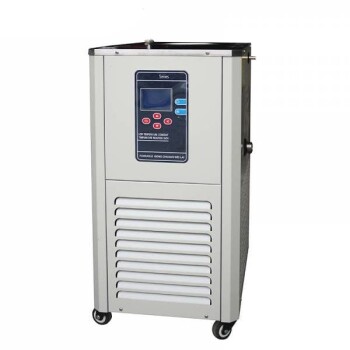
- 50L Chiller Water Bath Cooling Circulator Low Temperature Constant Temperature Reaction Bath
- Custom PTFE Teflon Parts Manufacturer for Magnetic Stirring Bar
- 10L Chilling Circulator Cooling Water Bath Low Temperature Constant Temperature Reaction Bath
People Also Ask
- What role does a magnetic stirrer with heating play in ZnO nanoparticle synthesis? Precision Control for Quality Results
- What role does a constant temperature heating magnetic stirrer play in MFC-HAp synthesis? Achieve Material Homogeneity
- What is the function of a laboratory magnetic stirrer in Ni–Cr–P electrodeposition? Optimize Ion Transport & Coating
- Why is a laboratory magnetic stirrer required for benzoic acid esters? Boost Reaction Speed & Yield with High RPM
- What role does a laboratory magnetic stirrer play in TiO2 and TiO2-Ag sol preparation? Master Chemical Kinetics