The primary role of a Teflon-lined stainless steel high-pressure reactor in synthesizing TiO2/NiF (Titanium Dioxide on Nickel Foam) composites is to facilitate hydrothermal synthesis. This vessel creates a sealed, high-pressure, and high-temperature environment (typically around 160 °C) that allows titanium precursors to undergo a uniform thermal chemical reaction and grow directly onto the Nickel Foam substrate.
Core Takeaway The reactor serves a dual purpose: the stainless steel shell provides the structural integrity to withstand high pressure for crystal growth, while the Teflon lining ensures chemical inertness to prevent corrosion and maintain the high purity of the final catalyst crystals.
Creating the Optimal Reaction Environment
Enabling Hydrothermal Synthesis
The reactor functions as an autoclave, creating a closed system.
By sealing the reactants inside, the reactor allows the temperature to rise above the boiling point of the solvent (e.g., 160 °C).
This generates high internal pressure, which is essential for the hydrothermal process used to synthesize the composite.
Facilitating Uniform Crystal Growth
Inside this pressurized environment, the thermal chemical reactions occur uniformly.
This uniformity is vital for ensuring that the titanium precursors do not merely precipitate randomly but interact consistently with the substrate.
The result is the direct, controlled growth of TiO2 crystals on the Nickel Foam surface.
The Critical Role of the Teflon Lining
Superior Corrosion Resistance
The chemical reagents used to synthesize TiO2 can be aggressive and corrosive.
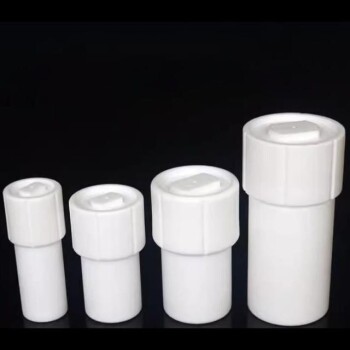
The Teflon lining acts as a robust barrier, preventing these strong reagents from coming into contact with the stainless steel outer shell.
Without this lining, the reactor body would suffer damage over repeated synthesis cycles.
Ensuring High Purity
The most critical function of the Teflon is preventing contamination.
If the reaction mixture touched the steel wall, metallic ions (like iron) could leach into the solution.
The Teflon lining ensures that the TiO2/NiF composite remains pure and free from foreign impurities that would degrade its catalytic performance.
Understanding the Trade-offs
Temperature Limitations of Teflon
While Teflon is excellent for corrosion resistance, it has a lower melting point than steel or ceramic.
It is generally safe for hydrothermal synthesis at 160 °C, but cannot withstand extreme temperatures often used in other solid-state reactions.
Volume and Filling Constraints
High-pressure reactors cannot be filled to capacity due to the expansion of liquids and gases.
You generally must leave headspace (often filling only 60-80%), which limits the yield per batch compared to open-vessel synthesis.
Making the Right Choice for Your Goal
If your primary focus is Catalyst Purity: Ensure the Teflon lining is inspected regularly for scratches or deformation, as even micro-fractures can introduce steel contaminants into your TiO2 lattice.
If your primary focus is Substrate Adhesion: Prioritize maintaining a consistent temperature (e.g., 160 °C) for the full duration, as the pressure generated by this heat is what drives the precursor into the Nickel Foam structure.
The reactor is not just a container; it is an active tool that forces the chemistry to occur at the interface of the Nickel Foam.
Summary Table:
| Feature | Role in TiO2/NiF Synthesis | Key Benefit |
|---|---|---|
| Stainless Steel Shell | Provides structural integrity under high pressure | Enables hydrothermal growth at 160°C |
| Teflon (PTFE) Lining | Acts as a corrosion-resistant chemical barrier | Prevents metallic contamination/leaching |
| Sealed Environment | Creates a closed system for boiling point elevation | Facilitates uniform precursor precipitation |
| Thermal Control | Maintains consistent internal temperature | Ensures strong TiO2 adhesion to Nickel Foam |
Elevate Your Materials Research with KINTEK
Precision in hydrothermal synthesis requires equipment that stands up to pressure while protecting your chemical purity. KINTEK specializes in advanced laboratory solutions, offering a premier range of high-temperature high-pressure reactors and autoclaves specifically designed for demanding catalyst synthesis and material science applications.
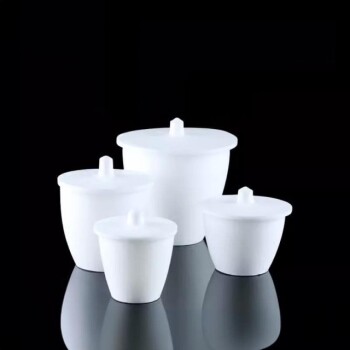
From high-performance PTFE products and crucibles to our robust muffle and hydrothermal reactors, we provide the tools researchers need to achieve superior crystal growth and substrate adhesion. Whether you are working on TiO2/NiF composites or next-generation battery research, our team is ready to support your lab's efficiency with reliable, high-quality consumables and equipment.
Ready to optimize your synthesis process? Contact KINTEK today to find the perfect reactor for your application!
References
- Abbas Abbasnia, Ali Esrafili. UiO66-NH2-TiO2/NiF photoanode for photocatalytic fuel cell by towards simultaneous treatment of antibiotic wastewater and electricity generation. DOI: 10.1038/s41598-023-49019-y
This article is also based on technical information from Kintek Solution Knowledge Base .
Related Products
- Stainless High Pressure Autoclave Reactor Laboratory Pressure Reactor
- Custom PTFE Teflon Parts Manufacturer for Reagent Wide Mouth Fine Mouth Sample High Temperature Bottles
- Custom PTFE Teflon Parts Manufacturer for Hydrothermal Synthesis Reactor Polytetrafluoroethylene Carbon Paper and Carbon Cloth Nano-growth
- Mini SS High Pressure Autoclave Reactor for Laboratory Use
- Custom PTFE Teflon Parts Manufacturer for Microwave Digestion Tank
People Also Ask
- Why is a laboratory high-pressure reactor used in the hydrothermal synthesis of hydroxyapatite catalysts?
- Why is a laboratory high-pressure reactor necessary for synthesizing fly ash-based zeolite? Achieve Pure Crystallization
- What role does a laboratory high-pressure reactor play in the leaching process of spent cathode materials? Optimize Recovery
- What conditions do laboratory high-pressure reactors provide for HTC? Optimize Your Biochar Production Processes
- How are high-pressure reactors used to prepare metaphosphate electrocatalysts? Master In-Situ Precursor Growth