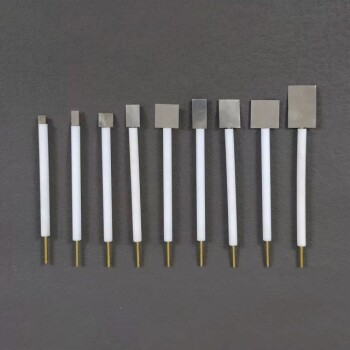
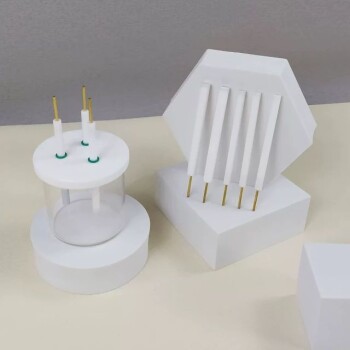
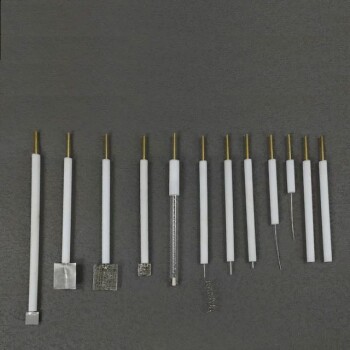
In the Electrophoretic Deposition (EPD) process, the electrolytic cell and platinum electrode serve as the foundational hardware that creates the necessary environment for coating formation. The electrolytic cell acts as the vessel containing the colloidal suspension of nanoparticles, while the platinum electrode functions as the counter electrode. Together, they establish the direct current (DC) electric field required to drive charged particles onto the working electrode, such as a NiTi alloy implant.
The synergy between the containment vessel and the counter electrode defines the quality of the final nanocomposite coating. The platinum electrode’s inherent stability ensures a pure reaction environment and a uniform electric field, which are the prerequisites for achieving adjustable coating thickness and a refined microstructure.
The Function of the Electrolytic Cell
Establishing the Reaction Environment
The primary role of the electrolytic cell is to securely hold the colloidal suspension. This liquid medium contains the specific film-forming nanoparticles intended for deposition.
Suspending Key Materials
Within this cell, essential materials such as nano-silica, silver, or hydroxyapatite (HA) are suspended. This creates the chemical bath necessary for the migration of particles to occur once the field is applied.
The Critical Role of the Platinum Electrode
Acting as the Counter Electrode
The platinum electrode serves as the counter electrode in the EPD setup. It completes the electrical circuit with the working electrode (the substrate being coated).
Driving Particle Migration
By facilitating a DC electric field, the platinum electrode provides the electromotive force. This force causes the charged nanoparticles within the suspension to migrate directionally and deposit onto the implant surface.
Ensuring Field Uniformity
Platinum is selected for its superior conductivity. This physical property helps generate a consistent and uniform electric field across the suspension, preventing irregular deposition patterns.
Maintaining Chemical Purity
The chemical stability of platinum is vital for preserving the integrity of the process. It ensures a pure electrochemical reaction environment, minimizing the risk of electrode corrosion contaminating the coating.
Impact on Coating Properties
Controlling Thickness
The stability provided by the platinum electrode allows for precise control over the deposition process. This results in adjustable coating thickness, allowing engineers to meet specific design requirements.
Refining Microstructure
Because the electric field is kept uniform by the high-quality electrode, the nanoparticles arrange themselves more evenly. This leads to a refined microstructure in the final nanocomposite coating.
Understanding Critical Dependencies
Sensitivity to Electrode Stability
The process relies heavily on the inert nature of the counter electrode. Any compromise in the chemical stability of the electrode material could disrupt the pure reaction environment described, potentially introducing impurities into the coating.
Reliance on Field Homogeneity
The quality of the coating is directly tied to the uniformity of the electric field. If the setup within the electrolytic cell fails to maintain this uniformity, the structural refinement and thickness consistency of the coating will likely suffer.
Making the Right Choice for Your Goal
To maximize the effectiveness of Electrophoretic Deposition, focus on these specific parameters:
- If your primary focus is Coating Purity: Prioritize the use of a chemically stable platinum electrode to ensure a reaction environment free from contaminants.
- If your primary focus is Structural Precision: Optimize the setup to leverage the electrode's conductivity, ensuring a uniform electric field for consistent microstructure and thickness.
By integrating a stable containment vessel with a highly conductive, inert electrode, you ensure the precision required for high-performance biomedical coatings.
Summary Table:
| Component | Primary Role | Key Benefits for EPD |
|---|---|---|
| Electrolytic Cell | Suspension Vessel | Maintains colloidal stability and houses the chemical bath |
| Platinum Electrode | Counter Electrode | Provides superior conductivity and generates a uniform DC electric field |
| Synergy | Driving Mechanism | Facilitates directional nanoparticle migration for refined microstructures |
| Chemical Stability | Purity Assurance | Ensures an inert reaction environment, preventing coating contamination |
Elevate Your Coating Precision with KINTEK
Unlock the full potential of Electrophoretic Deposition (EPD) with high-performance laboratory hardware. KINTEK specializes in precision-engineered electrolytic cells and electrodes, ensuring the chemical stability and field uniformity required for advanced nanocomposite coatings. Whether you are developing biomedical implants or researching next-generation thin films, our comprehensive portfolio—including high-temperature furnaces, hydraulic presses, and specialized electrochemical tools—provides the reliability your research demands.
Ready to refine your deposition process? Contact our technical experts today to discover how our premium laboratory equipment can enhance your results.
References
- Abhinay Thakur, Lei Guo. Recent Advancements in Surface Modification, Characterization and Functionalization for Enhancing the Biocompatibility and Corrosion Resistance of Biomedical Implants. DOI: 10.3390/coatings12101459
This article is also based on technical information from Kintek Solution Knowledge Base .
Related Products
- Platinum Sheet Electrode for Battery Lab Applications
- Platinum Sheet Electrode for Laboratory and Industrial Applications
- H Type Electrolytic Cell Triple Electrochemical Cell
- Electrolytic Electrochemical Cell Gas Diffusion Liquid Flow Reaction Cell
- Rotating Platinum Disk Electrode for Electrochemical Applications
People Also Ask
- How should a platinum sheet electrode be operated during an experiment? Ensure Accurate and Reproducible Results
- What is the purity of the platinum sheet in a platinum sheet electrode? The Key to Reliable Electrochemical Data
- What is the most critical guideline for immersing a platinum sheet electrode in an electrolyte? Ensure Accurate Electrochemical Measurements
- What is a common use for a platinum sheet electrode? As a Reliable Counter Electrode in Electrochemical Cells
- What are the available specifications for platinum sheet electrodes? Find the Perfect Fit for Your Electrochemical Needs