A high-pressure sealed reactor fundamentally optimizes biodiesel synthesis by maintaining precise stoichiometry and enabling reaction conditions that open vessels cannot support. Specifically, it prevents the evaporation of low-boiling point reactants like methanol while facilitating the elevated temperatures and pressures necessary for efficient reactant collisions.
By confining the reaction within a sealed, pressure-resistant environment, this equipment ensures that volatile reactants remain available for the chemical process rather than escaping. This allows for significantly higher reaction temperatures—often exceeding the solvent’s normal boiling point—which drastically improves reaction kinetics and conversion rates.
Controlling Reaction Stoichiometry
The primary challenge in transesterification is maintaining the correct ratio of reactants throughout the process.
Preventing Volatile Loss
In open systems, low-boiling point solvents such as methanol can easily evaporate before the reaction is complete. A sealed structure physically prevents this loss.
Maintaining Stable Molar Ratios
By trapping the solvent, the reactor maintains a stable molar ratio between the alcohol and the oil. This stability is critical for driving the equilibrium toward the formation of fatty acid methyl esters (FAME) rather than reverting to reactants.
Enhancing Kinetic Efficiency
The sealed nature of the reactor allows operators to manipulate thermodynamics to speed up the reaction.
Overcoming Boiling Point Limitations
Under standard atmospheric pressure, you cannot heat a reaction mixture above the solvent's boiling point (e.g., methanol boils at ~65 °C). A high-pressure reactor allows the solvent to remain in a liquid state or high-pressure vapor equilibrium at temperatures significantly higher than normal limits, such as 160 °C.
Utilizing Autogenous Pressure
As the sealed vessel is heated, it generates autogenous pressure. This internal pressure is not merely a byproduct; it is a key parameter that enables the system to overcome energy barriers, accelerating the conversion of triglycerides into biodiesel.
Ensuring Uniformity and Mass Transfer
Speed is irrelevant if the reactants do not physically contact one another efficiently.
Facilitating Reactant Collisions
Oil and alcohol are naturally immiscible. The reactor’s constant-speed stirring mechanism ensures sufficient mechanical shear force. This creates a homogeneous mixture, maximizing the frequency of efficient collisions between the oil and alcohol molecules.
Eliminating Concentration Gradients
Precise temperature control and uniform agitation eliminate local overheating or uneven mixing. This prevents concentration gradients, ensuring that the reaction data obtained is kinetically reliable and the final product quality is consistent.
Understanding the Trade-offs
While high-pressure reactors offer superior control, they introduce specific operational constraints that must be managed.
Catalyst Stability Under Stress
The extreme conditions within the reactor can stress solid catalysts. High temperatures and pressures serve as a rigorous test for catalyst structural integrity, potentially leading to the leaching of active sites if the catalyst is not industrial-grade.
Hardware Complexity
Operating at high pressures requires robust materials, such as stainless steel, to withstand the stress. This necessitates more rigorous safety protocols and hardware maintenance compared to simple atmospheric glass reactors.
Making the Right Choice for Your Goal
The necessity of a high-pressure system depends on your specific feedstock and processing targets.
- If your primary focus is processing waste oils or recalcitrant feedstocks: You need the high-temperature capabilities (e.g., 160 °C) to overcome slower kinetics and ensure complete conversion.
- If your primary focus is precise kinetic study: The sealed system is essential to eliminate variable solvent loss, ensuring your data reflects true reaction rates rather than evaporation rates.
- If your primary focus is standard, low-energy production: A moderate temperature setting (e.g., 60 °C) with efficient stirring may suffice, provided the seal prevents long-term solvent loss.
A high-pressure sealed reactor transforms transesterification from a volatile, open-loop process into a controlled, closed-loop system that guarantees reproducibility and efficiency.
Summary Table:
| Feature | Advantage in Transesterification | Impact on Biodiesel Synthesis |
|---|---|---|
| Sealed Environment | Prevents evaporation of methanol/volatile solvents | Maintains precise stoichiometry and molar ratios |
| High Pressure | Enables temperatures far above boiling points | Drastically accelerates reaction kinetics and conversion |
| Autogenous Pressure | Overcomes energy barriers for triglycerides | Facilitates more efficient reactant collisions |
| Integrated Stirring | High mechanical shear force | Overcomes immiscibility between oil and alcohol |
| Temperature Control | Uniform heat distribution | Eliminates concentration gradients and prevents leaching |
Maximize Your Biodiesel Yield with KINTEK Precision Engineering
Transition from volatile, open-loop processes to a controlled, high-efficiency system. KINTEK specializes in advanced laboratory equipment, offering industry-leading high-temperature high-pressure reactors and autoclaves specifically designed to handle the rigorous demands of biodiesel synthesis and transesterification.
Our solutions empower researchers and industrial producers with:
- Unrivaled Pressure Integrity: Ensure consistent molar ratios by preventing solvent loss.
- Advanced Kinetic Control: Reach temperatures up to 160°C and beyond to overcome recalcitrant feedstocks.
- Comprehensive Lab Support: From crushing and milling systems to precise cooling solutions and essential consumables like PTFE and ceramics.
Ready to optimize your reaction rates and product purity? Contact KINTEK today to find the perfect high-pressure reactor for your lab's specific goals.
References
- Thaíssa Saraiva Ribeiro, Leyvison Rafael Vieira da Conceição. Functionalized Biochar from the Amazonian Residual Biomass Murici Seed: An Effective and Low-Cost Basic Heterogeneous Catalyst for Biodiesel Synthesis. DOI: 10.3390/molecules28247980
This article is also based on technical information from Kintek Solution Knowledge Base .
Related Products
- Customizable High Pressure Reactors for Advanced Scientific and Industrial Applications
- Stainless High Pressure Autoclave Reactor Laboratory Pressure Reactor
- Mini SS High Pressure Autoclave Reactor for Laboratory Use
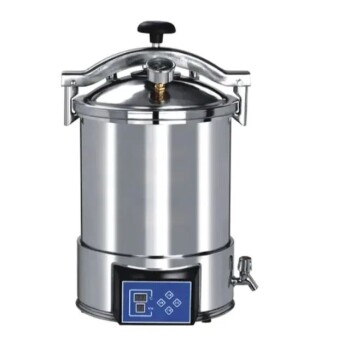
- Laboratory High Pressure Steam Sterilizer Vertical Autoclave for Lab Department
- Customizable Laboratory High Temperature High Pressure Reactors for Diverse Scientific Applications
People Also Ask
- What is the function of high-pressure reactors in the synthesis of MFI-type zeolites? Master Dry Gel Conversion.
- Graphene Fiber Synthesis: Key High-Pressure Reactor Processing Conditions Explained
- What reactor is used for high pressure reactions? Select the Right Autoclave for Your Lab
- What is the primary function of a high-pressure reactor in NiMoO4 preparation? Optimize Hydrothermal Catalyst Synthesis
- What are the hazards of high pressure reactors? A Guide to Managing Explosive Risks