Knowledge What technical challenge does the use of a planetary ball mill with alumina balls address? Solve MgAl2O4 Agglomeration
Author avatar

Tech Team · Kintek Solution

Updated 3 days ago

What technical challenge does the use of a planetary ball mill with alumina balls address? Solve MgAl2O4 Agglomeration


The primary technical challenge addressed is the elimination of hard agglomerates formed during the calcination process. Ultrafine Magnesium Aluminum Spinel (MgAl2O4) powders possess high surface energy, causing particles to cluster into tight clumps that compromise material consistency. A planetary ball mill using alumina grinding balls applies significant mechanical force to physically break these structures, ensuring the powder is dispersible and ready for sintering.

Mechanical grinding tackles the critical issue of particle agglomeration in ultrafine powders. By breaking down clusters formed after calcination, this process prevents uneven shrinkage during sintering and ensures uniform material properties.

The Mechanics of De-agglomeration

Overcoming High Surface Energy

During the calcination phase, MgAl2O4 powders are refined to an ultrafine state. However, this creates a side effect: high surface energy.

Because the particles are so small and energetic, they naturally attract one another. This attraction leads to the formation of hard agglomerates that are difficult to separate without mechanical intervention.

The Role of Mechanical Force

A planetary ball mill utilizes the kinetic energy of alumina grinding balls to solve this issue. Typically operated at a 7:1 ball-to-material ratio, the mill generates high-energy impacts.

These impacts apply the necessary shear and crushing forces to shatter hard agglomerates. This restores the powder to its intended discrete particle size rather than allowing it to remain as a cluster.

Impact on Sintering and Quality

Improving Dispersibility

The immediate benefit of breaking these agglomerates is improved dispersibility.

When agglomerates are present, the powder cannot mix uniformly with binders or other additives. Mechanical grinding ensures a physical homogenization of the powder, allowing it to form stable suspensions or uniform powder beds.

Preventing Uneven Shrinkage

The deep need for this process lies in the firing, or sintering, stage. Agglomerates create areas of varying density within the material.

If these density gradients remain, the material will shrink at different rates during sintering. By removing agglomerates, the milling process prevents uneven shrinkage, reducing the risk of warping or cracking in the final ceramic product.

Understanding the Trade-offs

Potential for Contamination

While alumina balls are effective, the physical grinding process inherently causes wear on the media.

This can introduce trace amounts of aluminum oxide into the MgAl2O4 powder. While alumina is often compatible with spinel chemistries, uncontrolled contamination can alter the stoichiometry of the final product.

Processing Efficiency vs. Over-milling

There is a balance between breaking agglomerates and over-processing the material.

Excessive milling time or speed can introduce unnecessary heat or alter the particle morphology beyond the desired range. It is crucial to optimize the ball-to-material ratio (such as the recommended 7:1) to achieve de-agglomeration without degrading the powder.

Making the Right Choice for Your Goal

To maximize the effectiveness of your post-treatment process, align your milling parameters with your specific end-goals.

  • If your primary focus is Sintering Density: Prioritize the complete breakdown of hard agglomerates to ensure uniform shrinkage and prevent structural defects.
  • If your primary focus is Material Purity: Monitor the condition of the alumina grinding balls closely to minimize contamination from media wear.

By effectively controlling agglomeration through mechanical milling, you secure the structural integrity and performance of the final ceramic component.

Summary Table:

Parameter/Factor Detail Impact on MgAl2O4 Processing
Core Challenge Hard Agglomerates Prevents uneven shrinkage and material defects
Mechanism High-Energy Mechanical Force Shatters clusters formed during calcination
Grinding Media Alumina (Al2O3) Balls Provides necessary shear & impact for de-agglomeration
Key Ratio 7:1 Ball-to-Material Optimizes breakdown without excessive media wear
Result High Dispersibility Ensures uniform density and structural integrity

Elevate Your Material Consistency with KINTEK

Don't let particle agglomeration compromise your sintering results. KINTEK specializes in advanced laboratory solutions, providing high-performance planetary ball mills, crushing and milling systems, and alumina grinding media tailored for Magnesium Aluminum Spinel processing.

Whether you require precision hydraulic presses for pelletizing or high-temperature furnaces for final sintering, our comprehensive range of equipment and consumables—including PTFE products, ceramics, and crucibles—ensures your research meets the highest standards of purity and density.

Ready to optimize your powder post-treatment? Contact KINTEK today for expert guidance and tailored equipment solutions!

Related Products

People Also Ask

Related Products

High Energy Planetary Ball Mill for Laboratory Horizontal Tank Type Milling Machine

High Energy Planetary Ball Mill for Laboratory Horizontal Tank Type Milling Machine

KT-P4000H uses the unique Y-axis planetary motion trajectory, and utilizes the collision, friction and gravity between the sample and the grinding ball to have a certain anti-sinking ability, which can obtain better grinding or mixing effects and further improve the sample output.

High Energy Planetary Ball Mill Milling Machine for Laboratory

High Energy Planetary Ball Mill Milling Machine for Laboratory

The biggest feature is that the high energy planetary ball mill can not only perform fast and effective grinding, but also has good crushing ability

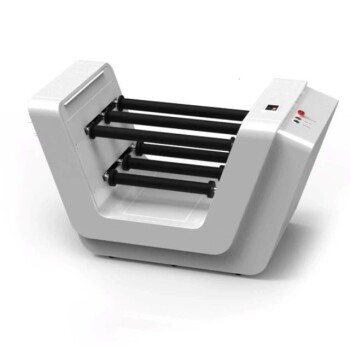
Laboratory Ten-Body Horizontal Jar Mill for Lab Use

Laboratory Ten-Body Horizontal Jar Mill for Lab Use

The Ten-body horizontal jar mill is for 10 ball mill pots (3000ml or less). It has frequency conversion control, rubber roller movement, and PE protective cover.

Powerful Plastic Crusher Machine

Powerful Plastic Crusher Machine

KINTEK's powerful plastic crusher machines process 60-1350 KG/H of diverse plastics, ideal for labs and recycling. Durable, efficient, and customizable.

Small Lab Rubber Calendering Machine

Small Lab Rubber Calendering Machine

Small lab rubber calendering machine is used for producing thin, continuous sheets of plastic or rubber materials. It is commonly employed in laboratories, small-scale production facilities, and prototyping environments to create films, coatings, and laminates with precise thickness and surface finish.

Laboratory Test Sieves and Vibratory Sieve Shaker Machine

Laboratory Test Sieves and Vibratory Sieve Shaker Machine

Efficiently process powders, granules, and small blocks with a high-frequency vibration sieve. Control vibration frequency, screen continuously or intermittently, and achieve accurate particle size determination, separation, and classification.

Single Punch Electric Tablet Press Machine Laboratory Powder Tablet Punching TDP Tablet Press

Single Punch Electric Tablet Press Machine Laboratory Powder Tablet Punching TDP Tablet Press

The single-punch electric tablet press is a laboratory-scale tablet press suitable for corporate laboratories in pharmaceutical, chemical, food, metallurgical and other industries.

Small Injection Molding Machine for Lab Use

Small Injection Molding Machine for Lab Use

The small injection molding machinehas fast and stable movements; good controllability and repeatability, super energy saving; the product can be automatically dropped and formed; the machine body is low, convenient for feeding, easy to maintain, and no height restrictions on the installation site.

Lab Internal Rubber Mixer Rubber Kneader Machine for Mixing and Kneading

Lab Internal Rubber Mixer Rubber Kneader Machine for Mixing and Kneading

Lab internal rubber mixer is suitable for mixing, kneading and dispersing various chemical raw materials such as plastics, rubber, synthetic rubber, hot melt adhesive and various low-viscosity materials.

Precision Wire Saw Laboratory Cutting Machine with 800mm x 800mm Workbench for Diamond Single Wire Circular Small Cutting

Precision Wire Saw Laboratory Cutting Machine with 800mm x 800mm Workbench for Diamond Single Wire Circular Small Cutting

Diamond wire cutting machines are mainly used for precision cutting of ceramics, crystals, glass, metals, rocks, thermoelectric materials, infrared optical materials, composite materials, biomedical materials and other material analysis samples. Especially suitable for precision cutting of ultra-thin plates with thickness up to 0.2mm.

Vibratory Sieve Shaker Machine Dry Three-Dimensional Vibrating Sieve

Vibratory Sieve Shaker Machine Dry Three-Dimensional Vibrating Sieve

The KT-V200 product focuses on solving common sieving tasks in the laboratory. It is suitable for sieving 20g-3kg dry samples.

Heated Hydraulic Press Machine with Integrated Manual Heated Plates for Lab Use

Heated Hydraulic Press Machine with Integrated Manual Heated Plates for Lab Use

Efficiently process heat-pressing samples with our Integrated Manual Heated Lab Press. With a heating range up to 500°C, it's perfect for various industries.

Laboratory Vibratory Sieve Shaker Machine for Dry and Wet Three-Dimensional Sieving

Laboratory Vibratory Sieve Shaker Machine for Dry and Wet Three-Dimensional Sieving

KT-VD200 can be used for sieving tasks of dry and wet samples in the laboratory. The screening quality is 20g-3kg. The product is designed with a unique mechanical structure and an electromagnetic vibrating body with a vibration frequency of 3000 times per minute.

Electric Split Lab Cold Isostatic Press CIP Machine for Cold Isostatic Pressing

Electric Split Lab Cold Isostatic Press CIP Machine for Cold Isostatic Pressing

Split cold isostatic presses are capable of providing higher pressures, making them suitable for testing applications that require high pressure levels.

Single Punch Electric Tablet Press Machine TDP Tablet Punching Machine

Single Punch Electric Tablet Press Machine TDP Tablet Punching Machine

The electric tablet punching machine is a laboratory equipment designed for pressing various granular and powdery raw materials into discs and other geometric shapes. It is commonly used in pharmaceutical, healthcare products, food, and other industries for small batch production and processing. The machine is compact, lightweight, and easy to operate, making it suitable for use in clinics, schools, laboratories, and research units.

Lab Plastic PVC Calender Stretch Film Casting Machine for Film Testing

Lab Plastic PVC Calender Stretch Film Casting Machine for Film Testing

The cast film machine is designed for the molding of polymer cast film products and has multiple processing functions such as casting, extrusion, stretching, and compounding.

Single Punch Tablet Press Machine and Mass Production Rotary Tablet Punching Machine for TDP

Single Punch Tablet Press Machine and Mass Production Rotary Tablet Punching Machine for TDP

Rotary tablet punching machine is an automatic rotating and continuous tableting machine. It is mainly used for tablet manufacturing in the pharmaceutical industry, and is also suitable for industrial sectors such as food, chemicals, batteries, electronics, ceramics, etc. to compress granular raw materials into tablets.

Metallographic Specimen Mounting Machine for Laboratory Materials and Analysis

Metallographic Specimen Mounting Machine for Laboratory Materials and Analysis

Precision metallographic mounting machines for labs—automated, versatile, and efficient. Ideal for sample prep in research and quality control. Contact KINTEK today!

Laboratory Vibratory Sieve Shaker Machine Slap Vibrating Sieve

Laboratory Vibratory Sieve Shaker Machine Slap Vibrating Sieve

KT-T200TAP is a slapping and oscillating sieving instrument for laboratory desktop use, with 300 rpm horizontal circular motion and 300 vertical slapping motions to simulate manual sieving to help sample particles pass through better.

Rubber Vulcanizer Vulcanizing Machine Plate Vulcanizing Press for Lab

Rubber Vulcanizer Vulcanizing Machine Plate Vulcanizing Press for Lab

The Plate vulcanizing press is a kind of equipment used in the production of rubber products, mainly used for the vulcanization of rubber products. Vulcanization is a key step in rubber processing.


Leave Your Message