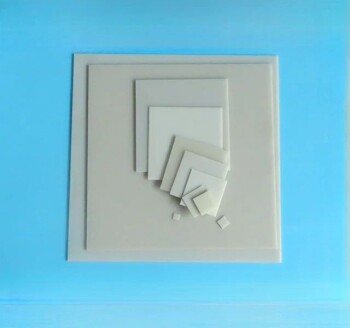
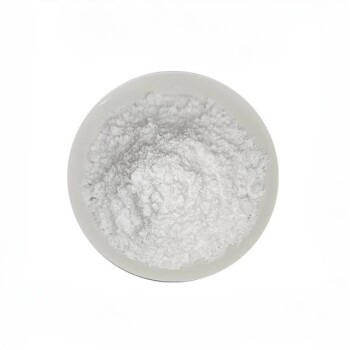
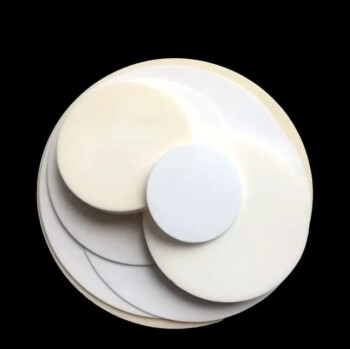
Alumina ceramic discs serve a critical functional role by acting as electrical insulators that decouple the sample from the cathode table. By preventing current from flowing directly through the sample, these discs force the substrate into a state of "floating potential," which fundamentally changes the deposition mechanism.
The use of alumina discs shifts the focus of plasma activity from the sample to the surrounding cathodic cage. This prevents ion bombardment damage (erosion) on the sample and ensures uniform film growth through particle migration.
The Mechanism of Floating Potential
Creating an Electrical Barrier
The primary reference establishes that alumina is chosen specifically for its insulating properties. When placed under a sample, it blocks the path of electric current.
This prevents the sample from becoming part of the cathode circuit. Consequently, the sample sits at a floating potential rather than the applied cathode potential.
Concentrating Plasma Activity
Because the sample is electrically isolated, it does not attract the high-intensity plasma directly.
Instead, the plasma activity concentrates on the conductive cathodic cage surrounding the setup. This ensures the cage becomes the primary source of active species.
Enhancing Deposition Quality
Guiding Particle Migration
With the plasma focused on the cage, active particles are generated at the cage walls.
These particles then migrate toward the sample surface. This process is driven by diffusion and the potential difference between the plasma and the floating sample.
Preventing Sputtering Erosion
Direct ion bombardment can strip material away from a surface, a process known as sputtering erosion.
By using the alumina disc to float the potential, you eliminate this direct bombardment. This allows material to accumulate (deposit) on the surface rather than being eroded away.
Understanding the Operational Trade-offs
Loss of Independent Bias Control
Using an insulating disc means you cannot independently bias the substrate to control ion impact energy.
The sample potential is determined solely by the plasma conditions (floating potential). You rely entirely on the cage environment for deposition kinetics.
Reliance on Cage Geometry
Because the sample is not actively attracting ions, the uniformity of the coating depends heavily on the cage design.
If the cage does not provide a uniform "hollow cathode effect," the passive migration of particles to the sample may result in uneven coverage.
Making the Right Choice for Your Process
If you are determining whether to include alumina supports in your setup, consider your specific objective:
- If your primary focus is Uniform Deposition: Use the alumina disc to ensure the plasma acts on the cage, allowing active particles to coat the sample gently without damage.
- If your primary focus is Surface Cleaning or Etching: Remove the alumina disc to allow direct current flow, which facilitates ion bombardment and sputtering erosion of the sample surface.
The alumina disc is the defining component that switches the process from potentially destructive ion bombardment to constructive film deposition.
Summary Table:
| Feature | Role of Alumina Disc | Benefit for Deposition |
|---|---|---|
| Electrical Property | High-performance Insulator | Decouples sample from cathode table |
| Plasma Interaction | Creates Floating Potential | Prevents direct ion bombardment & erosion |
| Deposition Driver | Particle Migration/Diffusion | Ensures uniform coating from cage wall species |
| Surface Quality | Protective Barrier | Eliminates sputtering damage and surface etching |
Elevate Your Material Research with KINTEK Precision Solutions
Unlock superior deposition quality and experimental accuracy with KINTEK's specialized laboratory equipment. Whether you are performing cathodic cage deposition, CVD/PECVD processes, or high-temperature material synthesis, our high-purity alumina ceramics, crucibles, and muffle furnaces provide the thermal and electrical stability your research demands.
From high-pressure reactors and hydraulic pellet presses to advanced battery research tools, KINTEK delivers the comprehensive range of consumables and hardware required for cutting-edge material science.
Ready to optimize your lab setup? Contact us today to discuss your specific requirements and see how our expertise in high-temperature systems and laboratory consumables can drive your success.
References
- Francisco Rafael Campos de Macedo, Rômulo Ríbeiro Magalhães de Sousa. Study of Surface Modification of Niobium Caused by Nitriding and Cathodic Cage Deposition. DOI: 10.1590/1980-5373-mr-2022-0613
This article is also based on technical information from Kintek Solution Knowledge Base .
Related Products
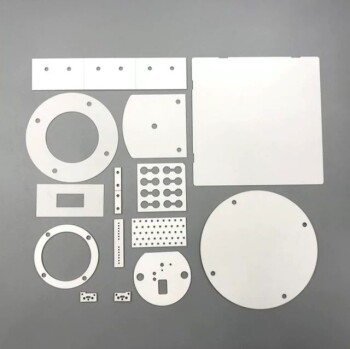
- Custom-Made Alumina Zirconia Special-Shaped Ceramic Plates for Engineering Advanced Fine Ceramics Processing
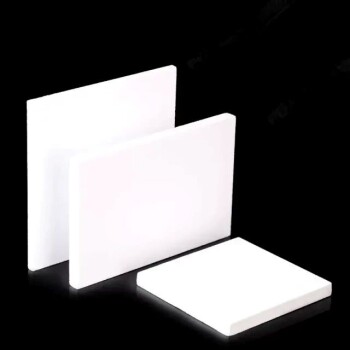
- High Temperature Wear-Resistant Alumina Al2O3 Plate for Engineering Advanced Fine Ceramics
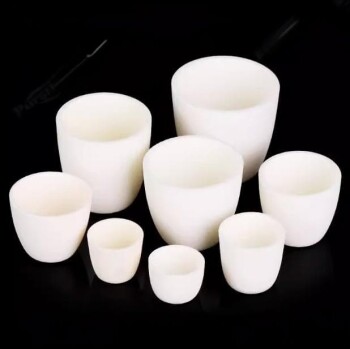
- Arc-Shaped Alumina Ceramic Crucible High Temperature Resistant for Engineering Advanced Fine Ceramics
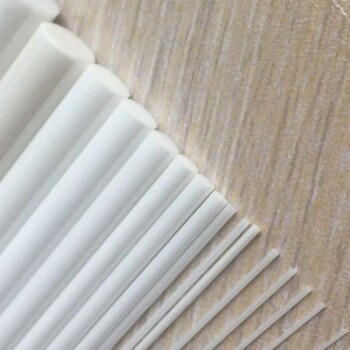
- Engineering Advanced Fine Alumina Al2O3 Ceramic Rod Insulated for Industrial Applications
- Engineering Advanced Fine Alumina (Al₂O₃) Ceramic Positioning Pin Straight Bevel for Precision Applications
People Also Ask
- What function do alumina ceramic plates serve as supports in the preparation of molecular sieve membranes?
- Why are ceramics more resistant to corrosion? Unlock the Secret to Unmatched Chemical Stability
- What are the process advantages of selecting an alumina plate for CuO nanofilm synthesis? Achieve Superior Purity
- How is alumina ceramic made? A Guide to Manufacturing Methods and Material Properties
- What are the applications of zirconia ceramics? Unlock High-Performance Solutions for Extreme Environments