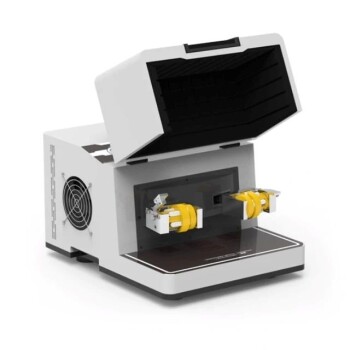
Different grinding systems are selected primarily to achieve a specific final particle size range, typically between 0.2 and 2 mm, which is dictated by the requirements of downstream processing. While systems like vibratory mills, hammer mills, and colloid mills operate differently, they are chosen based on their ability to deliver this precise reduction, which is essential for simplifying material handling and optimizing chemical reactivity.
The selection of a specific mechanical system is driven by the need to optimize the physical structure of biomass for reactivity. By targeting a precise particle size, these systems maximize surface area and reduce cellulose crystallinity, creating the necessary conditions for efficient enzymatic or chemical conversion.
The Core Objectives of Mechanical Selection
The choice of machinery—whether a hammer mill, ball mill, or two-roll mill—is not arbitrary. It is a calculated decision designed to overcome the recalcitrance of lignocellulosic biomass through specific physical changes.
Targeting Critical Particle Dimensions
The primary criterion for selecting a grinding system is its ability to reduce raw biomass to a critical size range of 0.2 to 2 mm.
Achieving this specific range is vital because it represents the "sweet spot" for processing. It effectively simplifies the physical handling of the material while preparing it for biological or chemical breakdown.
Increasing Specific Surface Area
Mechanical systems are selected for their ability to exponentially increase the specific surface area of the material.
By pulverizing, chopping, or grinding the biomass, the equipment exposes more of the material's internal structure. This reduction in heat and mass transfer resistance allows reagents to penetrate the biomass more effectively during thermochemical deconstruction.
Disrupting the Molecular Structure
Beyond simple sizing, high-energy systems like ball mills or vibratory mills are selected to alter the biomass at a molecular level.
These systems apply shear, impact, and compressive forces to reduce the crystallinity of the cellulose and the degree of polymerization. This disruption of the rigid cell wall structure and fibrous network is a prerequisite for making the cellulose accessible to enzymes.
Linking Grinding to Process Efficiency
The selection of the grinding method directly impacts the speed and yield of the subsequent steps in the biorefinery pipeline.
Enhancing Enzymatic Accessibility
The ultimate goal of mechanical pretreatment is to improve the efficiency of saccharification (sugar conversion).
By breaking down the robust cell walls and reducing particle size, the grinding system ensures that hydrolysis reagents or enzymes can physically access the cellulose microfibers. Without this access, conversion rates remain low regardless of the chemical treatment used.
Accelerating Fermentation and Digestion
Proper mechanical pretreatment significantly shortens the time required for downstream processes.
By increasing the surface area and lowering crystallinity, the biomass becomes more reactive. This leads to faster bio-hydrogen fermentation processes and shorter anaerobic digestion times, directly influencing the overall throughput of the facility.
Understanding the Trade-offs
While aggressive grinding offers chemical benefits, it introduces operational challenges that must be weighed during equipment selection.
Energy Input vs. Crystallinity Reduction
Not all grinding systems achieve the same level of structural disruption.
High-energy devices, such as ball mills, are excellent at reducing cellulose crystallinity through intense impact and friction. However, they typically consume more energy than simpler crushing systems designed only for coarse chipping.
The Risk of Over-Processing
Selecting a system that grinds material too finely can lead to diminishing returns.
While a high surface area is desirable, excessive energy expenditure to achieve ultra-fine particles may not yield proportionally higher conversion rates. The target range of 0.2 to 2 mm serves as a guideline to balance energy consumption with sufficient reactivity.
Making the Right Choice for Your Goal
The "best" grinding system depends entirely on the specific requirements of your conversion process.
- If your primary focus is maximizing enzymatic reactivity: Select high-energy systems like ball or vibratory mills to prioritize the reduction of cellulose crystallinity and cell wall disruption.
- If your primary focus is general material handling: Select mechanical crushing systems like hammer mills or cutters to efficiently reach the 0.2–2 mm particle size range without excessive energy use.
The optimal grinding system is one that achieves the necessary structural disruption to unlock cellulose potential while maintaining process viability.
Summary Table:
| Grinding System | Main Mechanism | Primary Objective | Best Use Case |
|---|---|---|---|
| Ball/Vibratory Mills | Impact & Shear | Reduce crystallinity & molecular disruption | Maximizing enzymatic reactivity |
| Hammer Mills | Impact | Achieve target particle size (0.2-2 mm) | General material handling & throughput |
| Colloid Mills | Hydraulic Shear | Fine particle dispersion | Specialized wet pretreatment |
| Cutter/Two-roll Mills | Compression & Cutting | Physical size reduction | Initial coarse processing |
Unlock the Full Potential of Your Biomass Research
Selecting the right mechanical pretreatment is critical for overcoming biomass recalcitrance. KINTEK specializes in high-performance laboratory equipment designed to help you achieve precise particle size and structural disruption for efficient conversion.
From advanced crushing and milling systems to precision sieving equipment and high-pressure reactors, we provide the tools needed to optimize your biorefinery pipeline. Whether you are focusing on enzymatic saccharification or anaerobic digestion, our experts can guide you to the perfect solution.
Ready to enhance your lab's efficiency and conversion yields? Contact KINTEK Today to Find Your Perfect Grinding System
References
- Sunčica Beluhan, Mirela Ivančić Šantek. The Production of Bioethanol from Lignocellulosic Biomass: Pretreatment Methods, Fermentation, and Downstream Processing. DOI: 10.3390/en16197003
This article is also based on technical information from Kintek Solution Knowledge Base .
Related Products
- High Energy Planetary Ball Mill Milling Machine for Laboratory
- High-Energy Omnidirectional Planetary Ball Mill Machine for Laboratory
- Mini Planetary Ball Mill Machine for Laboratory Milling
- Stainless Steel Laboratory Ball Mill for Dry Powder and Liquid with Ceramic Polyurethane Lining
- Laboratory Planetary Ball Mill Rotating Ball Milling Machine
People Also Ask
- What is the primary function of a planetary high-energy ball mill? Master Mechanical Alloying for Nickel Nanoparticles
- Why is a high-energy planetary ball mill preferred over traditional casting for nanocrystalline HEAs?
- What is the function of a high-energy planetary ball mill? Unlock Nanoscale Precision in Powder Metallurgy
- What is the function of a high-energy planetary ball mill in preparing MAB phase precursors? Optimize MBene Synthesis
- How does a high-energy planetary ball mill achieve room-temperature reactions? Master Mechanical Alloying Efficiency