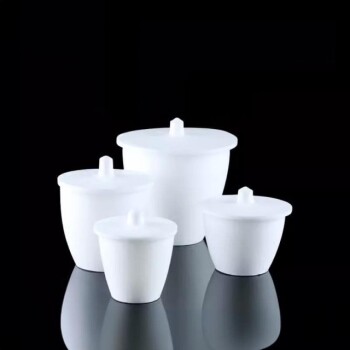
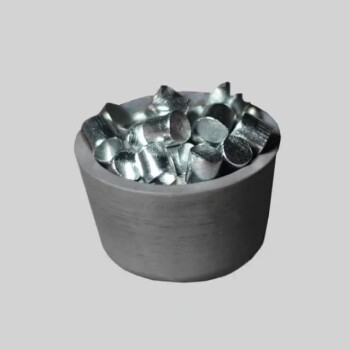
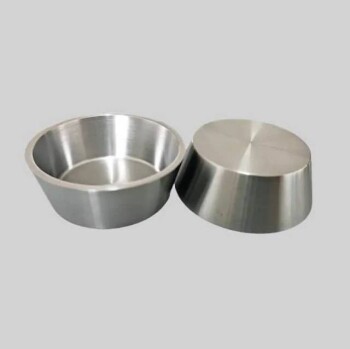
Glassy carbon crucibles are the preferred choice for high-temperature static molten salt corrosion experiments primarily due to their exceptional chemical inertness and thermal stability. In aggressive environments, such as molten chlorides at 700°C, these crucibles prevent the container material from reacting with the salt or the alloy samples, ensuring that the experimental data remains uncorrupted by external impurities.
Core Insight: In corrosion science, the container must be an invisible variable. The use of glassy carbon ensures that any observed degradation is solely the result of the interaction between the metal specimen and the molten salt, rather than an artifact of container leaching.
The Imperative of Chemical Inertness
Preventing Container Leaching
Molten salts, particularly chlorides, become highly chemically aggressive at temperatures exceeding 973 K (700°C). Standard container materials often degrade under these conditions, leaching their own components into the melt.
Glassy carbon is selected because it resists this attack. By maintaining its structural integrity, it prevents the introduction of foreign elements that would alter the chemistry of the salt solution.
Isolating the Corrosion Mechanism
To understand how an alloy performs, you must isolate the variables. If a crucible reacts with the salt, it introduces "noise" into the data.
Using glassy carbon ensures that the corrosion phenomena recorded—such as elemental precipitation or spallation—are accurate. It guarantees the data reflects the specific interaction between the alloy and the salt components, free from interference.
Thermal and Environmental Stability
Withstanding Extreme Heat
Static corrosion experiments often require sustained exposure to high heat to simulate real-world operating conditions.
Glassy carbon exhibits robust thermal stability at 700°C. This allows for long-term testing without the risk of mechanical failure or thermal shock that could compromise the experiment.
Compatibility with Aggressive Salts
While materials like Alumina are excellent for nitrate salts (up to 600°C), chlorides require a container that can withstand higher aggression.
Glassy carbon provides the necessary resistance for these harsher chloride environments. It serves as a neutral vessel, unlike metallic crucibles (like nickel) which are effective but are sometimes reserved for specific studies where metallic ion interference is less of a concern or strictly controlled.
Understanding the Trade-offs
The Scope of Application
Glassy carbon is not a universal solution for every salt type. It is specifically optimized for environments where carbon inertness is superior to ceramic or metallic options.
For example, while Alumina is preferred for nitrates to avoid specific oxide interactions, Glassy Carbon is the superior choice for chlorides to prevent metal-ion contamination.
Environmental Dependency
Even the best crucible cannot compensate for a poor atmosphere. The inertness of glassy carbon must be paired with a controlled environment.
For valid results, these experiments are often conducted in ultra-high purity argon glove boxes. This prevents atmospheric oxygen and moisture—which glassy carbon cannot filter out—from accelerating corrosion rates artificially.
Making the Right Choice for Your Goal
Selecting the correct crucible is about matching the material properties to your specific salt chemistry and temperature requirements.
- If your primary focus is Molten Chlorides (approx. 700°C): Select Glassy Carbon to ensure maximum chemical inertness and prevent container leaching in these highly aggressive salts.
- If your primary focus is Molten Nitrates (approx. 600°C): Consider High-Purity Alumina, as it offers exceptional stability specifically for nitrate mixtures like Solar Salt.
- If your primary focus is eliminating all metallic interference: Stick to Glassy Carbon or Alumina to ensure the only metal ions in the solution come from your test specimen, not the pot.
True experimental rigour requires a container that facilitates the process without participating in it.
Summary Table:
| Feature | Glassy Carbon Crucible | High-Purity Alumina | Nickel Crucibles |
|---|---|---|---|
| Best Salt Compatibility | Chlorides | Nitrates | Specific Alkaline Salts |
| Temperature Stability | High (700°C+) | Moderate (Up to 600°C) | High |
| Chemical Inertness | Exceptional (Non-leaching) | Excellent for Oxides | Metallic Leaching Risk |
| Primary Benefit | Isolates corrosion variables | Prevents oxide interaction | High thermal conductivity |
| Atmosphere Req. | Inert (Argon) | Oxygen/Air/Inert | Inert/Reducing |
Precision in corrosion science begins with the right vessel. KINTEK specializes in high-performance laboratory solutions, providing the premium glassy carbon and ceramic crucibles necessary for accurate high-temperature research. Beyond high-quality consumables, we offer a comprehensive range of high-temperature furnaces (vacuum, tube, and muffle), electrolytic cells, and glove box-ready equipment designed to maintain experimental integrity. Ensure your data reflects true material performance—contact KINTEK today to equip your lab with the industry's most reliable high-temperature and high-pressure tools.
References
- Robert Gentile, Lingfeng He. Corrosion Response of Ni-19Cr-5Fe in Molten NaCl-MgCl2 Salt. DOI: 10.1007/s11837-025-08019-1
This article is also based on technical information from Kintek Solution Knowledge Base .
Related Products
- Glassy Carbon Sheet RVC for Electrochemical Experiments
- High Purity Pure Graphite Crucible for Electron Beam Evaporation
- Glassy Carbon Electrochemical Electrode
- Carbon Graphite Boat -Laboratory Tube Furnace with Cover
- Electron Beam Evaporation Coating Oxygen-Free Copper Crucible and Evaporation Boat
People Also Ask
- What is an RVC glassy carbon sheet? A High-Performance Material for Demanding Applications
- What is the applicable potential range for an RVC glassy carbon sheet? Master Your Electrochemical Analysis
- What is the porosity of an RVC glassy carbon sheet? Understanding the Critical Difference Between PPI and Porosity
- What are the key characteristics of RVC glassy carbon sheets? Unlock Superior Electrochemical Performance
- What consideration should be given to ancillary equipment used with RVC glassy carbon sheets? Ensure Reliable Performance and Protect Your Investment