Graphite susceptors and high-frequency generators are the primary drivers of thermal efficiency in Chemical Vapor Deposition (CVD).
In the synthesis of iron germanide, these components work together to provide the precise, localized heating required for the controlled thermal decomposition of precursors. By converting electromagnetic energy into thermal energy, this setup ensures that only the substrate reaches the necessary temperature, maintaining the integrity and purity of the resulting thin films.
The combination of high-frequency induction and graphite susceptors enables a highly controlled "cold-wall" environment, which is essential for the high-purity synthesis of complex materials like iron germanide.
The Role of High-Frequency Induction Generators
Generating the Electromagnetic Field
The induction generator produces a high-frequency alternating current that flows through a dedicated induction coil. This process creates a rapidly oscillating magnetic field within the CVD reaction chamber.
Non-Contact Energy Transfer
Unlike resistive heating, which relies on physical contact, induction heating transfers energy wirelessly through the chamber walls. This allows for a sealed, vacuum-tight environment that is critical for preventing contamination during the deposition process.
Efficiency and Speed
High-frequency generators allow for extremely rapid ramp-up times, reaching process temperatures in seconds or minutes. This speed is vital for maintaining high throughput in both research and industrial-scale manufacturing.
The Graphite Susceptor as a Coupling Medium
Efficient Energy Absorption
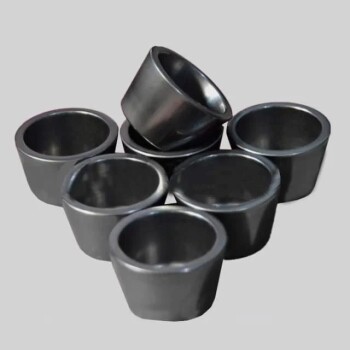
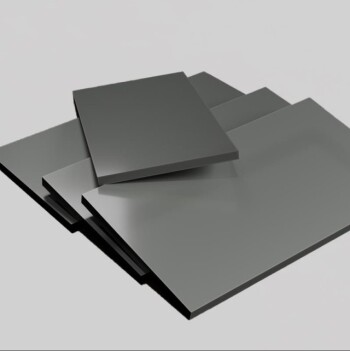
The graphite susceptor acts as the "bridge" between the magnetic field and the substrate. It is a conductive material that absorbs the electromagnetic energy and converts it into heat through internal eddy currents.
High Thermal Stability
Graphite is chosen for its ability to withstand extreme temperatures without losing structural integrity. It provides a stable, uniform thermal base that ensures the iron germanide film grows evenly across the entire substrate.
Precision Thermal Delivery
Because the heat is generated directly within the susceptor, the energy is localized to the reaction zone. This minimizes heat loss to the rest of the reactor, protecting sensitive equipment and reducing energy consumption.
Why This Setup is Critical for Iron Germanide
Decomposition of Single-Source Precursors
Iron germanide synthesis often utilizes single-source precursors that require exact thermal thresholds to decompose correctly. The precision of induction heating ensures that these precursors break down into the desired crystalline phase without forming unwanted byproducts.
Maintaining Thin Film Quality
The ability to control the temperature profile with high accuracy leads to superior crystallinity in iron germanide thin films. Proper thermal management prevents defects and ensures the material meets the specific electronic or magnetic requirements of the application.
Industrial Scalability
Drawing from broader CVD successes, such as in graphene production, this heating method is the only one capable of the industrial scale necessary to meet growing demand. It offers a balance of speed, purity, and repeatability that resistive heating cannot match.
Understanding the Trade-offs
Risk of Carbon Contamination
While graphite is an excellent thermal conductor, it can potentially introduce carbon impurities at very high temperatures. In high-purity applications, the susceptor may require a protective coating, such as silicon carbide (SiC), to act as a barrier.
System Complexity and Tuning
Induction heating systems require precise frequency tuning to match the material properties of the susceptor. If the frequency is not optimized, the energy transfer will be inefficient, leading to uneven heating and wasted power.
Initial Capital Investment
High-frequency generators and custom induction coils represent a higher upfront cost compared to standard heating elements. However, this is typically offset by lower operating costs and higher product quality over time.
How to Apply This to Your Project
When designing or optimizing a CVD process for iron germanide or similar materials, consider your primary performance metrics to choose the right configuration.
- If your primary focus is material purity: Prioritize a coated graphite susceptor (e.g., SiC-coated) to eliminate the risk of carbon leaching into the iron germanide film.
- If your primary focus is high throughput: Invest in a high-kilowatt induction generator to minimize heating and cooling cycles between deposition runs.
- If your primary focus is research and development: Use a smaller, tunable induction setup that allows you to experiment with different susceptor geometries and frequencies.
Precision in thermal management is the most effective way to ensure the consistent synthesis of high-quality iron germanide films.
Summary Table:
| Component | Key Function | Primary Benefit |
|---|---|---|
| High-Frequency Generator | Creates oscillating magnetic field | Non-contact, rapid energy transfer & "cold-wall" environment |
| Graphite Susceptor | Absorbs EM energy via eddy currents | Exceptional thermal stability & uniform heat distribution |
| Induction Heating | Localized energy delivery | Minimizes contamination & ensures precise precursor decomposition |
| SiC Coating (Optional) | Protective barrier | Prevents carbon leaching for ultra-high purity applications |
Elevate Your Thin Film Synthesis with KINTEK
Precision thermal management is the cornerstone of high-quality material synthesis. KINTEK specializes in advanced laboratory solutions, providing the high-performance CVD, PECVD, and MPCVD systems required for complex projects like iron germanide production.
From high-frequency induction melting systems and high-temperature furnaces to precision graphite and ceramic consumables, our equipment is designed to ensure maximum purity, repeatability, and efficiency. Whether you are scaling up industrial production or conducting cutting-edge R&D, our technical team is ready to help you select the ideal configuration for your specific thermal thresholds.
Contact KINTEK today to optimize your CVD process!
References
- Thomas Büttner, David Scheschkewitz. Single‐Source Precursors for the Chemical Vapor Deposition of Iron Germanides. DOI: 10.1002/ejic.202300433
This article is also based on technical information from Kintek Solution Knowledge Base .
Related Products
- Graphite Disc Rod and Sheet Electrode Electrochemical Graphite Electrode
- High Purity Pure Graphite Crucible for Evaporation
- Carbon Graphite Boat -Laboratory Tube Furnace with Cover
- High Purity Pure Graphite Crucible for Electron Beam Evaporation
- Carbon Graphite Plate Manufactured by Isostatic Pressing Method
People Also Ask
- Why is a graphite electrode used as a counter electrode? Achieve Pure Electrochemical Reduction with KINTEK
- What is the correct procedure for installing and connecting a graphite electrode during an experiment? Ensure Accurate Electrochemical Results
- What are the potential risks when using a graphite electrode in electrochemical tests? Avoid Decomposition and Contamination
- What are the key precautions for handling graphite electrodes? Ensure Safety & Maximize Performance
- Why are Dimensionally Stable Anodes (DSA) preferred for indium electrowinning? Ensure High-Purity Results.