Mechanical homogenization is a critical pre-treatment step for fishmeal wastewater analysis. It is necessary to process dried wastewater residues into a completely uniform state before measuring Total Organic Carbon (TOC). This ensures that the small sample portion analyzed is truly representative of the whole, eliminating measurement errors caused by inconsistencies in the material.
Key Takeaway: Accurate analysis relies on sample uniformity. Homogenizers eliminate heterogeneity in dried wastewater residues, ensuring that TOC measurements provide the precise data needed to effectively evaluate treatment technologies like electro-oxidation.
The Challenge of Sample Heterogeneity
Why Dried Residues are Problematic
When fishmeal wastewater is dried for analysis, the resulting residue is rarely uniform naturally.
The material often forms clumps or uneven distributions of organic matter.
Without intervention, these physical inconsistencies create a heterogeneous sample where the composition varies significantly from one spot to another.
The Impact on TOC Analysis
Total Organic Carbon (TOC) analysis typically uses a very small amount of material to represent the whole.
If the sample is heterogeneous, the specific portion selected for the instrument may contain a disproportionately high or low amount of carbon.
This leads to measurement errors that skew the data and fail to represent the actual composition of the wastewater.
How Mechanical Processing Solves the Problem
Achieving Complete Uniformity
Homogenizers or mechanical crushing systems physically pulverize the dried residue.
This process breaks down the material until all components are evenly distributed throughout the sample mixture.
By creating a uniform powder, you ensure that any random scoop taken for analysis is identical to any other.
Breaking Physical Agglomerates
Similar to how ultrasonic devices break down clusters in liquid suspensions, mechanical crushers eliminate physical agglomerates in solid residues.
This disintegration is essential for exposing the true nature of the sample matrix.
It prevents "hot spots" of concentrated material from distorting the analytical results.
The Ultimate Goal: Reliable Data Evaluation
Validating Treatment Efficiency
The purpose of analyzing these samples is often to evaluate the effectiveness of specific technologies, such as electro-oxidation treatment.
To determine if the treatment worked, you need precise, reproducible data.
Homogenization minimizes data noise, allowing researchers to attribute changes in TOC directly to the treatment efficiency rather than sampling errors.
Understanding the Risks of Inadequate Preparation
The Cost of Skipping Homogenization
Bypassing the mechanical crushing step may save a small amount of preparation time, but it introduces significant variability.
Results usually become non-reproducible, meaning repeating the test on the same batch yields different numbers.
This lack of precision makes it impossible to draw valid scientific conclusions about the wastewater treatment process.
Ensuring Analytical Precision
The quality of your data is defined by the quality of your sample preparation.
- If your primary focus is Data Accuracy: You must use mechanical crushing to ensure that every micro-sample analyzed statistically represents the entire bulk material.
- If your primary focus is Process Evaluation: You must eliminate sample heterogeneity to correctly assess the performance of electro-oxidation or similar treatment technologies.
Reliable science begins with a representative sample; homogenization is the bridge between a raw residue and an actionable result.
Summary Table:
| Feature | Importance in Wastewater Analysis |
|---|---|
| Physical State | Transforms dried residues into a uniform, fine powder |
| Data Integrity | Eliminates measurement errors from organic matter clumps |
| Representativeness | Ensures small test portions reflect the entire sample bulk |
| Process Validation | Enables accurate evaluation of electro-oxidation efficiency |
| Reproducibility | Reduces data noise for consistent, scientific results |
Elevate Your Analytical Precision with KINTEK
Don't let sample heterogeneity compromise your research. KINTEK specializes in high-performance laboratory equipment designed for the most demanding sample preparation tasks. Whether you are analyzing fishmeal wastewater or developing advanced treatment technologies, our crushing and milling systems, homogenizers, and shakers ensure your samples are perfectly uniform every time.
From high-temperature furnaces and reactors to essential lab consumables like PTFE products and ceramics, KINTEK provides the comprehensive solutions needed for precise data and reliable process evaluation. Ready to optimize your lab's workflow? Contact us today to find the perfect equipment for your application!
References
- Raju Meganathan, Rajagopalan Varadarajan. Electro-oxidation of fish meal industry wastewater in a stirred batch reactor using a Ti/RuO2 anode. DOI: 10.2166/wpt.2021.087
This article is also based on technical information from Kintek Solution Knowledge Base .
Related Products
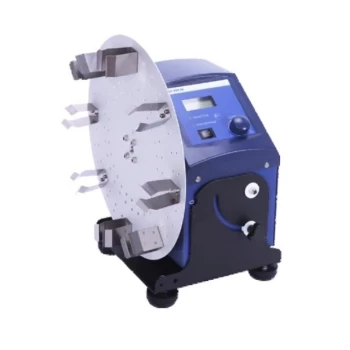
- Laboratory Disc Rotary Mixer for Efficient Sample Mixing and Homogenization
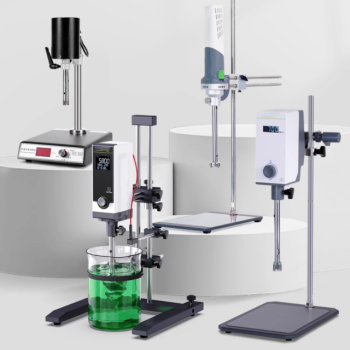
- High Shear Homogenizer for Pharmaceutical and Cosmetic Applications
- Lab Sterile Slapping Type Homogenizer for Tissue Mashing and Dispersing
- High Performance Lab Homogenizer for Pharma Cosmetics and Food R&D
People Also Ask
- What is a laboratory mixer used for? Choose the Right Tool for Liquids or Solids
- What is a laboratory mixer? A Guide to Achieving Perfect Sample Homogeneity
- What are laboratory mixers used for? Achieve Perfect Sample Homogeneity and Reliable Results
- How does a high-efficiency homogenizing mixer contribute to the preparation of Tobermorite and Xonotlite precursors?
- Why is precision mixing required for concrete corrosion studies? Ensure Data Integrity through Homogenization