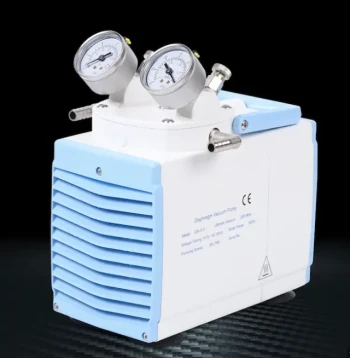
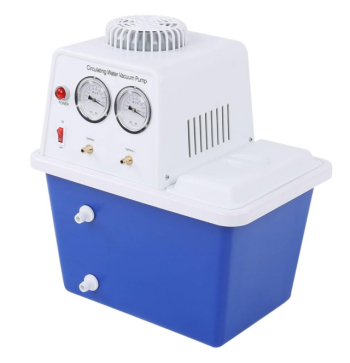
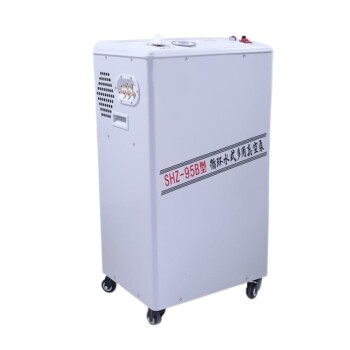
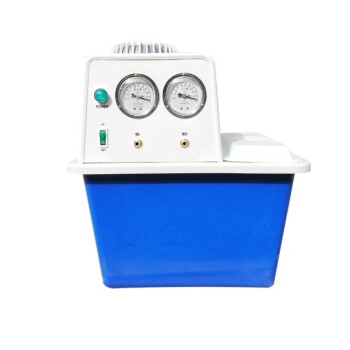
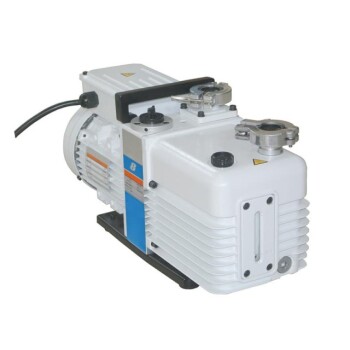
Vacuum pumps and pressure monitoring devices form the critical control infrastructure of a gas nitriding system. The vacuum pump is responsible for the initial purification of the furnace environment by removing residual air and impurities, preventing contamination. Once the process begins, pressure monitoring devices enable the precise real-time tracking of ammonia partial pressure, which is strictly required to control the nitrogen potential balance.
Core Takeaway: These components transform gas nitriding from a simple heat treatment into a precision chemical process. By eliminating atmospheric variables and strictly regulating internal pressure, they ensure the controllability of the process and the stability of the resulting nitrided layer.
Establishing Environmental Purity
To achieve a high-quality metallurgical bond, the environment must be chemically inert before the active gas is introduced.
Evacuating Residual Impurities
The primary role of the vacuum pump is to evacuate the furnace chamber prior to heating.
It removes residual air and atmospheric impurities that would otherwise react with the workload.
Without this evacuation, oxygen or moisture could interfere with the nitrogen diffusion, leading to oxidation rather than the desired nitriding.
Ensuring Atmosphere Consistency
By creating a vacuum, the system establishes a clean baseline.
This ensures that when the nitriding gas (ammonia) is introduced, the atmosphere inside the furnace remains pure.
This purity is the foundation for achieving consistent, repeatable results across different batches.
Precise Process Control
Once the environment is prepared, the focus shifts to regulating the chemical activity within the furnace.
Real-Time Pressure Tracking
Pressure monitoring devices are essential for the active phase of the process.
They provide continuous data on the internal furnace conditions.
Specifically, they track the ammonia partial pressure, which changes as the ammonia dissociates into nitrogen and hydrogen.
Controlling Nitrogen Potential
The data provided by these monitors allows for the adjustment of gas flow and pressure to maintain the correct nitrogen potential balance.
Nitrogen potential is the driving force that dictates how much nitrogen diffuses into the steel.
If the pressure is not monitored and adjusted, the nitrogen potential will fluctuate, resulting in uneven case depths or improper phase formation.
The Impact on Material Properties
The strict control provided by these components directly correlates to the physical enhancements of the treated parts.
Enhancing Surface Hardness
Proper atmosphere control allows for a surface hardness increase of 40–70%.
This significantly enhances the part's wear resistance and anti-galling properties.
These results are only possible if the nitrogen potential is kept stable throughout the cycle.
Preserving Mechanical Integrity
Because the process is controlled effectively, it can operate at lower temperatures (700–1,200°F).
This preserves the mechanical properties of the base material.
It also minimizes distortion in the finished parts, a critical advantage over higher-temperature hardening methods.
Understanding the Trade-offs
While these components are essential, they introduce complexity that must be managed.
Sensitivity to Leaks
Relying on a vacuum pump means the system is highly sensitive to seal integrity.
Even a minor leak can reintroduce oxygen, negating the work of the vacuum pump and compromising the purity of the nitriding atmosphere.
Dependence on Sensor Calibration
Pressure monitoring devices are precision instruments that require regular calibration.
If a sensor drifts, the system may report incorrect ammonia partial pressure readings.
This can lead to a false sense of security, where the operator believes the nitrogen potential is balanced when, in reality, the process is drifting out of specification.
Ensuring Process Reliability
To maximize the benefits of gas nitriding, you must view these components as part of a holistic quality system.
- If your primary focus is Consistency: Prioritize the maintenance of vacuum seals to ensure no impurities compromise the atmosphere purity.
- If your primary focus is Precision: Invest in high-accuracy pressure sensors to maintain the strict nitrogen potential required for exact case depths (up to 0.025 inch).
Ultimately, the reliability of your vacuum and monitoring equipment dictates the stability of your nitrided layer quality.
Summary Table:
| Component | Primary Function | Impact on Nitriding Quality |
|---|---|---|
| Vacuum Pump | Removes residual air & impurities | Prevents oxidation; ensures atmosphere purity |
| Pressure Sensors | Real-time monitoring of partial pressure | Maintains stable nitrogen potential & case depth |
| Ammonia Control | Regulates gas dissociation | Controls nitrogen diffusion into the material |
| Seal Integrity | Prevents atmospheric leaks | Ensures repeatable results & process stability |
Elevate Your Surface Treatment Precision with KINTEK
Consistency in gas nitriding requires high-performance vacuum systems and ultra-precise monitoring. KINTEK specializes in advanced laboratory and industrial equipment, providing the reliable vacuum solutions and high-temperature furnace infrastructure needed to achieve a 40–70% increase in surface hardness while minimizing distortion.
Whether you are refining battery research, material science, or industrial heat treatment, our comprehensive portfolio—from vacuum pumps and high-temperature furnaces to precision hydraulic presses—is designed to meet the most rigorous standards.
Ready to optimize your nitrogen potential control?
Contact KINTEK Experts Today to discover how our tailored equipment solutions can enhance your process reliability and material performance.
References
- Zhou Yu-Long, Zhiwei Li. A Review—Effect of Accelerating Methods on Gas Nitriding: Accelerating Mechanism, Nitriding Behavior, and Techno-Economic Analysis. DOI: 10.3390/coatings13111846
This article is also based on technical information from Kintek Solution Knowledge Base .
Related Products
- Oil Free Diaphragm Vacuum Pump for Laboratory and Industrial Use
- Circulating Water Vacuum Pump for Laboratory and Industrial Use
- Laboratory Vertical Water Circulating Vacuum Pump for Lab Use
- Laboratory Benchtop Water Circulating Vacuum Pump for Lab Use
- Laboratory Rotary Vane Vacuum Pump for Lab Use
People Also Ask
- What are some typical applications for oil-free diaphragm vacuum pumps? Ensure Process Purity in Your Lab
- What is an oil-free diaphragm vacuum pump? The Ultimate Guide to Clean, Low-Maintenance Vacuum
- How does an oil-free diaphragm vacuum pump work? A Guide to Clean, Contamination-Free Vacuum
- What are the advantages of using oil-free diaphragm vacuum pumps? Achieve Clean, Low-Maintenance Vacuum
- What factors should be considered when selecting an oil-free diaphragm vacuum pump? A Guide to Optimal Performance & Longevity