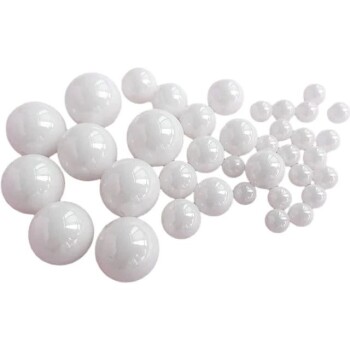
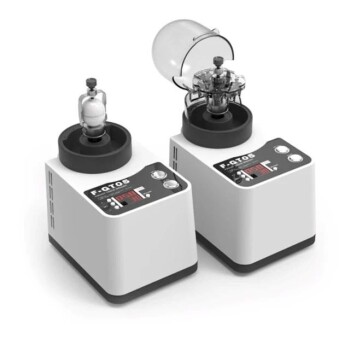
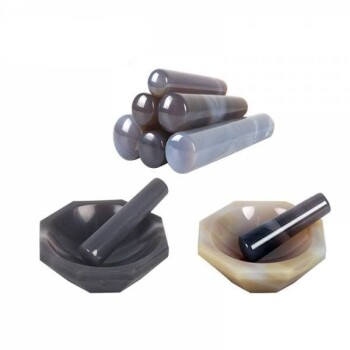
Zirconia grinding balls are the preferred media for processing Ag-SnO2-Y2O3 powders because they offer a critical balance of high kinetic energy and exceptional chemical purity. By combining high density with superior wear resistance, zirconia media effectively crush and embed powder particles without introducing metallic contaminants that would degrade the material's performance in electrical applications.
The selection of zirconia is driven by the strict need to maintain the purity of electrical contact materials. It provides the physical force necessary for mechanical alloying while eliminating the risk of iron or chromium contamination associated with steel grinding media.
The Imperative of Material Purity
Preventing Metallic Contamination
For Ag-SnO2-Y2O3 powders, which are used to manufacture electrical contact materials, purity is paramount. Even trace amounts of metallic impurities, such as iron from steel balls, can drastically alter the material's conductivity and arc resistance. Zirconia is chemically stable, ensuring the powder remains free of external metallic pollutants.
Chemical Stability During Processing
High-energy ball milling often involves long processing cycles that generate significant heat and friction. Zirconia remains chemically inert under these conditions. This prevents unwanted chemical reactions between the grinding media and the active powders, preserving the specific stoichiometry of the Ag-SnO2-Y2O3 mixture.
Mechanical Efficiency in High-Energy Milling
High Density for Kinetic Impact
Effective milling requires sufficient kinetic energy to fracture hard particles and cold-weld ductile ones. Zirconia balls possess high density, which translates to higher impact momentum compared to lower-density ceramics. This weight allows the media to generate the force needed to "crush and embed" the powder particles into a composite structure.
Superior Wear Resistance
The milling process subjects grinding media to intense, repetitive impacts. Zirconia is characterized by high hardness and toughness, allowing it to withstand this environment with negligible wear. This durability ensures that the size and shape of the grinding media remain consistent throughout the process, maintaining stable milling efficiency.
Understanding the Trade-offs
Cost vs. Purity
While zirconia offers superior performance for this specific application, it is generally more expensive than common stainless steel media. However, for high-performance electrical contacts, the cost is justified by the prevention of failure-inducing contamination.
Density Considerations
Zirconia is denser than most ceramics but less dense than tungsten carbide. While tungsten carbide offers higher impact energy, it poses a severe contamination risk. Zirconia represents the optimal compromise: dense enough to mill effectively, yet inert enough to protect the chemistry of the silver-tin oxide system.
Making the Right Choice for Your Goal
When configuring a ball milling process for sensitive composites like Ag-SnO2-Y2O3, consider your specific performance targets:
- If your primary focus is electrical conductivity: Prioritize zirconia media to strictly eliminate iron contamination that acts as a scattering center for electrons.
- If your primary focus is mechanical alloying efficiency: Rely on the high density of zirconia to provide the necessary impact energy for embedding Y2O3 particles into the silver matrix.
- If your primary focus is equipment longevity: Leverage the wear resistance of zirconia to reduce media replacement frequency and prevent abrasive wear on the jar lining.
Zirconia remains the definitive choice for producing high-reliability electrical contact materials where purity cannot be compromised.
Summary Table:
| Feature | Zirconia (YSZ) | Stainless Steel | Alumina |
|---|---|---|---|
| Contamination Risk | Extremely Low (Inert) | High (Metallic) | Low |
| Density (g/cm³) | ~6.0 (High Impact) | ~7.8 (High Impact) | ~3.9 (Moderate) |
| Wear Resistance | Exceptional | Moderate | High |
| Application Suitability | High-purity electrical contacts | General mechanical alloying | Basic chemical processing |
Optimize Your Material Processing with KINTEK
Precision in high-energy ball milling begins with the right media. KINTEK specializes in high-performance laboratory equipment and consumables, offering a premium selection of zirconia grinding media, crushing and milling systems, and high-temperature furnaces designed to meet the rigorous demands of battery research and electrical contact material production.
Whether you require high-density zirconia balls to eliminate contamination or advanced muffle and vacuum furnaces for sintering, our expert team is ready to support your lab's efficiency and material integrity.
Ready to elevate your research? Contact KINTEK Today to discuss our full range of planetary ball mills, hydraulic presses, and high-purity ceramic consumables.
Related Products
- Laboratory Jar Ball Mill with Alumina Zirconia Grinding Jar and Balls
- Precision Machined Zirconia Ceramic Ball for Engineering Advanced Fine Ceramics
- Laboratory Jar Mill with Agate Grinding Jar and Balls
- Laboratory Ball Mill Jar Mill with Metal Alloy Grinding Jar and Balls
- Laboratory Micro Tissue Grinding Mill Grinder
People Also Ask
- What are the primary functions of using a ball mill for BZCY72 powder? Achieve High Purity and Enhanced Sintering
- In what way does a laboratory ball mill affect material properties when modifying PHBV/pulp fiber composites?
- Why is a laboratory ball mill required for ultra-fine fly ash? Unlock Nano-Scale Adsorption Power
- What is the function of a laboratory ball mill in the preparation of AMMCs? Optimize Dispersion & Grain Refinement
- What is the function of a laboratory ball mill in the pretreatment of waste tire char (WTC)? Optimize Material Reactivity