Knowledge What role does a laboratory crushing mill play in biomass pre-treatment? Unlock Lignocellulose Potential
Author avatar

Tech Team · Kintek Solution

Updated 21 hours ago

What role does a laboratory crushing mill play in biomass pre-treatment? Unlock Lignocellulose Potential


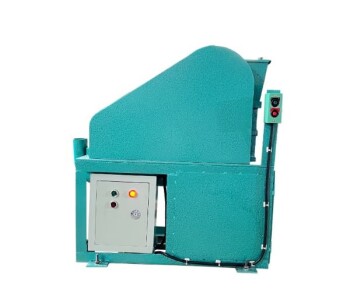
The laboratory crushing mill acts as the primary mechanical catalyst in the pre-treatment of biomass. It utilizes physical shearing and impact forces to pulverize raw agricultural residues, such as wheat and corn straw, into a uniform particle size of approximately 1 mm. This mechanical reduction is not merely cosmetic; it fundamentally alters the physical structure of the biomass to enable successful downstream processing.

By significantly increasing the specific surface area of the material, the crushing mill reduces the natural recalcitrance of lignocellulose. This structural opening allows chemical reagents to penetrate internal fibers effectively, ensuring the success of subsequent treatments.

The Mechanics of Biomass Preparation

Physical Shearing and Impact

Raw biomass is naturally resistant to chemical breakdown. The crushing mill overcomes this by applying intense mechanical force.

Through shearing and impact, the mill physically disrupts the tough outer structure of straw and stalks. This prepares the material for the chemical phases of bio-processing.

Standardization of Particle Size

To achieve consistent experimental results, random fragmentation is insufficient. The crushing mill targets a specific, uniform particle size.

While the primary target is often around 1 mm, systems can facilitate ranges between 0.43 mm and 1.02 mm. This uniformity is critical for predicting how the material will behave during later stages.

Reducing Lignocellulose Recalcitrance

Increasing Specific Surface Area

The core biological barrier in wheat and corn straw is lignocellulose recalcitrance—the material's natural resistance to degradation.

Crushing the biomass drastically increases its specific surface area. By exposing more surface area per unit of weight, the material becomes much more reactive.

Enhancing Reagent Penetration

Once the surface area is maximized, chemical reagents can access the material's core.

The crushing process ensures that agents used in subsequent steps, such as ammonia treatment, can deeply penetrate the internal fibers. Without this mechanical opening, chemical reactions would remain superficial and inefficient.

Operational Dependencies and Trade-offs

The Necessity of Moisture Control

While the mill handles physical reduction, it relies on proper upstream preparation to function correctly.

According to supplementary data, biomass often requires drying in a laboratory oven (typically at 105 °C) prior to or in conjunction with analysis. Reducing moisture ensures the mill operates on material calculated on a dry basis, which improves experimental accuracy.

Balancing Size and Integrity

Achieving the right particle size is a balancing act.

The goal is to reduce the size enough to expose fibers, but not to pulverize the material so finely that it becomes difficult to handle or process. The 0.43 mm to 1.02 mm range represents the optimal window for balancing surface area with processability.

Making the Right Choice for Your Goal

To maximize the efficacy of your biomass pre-treatment, align your milling strategy with your specific experimental needs:

  • If your primary focus is chemical reactivity: Prioritize achieving a particle size near the lower end of the spectrum (approx. 0.43 mm - 1 mm) to maximize specific surface area and reagent penetration.
  • If your primary focus is experimental accuracy: Ensure the biomass is thoroughly dehydrated in a laboratory oven before final processing to guarantee calculations are based on a consistent dry weight.

Proper mechanical size reduction is the non-negotiable first step in unlocking the chemical potential of biomass.

Summary Table:

Feature Role in Biomass Pre-treatment Impact on Research
Mechanical Force Physical shearing and impact Disrupts tough lignocellulose structure
Size Standardization Target range of 0.43 mm to 1.02 mm Ensures uniform reaction and consistency
Surface Area Drastic increase in specific surface area Maximizes chemical reagent penetration
Material State Processing on a dry basis (via laboratory oven) Guarantees accuracy of dry-weight calculations

Revolutionize Your Biomass Research with KINTEK Precision

Unlock the full potential of your agricultural residues with KINTEK’s high-performance laboratory crushing and milling systems. Our equipment is engineered to overcome lignocellulose recalcitrance, providing the uniform particle size and increased surface area essential for advanced biofuel and chemical analysis.

Beyond sample preparation, KINTEK offers a comprehensive suite of laboratory solutions—from high-temperature furnaces and vacuum systems to high-pressure reactors, autoclaves, and hydraulic presses. Whether you are optimizing battery research or perfecting material synthesis, our premium consumables and equipment ensure precision at every stage.

Ready to elevate your lab's efficiency? Contact us today to discover how KINTEK can provide the tailored solutions your research demands!

References

  1. Lili Jia, Junhua Zhang. Comparison of the Delignifiability and Hydrolysability of Wheat Straw and Corn Stover in Aqueous Ammonia Pretreatment. DOI: 10.15376/biores.8.3.4505-4517

This article is also based on technical information from Kintek Solution Knowledge Base .

Related Products

People Also Ask

Related Products

Laboratory Micro Horizontal Jar Mill for Precision Sample Preparation in Research and Analysis

Laboratory Micro Horizontal Jar Mill for Precision Sample Preparation in Research and Analysis

Discover the Micro Horizontal Jar Mill for precise sample preparation in research and analysis. Ideal for XRD, geology, chemistry, and more.

Laboratory Four-Body Horizontal Jar Mill

Laboratory Four-Body Horizontal Jar Mill

The four-body horizontal tank mill ball mill can be used with four horizontal ball mill tanks with a volume of 3000ml. It is mostly used for mixing and grinding laboratory samples.

Vibrating Disc Mill Small Laboratory Grinding Machine

Vibrating Disc Mill Small Laboratory Grinding Machine

Discover the versatile Vibrating Disc Mill for efficient laboratory grinding. Ideal for geology, metallurgy, biology, and more. Explore now!

Stainless Steel Laboratory Ball Mill for Dry Powder and Liquid with Ceramic Polyurethane Lining

Stainless Steel Laboratory Ball Mill for Dry Powder and Liquid with Ceramic Polyurethane Lining

Discover the versatile stainless steel dry powder/liquid horizontal ball mill with ceramic/polyurethane lining. Ideal for ceramic, chemical, metallurgical, and building materials industries. High grinding efficiency and uniform particle size.

Laboratory Hybrid Tissue Grinding Mill

Laboratory Hybrid Tissue Grinding Mill

KT-MT20 is a versatile laboratory device used for rapid grinding or mixing of small samples, whether dry, wet, or frozen. It comes with two 50ml ball mill jars and various cell wall breaking adapters for biological applications such as DNA/RNA and protein extraction.

Laboratory Single Horizontal Jar Mill

Laboratory Single Horizontal Jar Mill

KT-JM3000 is a mixing and grinding instrument for placing a ball milling tank with a volume of 3000ml or less. It adopts frequency conversion control to realize timing, constant speed, direction change, overload protection and other functions.

Mini Planetary Ball Mill Machine for Laboratory Milling

Mini Planetary Ball Mill Machine for Laboratory Milling

Discover the KT-P400 desktop planetary ball mill, ideal for grinding and mixing small samples in the lab. Enjoy stable performance, long service life, and practicality. Functions include timing and overload protection.

Laboratory Ten-Body Horizontal Jar Mill for Lab Use

Laboratory Ten-Body Horizontal Jar Mill for Lab Use

The Ten-body horizontal jar mill is for 10 ball mill pots (3000ml or less). It has frequency conversion control, rubber roller movement, and PE protective cover.

Laboratory Jar Mill with Agate Grinding Jar and Balls

Laboratory Jar Mill with Agate Grinding Jar and Balls

Grind your materials with ease using Agate Grinding Jars with Balls. Sizes from 50ml to 3000ml, perfect for planetary and vibration mills.

Liquid Nitrogen Cryogenic Grinder Mill Cryomill with Screw Feeder

Liquid Nitrogen Cryogenic Grinder Mill Cryomill with Screw Feeder

Discover the Liquid Nitrogen Cryogenic Pulverizer with Screw Feeder, perfect for fine material processing. Ideal for plastics, rubber, and more. Boost your lab efficiency now!

Lab Vibration Mill

Lab Vibration Mill

Vibration Mill for Efficient Sample Preparation, Suitable for Crushing and Grinding a Variety of Materials with Analytical Precision. Supports Dry / Wet / Cryogenic Grinding and Vacuum/Inert Gas Protection.

High Energy Planetary Ball Mill for Laboratory Horizontal Tank Type Milling Machine

High Energy Planetary Ball Mill for Laboratory Horizontal Tank Type Milling Machine

KT-P4000H uses the unique Y-axis planetary motion trajectory, and utilizes the collision, friction and gravity between the sample and the grinding ball to have a certain anti-sinking ability, which can obtain better grinding or mixing effects and further improve the sample output.

Laboratory Horizontal Planetary Ball Mill Milling Machine

Laboratory Horizontal Planetary Ball Mill Milling Machine

Improve sample uniformity with our Horizontal Planetary Ball Mills. KT-P400H reduces sample deposition and KT-P400E has multi-directional capabilities. Safe, convenient and efficient with overload protection.

High Energy Planetary Ball Mill Milling Machine for Laboratory

High Energy Planetary Ball Mill Milling Machine for Laboratory

Experience fast and effective sample processing with the F-P2000 high-energy planetary ball mill. This versatile equipment offers precise control and excellent grinding capabilities. Perfect for laboratories, it features multiple grinding bowls for simultaneous testing and high output. Achieve optimal results with its ergonomic design, compact structure, and advanced features. Ideal for a wide range of materials, it ensures consistent particle size reduction and low maintenance.

High Energy Planetary Ball Mill Milling Machine for Laboratory

High Energy Planetary Ball Mill Milling Machine for Laboratory

The biggest feature is that the high energy planetary ball mill can not only perform fast and effective grinding, but also has good crushing ability

Laboratory Planetary Ball Mill Rotating Ball Milling Machine

Laboratory Planetary Ball Mill Rotating Ball Milling Machine

KT-P400E is a desktop multi-directional planetary ball mill with unique grinding and mixing capabilities. It offers continuous and intermittent operation, timing, and overload protection, making it ideal for various applications.

High-Energy Omnidirectional Planetary Ball Mill Machine for Laboratory

High-Energy Omnidirectional Planetary Ball Mill Machine for Laboratory

The KT-P2000E is a new product derived from the vertical high-energy planetary ball mill with a 360°rotation function. The product not only has the characteristics of the vertical high-energy ball mill, but also has a unique 360°rotation function for the planetary body.

High Energy Vibratory Laboratory Ball Mill Double Tank Type

High Energy Vibratory Laboratory Ball Mill Double Tank Type

High-energy vibration ball mill is a small desktop laboratory grinding instrument. It uses 1700r/min high-frequency three-dimensional vibration to make the sample achieve the result of grinding or mixing.

Disc Cup Vibrating Mill Multi-Platform for Lab

Disc Cup Vibrating Mill Multi-Platform for Lab

The multi-platform vibrating disc mill is suitable for non-destructive crushing and fine grinding of samples with large particle sizes. It is suitable for crushing and grinding applications of medium-hard, high-hard, brittle, fibrous, and elastic materials.

High Energy Vibratory Laboratory Ball Mill Grinding Mill Single Tank Type

High Energy Vibratory Laboratory Ball Mill Grinding Mill Single Tank Type

High-energy vibration ball mill is a small desktop laboratory grinding instrument.It can be ball-milled or mixed with different particle sizes and materials by dry and wet methods.


Leave Your Message