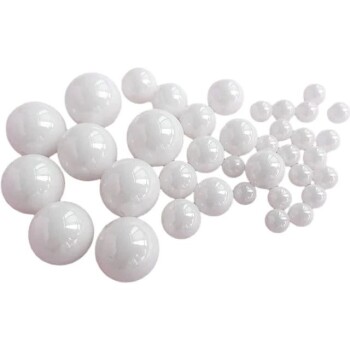
The preferred choice for preparing LLZ solid-state electrolytes is undoubtedly zirconia (zirconium oxide) grinding media. This preference is driven by two non-negotiable requirements: the physical ability to crush extremely hard garnet-type oxides and the chemical necessity to maintain absolute purity. Unlike softer or metallic options, zirconia delivers high-energy impact without contaminating the delicate electrolyte structure.
Core Insight: The success of LLZ preparation relies on minimizing "parasitic" variables. Zirconia is preferred because it solves the dual challenge of efficiently pulverizing hard oxides while preventing the introduction of metallic impurities that drastically reduce ionic conductivity.
Achieving Efficient Particle Reduction
High Hardness and Density
Processing LLZ (Lithium Lanthanum Zirconate) requires significant mechanical force. Garnet-type oxides are inherently hard materials.
Zirconia balls possess exceptional hardness and high density. This combination generates the high kinetic energy and impact force required to effectively pulverize tough oxide particles during ball milling.
Superior Wear Resistance
Standard grinding media often degrade during the long milling durations required for solid-state electrolytes.
Zirconia offers high wear resistance, meaning the grinding balls retain their size and shape even after hours of high-speed impact. This durability ensures consistent grinding efficiency throughout the entire process.
Preserving Electrochemical Performance
Chemical Inertness
The most critical factor in solid-state electrolyte preparation is purity.
Zirconia is chemically stable and inert. It does not react with the LLZ powder, ensuring that the chemical composition of your synthesized material remains exactly as intended.
Preventing Metallic Contamination
Using stainless steel grinding jars or balls is a common pitfall in material processing.
Stainless steel introduces metallic impurities, such as iron or chromium, into the powder due to abrasive wear. These impurities are disastrous for electrolytes, potentially causing side reactions or short circuits. Zirconia eliminates this risk entirely.
Maintaining Ionic Conductivity
The presence of foreign contaminants interferes with the movement of lithium ions.
By preventing impurity contamination, zirconia preserves the high ionic conductivity of the material. This is essential for the final battery performance, as even trace amounts of metallic wear can compromise the electrical properties of the electrolyte.
The Risk of Alternative Media
The Consequence of Impurities
It is important to understand why alternatives like stainless steel are rejected for this specific application.
While stainless steel is hard, it is not chemically compatible with the stringent purity requirements of LLZTO or sulfide electrolytes. The introduction of metal ions acts as a contaminant that degrades the electrochemical cycling stability of the final cell.
Impact on Tough Impurity Layers
In some variations, such as LLZTO processing, the raw material may have tough impurity layers on the particles.
Zirconia's density provides the necessary kinetic energy to break through these layers. Lighter or softer media would fail to clean the particle surfaces effectively, leading to subpar grain boundary contacts in the sintered ceramic.
Making the Right Choice for Your Goal
To ensure the success of your solid-state electrolyte synthesis, align your media selection with your performance metrics:
- If your primary focus is maximizing ionic conductivity: Select zirconia to eliminate metallic contamination and ensure the material lattice remains pure for optimal ion transport.
- If your primary focus is processing efficiency: Rely on high-density zirconia beads to deliver the intense mechanical impact needed to pulverize hard garnet oxides rapidly.
Summary: Zirconia media are not merely tools for size reduction; they are a critical process control measure that safeguards the purity and performance of high-performance solid-state electrolytes.
Summary Table:
| Feature | Zirconia Grinding Media | Stainless Steel Media | Impact on LLZ Electrolyte |
|---|---|---|---|
| Hardness/Density | Very High | High | Efficiently pulverizes hard garnet-type oxides. |
| Wear Resistance | Superior | Moderate | Prevents particle contamination from media degradation. |
| Chemical Purity | Inert | Risks Metallic Ions | Maintains high ionic conductivity and prevents shorts. |
| Contamination | Negligible | Iron/Chromium trace | Ensures electrochemical stability and lattice integrity. |
Elevate Your Solid-State Battery Research with KINTEK
Precision in material synthesis starts with the right tools. KINTEK specializes in high-performance laboratory equipment designed for the rigorous demands of battery research. From our high-density zirconia grinding media and crushing and milling systems to our high-temperature furnaces and vacuum sintering solutions, we provide the end-to-end support your lab needs to achieve maximum ionic conductivity.
Don't let impurities compromise your electrolyte performance. Contact our technical experts today to discover how our premium laboratory consumables and advanced material processing tools can streamline your workflow and deliver superior LLZ results.
Related Products
- Laboratory Jar Ball Mill with Alumina Zirconia Grinding Jar and Balls
- Precision Machined Zirconia Ceramic Ball for Engineering Advanced Fine Ceramics
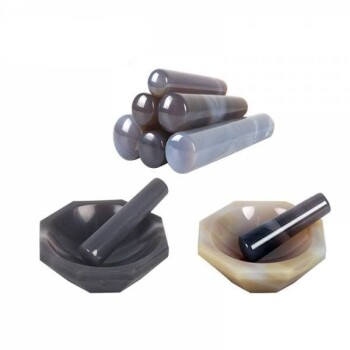
- Laboratory Jar Mill with Agate Grinding Jar and Balls
- Laboratory Ball Mill Jar Mill with Metal Alloy Grinding Jar and Balls
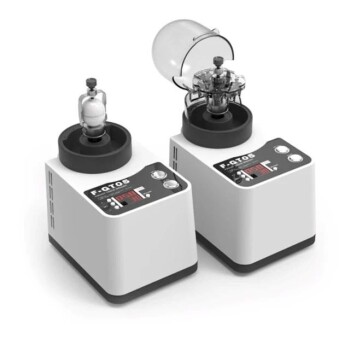
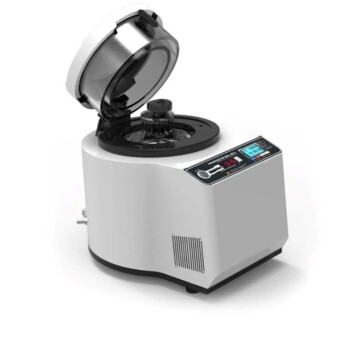
- Laboratory Micro Tissue Grinding Mill Grinder
People Also Ask
- What are the primary functions of using a ball mill for BZCY72 powder? Achieve High Purity and Enhanced Sintering
- In what way does a laboratory ball mill affect material properties when modifying PHBV/pulp fiber composites?
- Why is a laboratory ball mill required for ultra-fine fly ash? Unlock Nano-Scale Adsorption Power
- What is the function of a laboratory ball mill in the preparation of AMMCs? Optimize Dispersion & Grain Refinement
- What is the function of a laboratory ball mill in the pretreatment of waste tire char (WTC)? Optimize Material Reactivity