Knowledge Why is a ball mill used for Fe-Cr-Mn-Mo-N-C composites? Unlock Precision Micro-Scale Homogeneity
Author avatar

Tech Team · Kintek Solution

Updated 1 day ago

Why is a ball mill used for Fe-Cr-Mn-Mo-N-C composites? Unlock Precision Micro-Scale Homogeneity


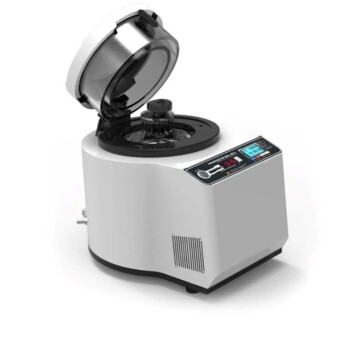
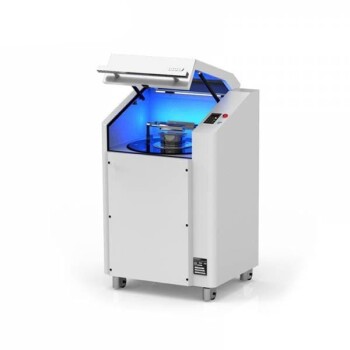
High-energy ball milling serves as the foundational processing step in the preparation of the mixture for Fe-Cr-Mn-Mo-N-C composites. It is utilized to mechanically grind and mix component powders—specifically aluminum-magnesium, iron-chromium oxides, and chromium nitride—to ensure they are distributed with high uniformity at the microscopic scale. This homogeneity is the specific requirement needed to maintain a stable propagation of the self-propagating thermite reaction later in the process.

Core Insight: The use of a ball mill is not merely for mixing; it is a safety and quality control measure. By ensuring microscopic homogeneity, the process prevents localized overheating and ensures the chemical reaction propagates stably rather than erratically.

The Critical Role of Microscopic Uniformity

To understand the necessity of a ball mill, one must look beyond simple blending. The goal is to alter the physical state of the precursor materials to enable a controlled chemical synthesis.

Achieving Homogeneity at the Micro-Scale

Standard mixing methods often leave "pockets" of isolated materials. Ball milling employs high-energy impact to force the aluminum-magnesium powder, iron-chromium oxides, and chromium nitride into a uniform distribution.

This ensures that every microscopic region of the mixture contains the exact stoichiometric ratio of ingredients required for the target alloy.

Preventing Reaction Instabilities

The preparation of these composites often involves a self-propagating thermite reaction, which releases significant heat.

If the mixture is not uniform, the reaction front will propagate unevenly. High uniformity prevents localized overheating, which can damage the material structure, and eliminates areas of incomplete reactions where the raw powder fails to transform into the final composite.

Mechanical Refinement and Reactivity

Beyond uniformity, the ball mill alters the particle structure to enhance the efficiency of the synthesis process.

Breaking Down Agglomerates

Raw powders, particularly those in the micron range, tend to clump together due to surface forces. The ball mill generates intense impact and shear forces that break these agglomerated structures apart.

This dispersion is critical for exposing fresh surfaces on the particles, ensuring they are available for chemical bonding during the subsequent reaction.

Grain Refinement

The mechanical force of the grinding media refines the particles, potentially reducing them to micro-nano scales.

Smaller particles possess a larger surface area relative to their volume. This increased surface area significantly enhances the reactivity of the powder mixture, allowing for a more efficient and complete transformation during the thermite reaction.

Understanding the Trade-offs

While ball milling is essential for this process, it introduces specific variables that must be managed to avoid diminishing the material quality.

Potential for Contamination

The high-energy impact between the grinding balls and the jar walls can introduce impurities into the powder mixture. Material from the milling media (such as tungsten carbide or steel) may wear off and contaminate the Fe-Cr-Mn-Mo-N-C composite, altering its intended chemical composition.

Risk of Cold Welding

In ductile materials like aluminum alloys, excessive milling energy can cause particles to cold-weld together rather than fracturing. This can lead to larger, rather than smaller, particle sizes if the milling time and speed are not carefully optimized.

Making the Right Choice for Your Goal

The parameters you choose for ball milling should depend on the specific defect you are trying to prevent in the final composite.

  • If your primary focus is Reaction Safety: Prioritize milling duration to ensure absolute microscopic homogeneity, as this stabilizes the thermite propagation and prevents dangerous overheating.
  • If your primary focus is Material Density: Focus on high-energy impact settings to break agglomerates and refine particle size, which facilitates better sintering and structural density.

Microscopic uniformity in the precursor mix is the single most important predictor of stability in the final reactive synthesis.

Summary Table:

Feature Impact on Fe-Cr-Mn-Mo-N-C Composites
Micro-Scale Homogeneity Ensures stable propagation of self-propagating thermite reactions.
Particle Refinement Breaks down agglomerates and reduces grain size to micro-nano scales.
Reaction Control Prevents localized overheating and ensures complete chemical transformation.
Surface Reactivity Increases particle surface area, enhancing synthesis efficiency.

Elevate Your Composite Synthesis with KINTEK Precision

Achieving the perfect stoichiometric ratio in Fe-Cr-Mn-Mo-N-C composites requires more than basic mixing—it demands the high-energy precision of KINTEK’s crushing and milling systems.

Whether you are refining powders for thermite reactions or stabilizing complex chemical syntheses, our laboratory solutions provide the reliability you need. From high-energy ball mills and sieving equipment to high-temperature furnaces and hydraulic presses, KINTEK empowers researchers with the tools to eliminate contamination and optimize grain refinement.

Ready to stabilize your material production?
Contact our laboratory equipment experts today to find the ideal milling and heating solutions for your research.

References

  1. Konovalov Maksim, Ovcharenko Pavel. Effect of Carbon on Wear Resistance, Strength and Hardness of a Composite with a Matrix of the Fe-Cr-Mn-Mo-N-C System. DOI: 10.15350/17270529.2023.1.8

This article is also based on technical information from Kintek Solution Knowledge Base .

Related Products

People Also Ask

Related Products

Powerful Plastic Crusher Machine

Powerful Plastic Crusher Machine

KINTEK's powerful plastic crusher machines process 60-1350 KG/H of diverse plastics, ideal for labs and recycling. Durable, efficient, and customizable.

Small Lab Rubber Calendering Machine

Small Lab Rubber Calendering Machine

Small lab rubber calendering machine is used for producing thin, continuous sheets of plastic or rubber materials. It is commonly employed in laboratories, small-scale production facilities, and prototyping environments to create films, coatings, and laminates with precise thickness and surface finish.

Rubber Vulcanizer Vulcanizing Machine Plate Vulcanizing Press for Lab

Rubber Vulcanizer Vulcanizing Machine Plate Vulcanizing Press for Lab

The Plate vulcanizing press is a kind of equipment used in the production of rubber products, mainly used for the vulcanization of rubber products. Vulcanization is a key step in rubber processing.

Lab Internal Rubber Mixer Rubber Kneader Machine for Mixing and Kneading

Lab Internal Rubber Mixer Rubber Kneader Machine for Mixing and Kneading

Lab internal rubber mixer is suitable for mixing, kneading and dispersing various chemical raw materials such as plastics, rubber, synthetic rubber, hot melt adhesive and various low-viscosity materials.

Single Punch Electric Tablet Press Machine TDP Tablet Punching Machine

Single Punch Electric Tablet Press Machine TDP Tablet Punching Machine

The electric tablet punching machine is a laboratory equipment designed for pressing various granular and powdery raw materials into discs and other geometric shapes. It is commonly used in pharmaceutical, healthcare products, food, and other industries for small batch production and processing. The machine is compact, lightweight, and easy to operate, making it suitable for use in clinics, schools, laboratories, and research units.

Single Punch Electric Tablet Press Machine Laboratory Powder Tablet Punching TDP Tablet Press

Single Punch Electric Tablet Press Machine Laboratory Powder Tablet Punching TDP Tablet Press

The single-punch electric tablet press is a laboratory-scale tablet press suitable for corporate laboratories in pharmaceutical, chemical, food, metallurgical and other industries.

Lab Plastic PVC Calender Stretch Film Casting Machine for Film Testing

Lab Plastic PVC Calender Stretch Film Casting Machine for Film Testing

The cast film machine is designed for the molding of polymer cast film products and has multiple processing functions such as casting, extrusion, stretching, and compounding.

Laboratory Test Sieves and Vibratory Sieve Shaker Machine

Laboratory Test Sieves and Vibratory Sieve Shaker Machine

Efficiently process powders, granules, and small blocks with a high-frequency vibration sieve. Control vibration frequency, screen continuously or intermittently, and achieve accurate particle size determination, separation, and classification.

Electric Split Lab Cold Isostatic Press CIP Machine for Cold Isostatic Pressing

Electric Split Lab Cold Isostatic Press CIP Machine for Cold Isostatic Pressing

Split cold isostatic presses are capable of providing higher pressures, making them suitable for testing applications that require high pressure levels.

Metallographic Specimen Mounting Machine for Laboratory Materials and Analysis

Metallographic Specimen Mounting Machine for Laboratory Materials and Analysis

Precision metallographic mounting machines for labs—automated, versatile, and efficient. Ideal for sample prep in research and quality control. Contact KINTEK today!

Single Punch Tablet Press Machine and Mass Production Rotary Tablet Punching Machine for TDP

Single Punch Tablet Press Machine and Mass Production Rotary Tablet Punching Machine for TDP

Rotary tablet punching machine is an automatic rotating and continuous tableting machine. It is mainly used for tablet manufacturing in the pharmaceutical industry, and is also suitable for industrial sectors such as food, chemicals, batteries, electronics, ceramics, etc. to compress granular raw materials into tablets.

Automatic High Temperature Heated Hydraulic Press Machine with Heated Plates for Lab

Automatic High Temperature Heated Hydraulic Press Machine with Heated Plates for Lab

The High Temperature Hot Press is a machine specifically designed for pressing, sintering and processing materials in a high temperature environment. It is capable of operating in the range of hundreds of degrees Celsius to thousands of degrees Celsius for a variety of high temperature process requirements.

Heated Hydraulic Press Machine with Integrated Manual Heated Plates for Lab Use

Heated Hydraulic Press Machine with Integrated Manual Heated Plates for Lab Use

Efficiently process heat-pressing samples with our Integrated Manual Heated Lab Press. With a heating range up to 500°C, it's perfect for various industries.

Lab Blown Film Extrusion Three Layer Co-Extrusion Film Blowing Machine

Lab Blown Film Extrusion Three Layer Co-Extrusion Film Blowing Machine

Lab blown film extrusion is mainly used to detect the feasibility of film blowing of polymer materials and the colloid condition in the materials, as well as the dispersion of colored dispersions, controlled mixtures, and extrudates;

12 Inch 24 Inch High Precision Automatic Diamond Wire Cutting Machine Laboratory Saw Precision Wire EDM Cutting Machine

12 Inch 24 Inch High Precision Automatic Diamond Wire Cutting Machine Laboratory Saw Precision Wire EDM Cutting Machine

The high precision automatic diamond wire cutting machine is a versatile cutting tool that uses a diamond wire to cut through a wide range of materials, including conductive and non-conductive materials, ceramics, glass, rocks, gems, jade, meteorites, monocrystalline silicon, silicon carbide, polycrystalline silicon, refractory bricks, epoxy boards, and ferrite bodies. It is especially suitable for cutting various brittle crystals with high hardness, high value, and easy to break.

Precision Wire Saw Laboratory Cutting Machine with 800mm x 800mm Workbench for Diamond Single Wire Circular Small Cutting

Precision Wire Saw Laboratory Cutting Machine with 800mm x 800mm Workbench for Diamond Single Wire Circular Small Cutting

Diamond wire cutting machines are mainly used for precision cutting of ceramics, crystals, glass, metals, rocks, thermoelectric materials, infrared optical materials, composite materials, biomedical materials and other material analysis samples. Especially suitable for precision cutting of ultra-thin plates with thickness up to 0.2mm.

Small Injection Molding Machine for Lab Use

Small Injection Molding Machine for Lab Use

The small injection molding machinehas fast and stable movements; good controllability and repeatability, super energy saving; the product can be automatically dropped and formed; the machine body is low, convenient for feeding, easy to maintain, and no height restrictions on the installation site.

Laboratory Vibratory Sieve Shaker Machine for Dry and Wet Three-Dimensional Sieving

Laboratory Vibratory Sieve Shaker Machine for Dry and Wet Three-Dimensional Sieving

KT-VD200 can be used for sieving tasks of dry and wet samples in the laboratory. The screening quality is 20g-3kg. The product is designed with a unique mechanical structure and an electromagnetic vibrating body with a vibration frequency of 3000 times per minute.

Automatic Lab Cold Isostatic Press CIP Machine Cold Isostatic Pressing

Automatic Lab Cold Isostatic Press CIP Machine Cold Isostatic Pressing

Efficiently prepare samples with our Automatic Lab Cold Isostatic Press. Widely used in material research, pharmacy, and electronic industries. Provides greater flexibility and control compared to electric CIPs.

Laboratory Vibratory Sieve Shaker Machine Slap Vibrating Sieve

Laboratory Vibratory Sieve Shaker Machine Slap Vibrating Sieve

KT-T200TAP is a slapping and oscillating sieving instrument for laboratory desktop use, with 300 rpm horizontal circular motion and 300 vertical slapping motions to simulate manual sieving to help sample particles pass through better.


Leave Your Message