A constant temperature control system is strictly required to ensure the accuracy and physiological relevance of corrosion data. Because corrosion reaction kinetics fluctuate significantly with temperature changes, maintaining Simulated Body Fluid (SBF) at exactly 37 °C is the only way to reliably replicate the human environment and generate valid medical data for implants.
Electrochemical corrosion testing seeks to predict how implants perform inside the human body. Without precise thermal control at 37 °C, the simulation fails, rendering metrics like corrosion rates and polarization resistance medically irrelevant.
Simulating the Physiological Environment
To determine if a material is safe for implantation, laboratory conditions must mirror the host environment.
Replicating Human Homeostasis
The human body maintains a tightly regulated core temperature of approximately 37 °C.
For materials like 316L stainless steel, testing at room temperature or uncontrolled temperatures would yield data that does not apply to the actual service environment of the implant.
The Role of Simulated Body Fluid (SBF)
SBF is formulated to mimic the ion concentrations of human plasma.
However, the chemical activity within this fluid is temperature-dependent. A high-precision control system ensures the fluid behaves chemically as it would inside a patient, providing a valid baseline for testing.
The Science of Corrosion Kinetics
The primary reason for thermal control lies in the fundamental nature of electrochemical reactions.
Sensitivity to Thermal Variations
Corrosion reaction kinetics are highly sensitive to temperature changes.
Even minor fluctuations in temperature can alter the rate at which an implant degrades. Uncontrolled temperatures introduce variables that make it impossible to isolate the material's inherent performance.
Accuracy of Measured Parameters
Key metrics, such as polarization resistance and corrosion rates, are direct functions of the reaction environment.
To obtain meaningful medical reference values, these parameters must be measured under stable thermal conditions. This ensures the data reflects the material's electrochemical stability rather than environmental noise.
Understanding the Risks of Improper Control
While implementing a high-precision temperature system adds complexity to the experimental setup, the alternative undermines the validity of the research.
The Risk of False Data
Testing without constant temperature control produces unreliable data.
You risk concluding that a material is corrosion-resistant when, at body temperature, it may degrade rapidly. Conversely, you might reject a viable material due to artifacts caused by ambient temperature swings.
Medical Reference Value Integrity
The goal of this testing is to provide data that surgeons and engineers can trust.
If the temperature is not maintained at 37 °C, the resulting values cannot serve as a legitimate medical reference. The correlation between the lab test and the clinical application is broken.
Ensuring Valid Experimental Results
To derive meaningful data for medical implants, strict thermal regulation is non-negotiable.
- If your primary focus is medical validity: Ensure your system maintains SBF at exactly 37 °C to strictly mirror physiological conditions for 316L stainless steel.
- If your primary focus is data precision: Use high-precision control systems to eliminate kinetic variances caused by ambient temperature shifts.
Ultimately, precise temperature control is the essential bridge that translates laboratory experiments into real-world clinical safety.
Summary Table:
| Factor | Requirement | Impact on Testing |
|---|---|---|
| Target Temp | 37 °C (Human Body) | Replicates physiological homeostasis for implants |
| Fluid Media | Simulated Body Fluid (SBF) | Mimics human plasma ion concentrations |
| Reaction Kinetics | High Sensitivity | Fluctuations alter corrosion rates and polarization |
| Data Integrity | Strict Thermal Control | Ensures medically relevant and reproducible results |
Elevate Your Electrochemical Research with KINTEK
Precision is paramount when simulating the human physiological environment. At KINTEK, we specialize in providing high-performance laboratory equipment designed to meet the rigorous demands of medical and material science.
Whether you are conducting electrochemical corrosion studies in SBF or exploring advanced battery research, our comprehensive portfolio offers the tools you need for success, including:
- Electrolytic cells and high-precision electrodes for accurate corrosion metrics.
- High-temperature furnaces (muffle, tube, vacuum) and reactors/autoclaves for advanced material synthesis.
- Cooling solutions (ULT freezers, chillers) and homogenizers to maintain experimental stability.
- Hydraulic presses and crushing systems for specimen preparation.
Don't compromise your data integrity with inconsistent thermal control. Contact KINTEK today to discover how our specialized laboratory solutions can enhance your research accuracy and bring your clinical simulations closer to reality.
References
- Suresh Kolanji, Sivaprakasam Palani. Studies on Nano-Indentation and Corrosion Behavior of Diamond-Like Carbon Coated Stainless Steel (316L). DOI: 10.48048/tis.2024.7677
This article is also based on technical information from Kintek Solution Knowledge Base .
Related Products
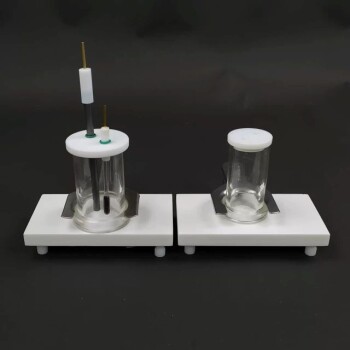
- Flat Corrosion Electrolytic Electrochemical Cell
- PTFE Electrolytic Cell Electrochemical Cell Corrosion-Resistant Sealed and Non-Sealed
- Electrolytic Electrochemical Cell for Coating Evaluation
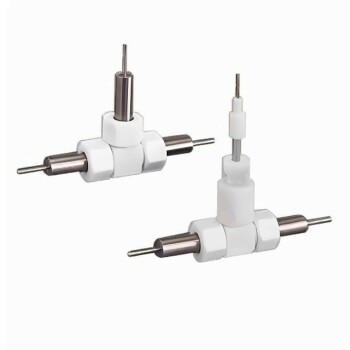
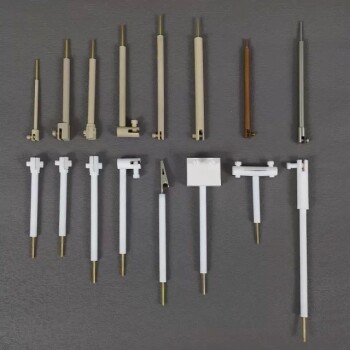
- Sample Support Body for Electrochemical Tests
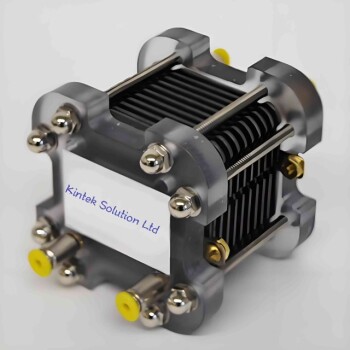
- Customizable Swagelok Type Test Cells for Advanced Battery Research Electrochemical Analysis
People Also Ask
- What is the difference between electrolytic corrosion cell and electrochemical corrosion cell? Understand the Driving Force Behind Corrosion
- How does the design of an electrochemical electrolytic cell influence the coating uniformity? Optimize Your Catalysts
- What are the design advantages of using a flat electrochemical cell? Enhance Corrosion Testing Precision
- What procedures and observations are necessary during an experiment with a flat plate corrosion electrolytic cell? Master the 3-Phase Method
- What is the operating principle of a flat plate corrosion electrolytic cell? A Guide to Controlled Materials Testing