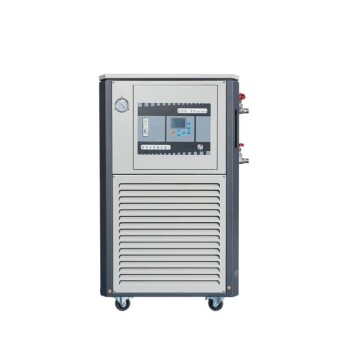
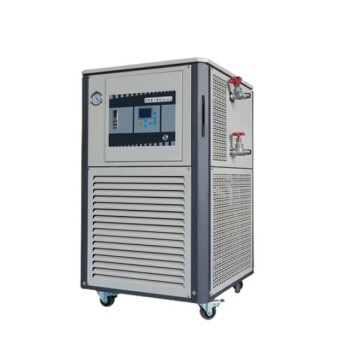
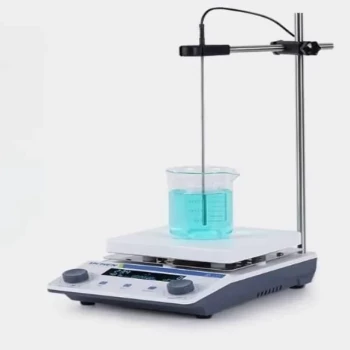
A constant temperature water bath shaker acts as the critical control center for anaerobic digestion experiments involving advanced materials. It serves two simultaneous functions: maintaining a precise thermal environment (typically 40 °C) and providing continuous mechanical oscillation (often at 120 rpm) to drive the biochemical process.
By synchronizing temperature control with physical agitation, this device solves the problem of material settling and ensures uniform interaction between the microbial community and additives like graphene oxide. This stability is the foundation for efficient mass transfer and consistent metabolic activity.
The Critical Role of Thermal Stability
Maintaining Metabolic Consistency
Anaerobic digestion relies on living microbial communities that are highly sensitive to temperature fluctuations. A constant temperature water bath ensures these microorganisms remain in their optimal growth range, such as 40 °C.
Stabilizing Reaction Rates
Temperature directly dictates the speed of biochemical reactions. By eliminating thermal variance, the shaker maintains a stable metabolic rate, ensuring that data collected reflects the performance of the materials rather than environmental anomalies.
The Necessity of Mechanical Agitation
Preventing Material Sedimentation
Graphene oxide (GO) and iron-based materials are solid additives that naturally tend to settle at the bottom of a reactor. Without intervention, this sedimentation isolates the additives from the wastewater and the bacteria.
Ensuring Thorough Contact
Continuous oscillation keeps these heavy materials in suspension. This creates a homogeneous mixture where thorough contact occurs between the GO/iron materials, the microbial community, and the organic matter in the wastewater.
Enhancing Mass Transfer Efficiency
Biological processes are limited by how quickly nutrients and additives can reach the microbes. The agitation reduces diffusion layers, significantly enhancing mass transfer efficiency and allowing the additives to effectively stimulate the digestion process.
Understanding the Operational Trade-offs
The Balance of Agitation Speed
While agitation is necessary, the speed must be carefully calibrated. If the oscillation is too slow, the heavy iron-based materials will settle, rendering them ineffective.
Risks of Excessive Force
Conversely, if the speed is too high, the shear forces can disrupt the microbial flocs or biofilms. The goal is to find the "sweet spot"—such as 120 rpm—that maintains suspension without damaging the biological agents.
Making the Right Choice for Your Experiment
To maximize the efficiency of your anaerobic digestion process, align your equipment settings with your specific objectives:
- If your primary focus is Metabolic Stability: Prioritize the precision of the heating element to prevent thermal shock to the microbial community.
- If your primary focus is Material Efficiency: Ensure the oscillation speed is high enough to prevent the specific sedimentation of your chosen graphene oxide or iron composites.
Effective anaerobic digestion requires a delicate balance between a static environment for growth and a dynamic environment for interaction.
Summary Table:
| Feature | Role in Anaerobic Digestion | Primary Benefit |
|---|---|---|
| Precise Temperature | Maintains optimal 40°C environment | Ensures microbial metabolic consistency |
| Constant Oscillation | Prevents sedimentation of GO & iron | Maximizes material-to-microbe contact |
| Agitation Control | Reduces diffusion layers | Enhances mass transfer and reaction rates |
| Operational Stability | Eliminates environmental anomalies | Provides reproducible and reliable data |
Elevate Your Research with Precision Lab Solutions from KINTEK
Achieve the perfect balance of thermal stability and mechanical agitation in your anaerobic digestion experiments. At KINTEK, we specialize in high-performance laboratory equipment designed to handle advanced materials like graphene oxide and iron composites.
Whether you need reliable constant temperature water bath shakers, homogenizers, or specialized anaerobic digestion reactors, our comprehensive portfolio—ranging from muffle and vacuum furnaces to high-pressure autoclaves and PTFE consumables—is engineered to deliver precision and durability.
Ready to optimize your lab’s efficiency and data accuracy? Contact KINTEK today to find the ideal equipment for your research!
References
- Longyu Wang, Huixia Lan. GO/iron series systems enhancing the pH shock resistance of anaerobic systems for sulfate-containing organic wastewater treatment. DOI: 10.1039/d2ra01616h
This article is also based on technical information from Kintek Solution Knowledge Base .
Related Products
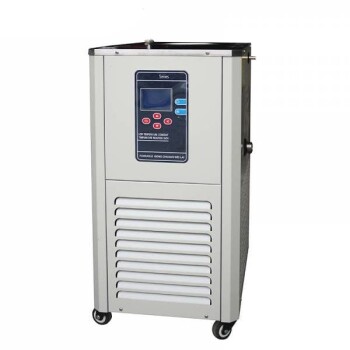
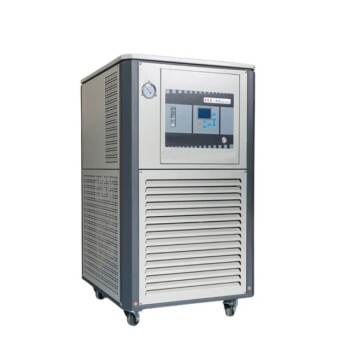
- High Temperature Constant Temperature Heating Circulator Water Bath Chiller Circulator for Reaction Bath
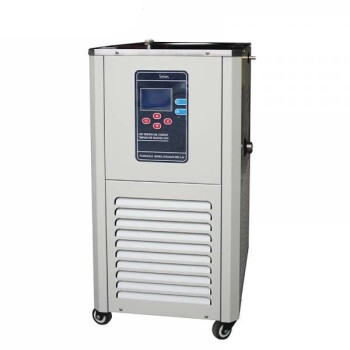
- 50L Chiller Water Bath Cooling Circulator Low Temperature Constant Temperature Reaction Bath
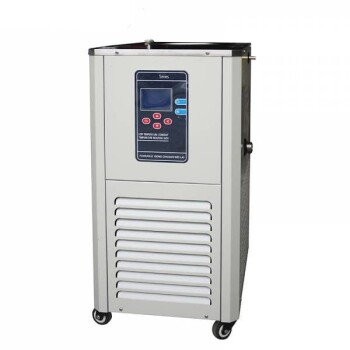
- 40L Chiller Water Bath Cooling Circulator Low Temperature Constant Temperature Reaction Bath
- 30L Chiller Water Bath Cooling Circulator Low Temperature Constant Temperature Reaction Bath
- 20L Heating Chilling Circulator Cooling Water Bath Circulator for High and Low Temperature Constant Temperature Reaction
People Also Ask
- What is the necessity of a circulating water bath in chlorate production? Optimize Yield & Purity with Precision
- How do constant temperature circulators impact weight-loss immersion tests? Ensure Precision in Corrosion Analysis
- How does a constant temperature circulator support the leaching reaction of gold scrap? Optimize Gold Recovery Results
- Why is a constant temperature water bath used for precursor storage in CVD? Achieve Stable Nanocrystalline SiC Deposition
- Why is a high-precision constant temperature water bath necessary for anaerobic digestion? Ensure Success at 37±0.02°C