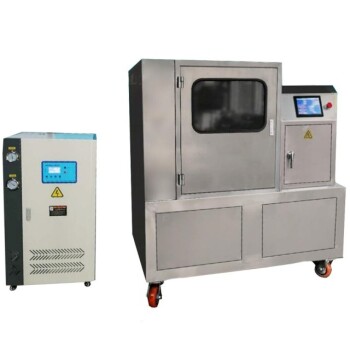
A robust cooling system is mandatory for the Micro-arc Oxidation (MAO) process because the procedure inherently generates significant thermal energy through high-voltage electrochemical reactions. Without active cooling, the electrolyte temperature will rise and fluctuate, causing unstable electrical discharges and resulting in a compromised, low-density coating.
The control of electrolyte temperature is the single most critical variable for maintaining process stability in MAO. By utilizing a circulatory cooling system, manufacturers prevent "over-burning" and ensure the chemical kinetics necessary for a dense, high-quality ceramic layer are preserved.
The Source of Thermal Instability
Electrochemical Heat Generation
The MAO process creates a ceramic coating on aluminum through high-voltage plasma discharges. These intense electrochemical reactions naturally release a vast amount of heat into the electrolyte bath.
The Challenge of Large Components
When treating large-scale aluminum alloys, the issue is magnified. The larger surface area requires higher total energy input, leading to a rapid spike in electrolyte temperature that passive cooling cannot dissipate.
Consequences of Uncontrolled Temperature
Destabilized Micro-arc Discharge
For the coating to form uniformly, the micro-arc discharges on the metal surface must be stable. Fluctuating electrolyte temperatures disrupt this stability, causing erratic discharge patterns that lead to uneven coating thickness.
Coating Density Reduction
The physical properties of the coating, such as hardness and wear resistance, rely on high density. If the temperature varies, the microscopic structure of the coating becomes porous and weak rather than dense and crystalline.
The Risk of Over-burning
When heat accumulates unchecked, the process creates a defect known as "over-burning." This occurs when the localized energy is too high, damaging the coating surface and ruining the finish of the component.
Ensuring Correct Reaction Kinetics
Following the Intended Path
Chemical reactions are dictated by kinetics—the rate and path at which they occur. A specific, stable temperature range is required to ensure the reaction follows the "intended kinetic path."
Preventing Unwanted Phases
If the temperature drifts, the reaction may shift, producing inferior chemical compounds on the surface. Active cooling forces the reaction to remain in the optimal window for creating high-performance ceramic phases.
Understanding the Trade-offs
Equipment Sizing Complexity
Implementing a cooling system introduces complexity regarding sizing. If the industrial chiller is undersized for the tank volume or the component surface area, it will fail to offset the heat generation, leading to temperature "creep" during long processing cycles.
Energy Overhead vs. Quality Assurance
Running high-capacity chillers increases the operational energy cost of the manufacturing line. However, this is a necessary trade-off; skipping this energy expenditure invariably results in rejected parts and material waste due to thermal defects.
Making the Right Choice for Your Goal
To maximize the quality of your large-scale aluminum components, align your cooling strategy with your specific requirements:
- If your primary focus is maximum hardness: Prioritize a cooling system with a high flow rate to keep the electrolyte temperature at the lower end of the operational range, promoting a denser coating structure.
- If your primary focus is surface uniformity: Ensure your chiller has precise feedback controls to eliminate temperature fluctuations, preventing localized over-burning on complex geometries.
Active thermal management is not just a support function; it is the prerequisite for achieving a successful MAO finish.
Summary Table:
| Factor | Impact of Uncontrolled Heat | Benefit of Active Cooling |
|---|---|---|
| Discharge Stability | Erratic micro-arc patterns; uneven coating | Stable, uniform electrical discharge |
| Coating Density | Porous, weak microscopic structure | High hardness and wear resistance |
| Surface Integrity | High risk of localized "over-burning" | Smooth, defect-free ceramic finish |
| Reaction Kinetics | Shift toward inferior chemical phases | Precise control of high-performance phases |
Elevate Your MAO Process with KINTEK Precision
Maintaining thermal stability is the key to high-performance ceramic coatings. KINTEK specializes in advanced laboratory and industrial solutions, providing the high-capacity cooling systems and chillers necessary to manage the intense heat of Micro-arc Oxidation.
Whether you are processing large-scale aluminum alloys or conducting specialized battery research, our comprehensive portfolio—including high-temperature furnaces, electrolytic cells, and precision cooling solutions—ensures your materials achieve the intended kinetic path every time. Don't let temperature fluctuations compromise your quality.
Contact KINTEK today to optimize your laboratory or production line!
References
- Valeria Subbotinа, Safwan Al-Qawabah. Determination of influence of electrolyte composition and impurities on the content of -AL2O3 phase in MАO-coatings on aluminum. DOI: 10.15587/1729-4061.2019.185674
This article is also based on technical information from Kintek Solution Knowledge Base .
Related Products
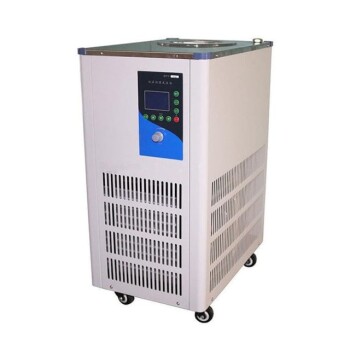
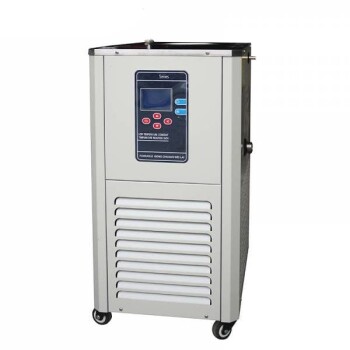
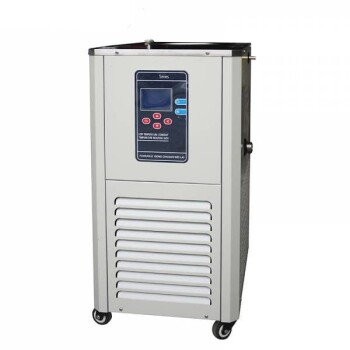
- 100L Chilling Circulator Cooling Water Circulator for Low Temperature Constant Temperature Reaction Bath Water Bath Cooling
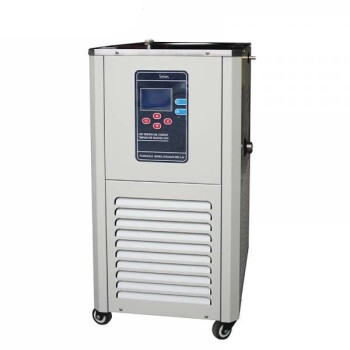
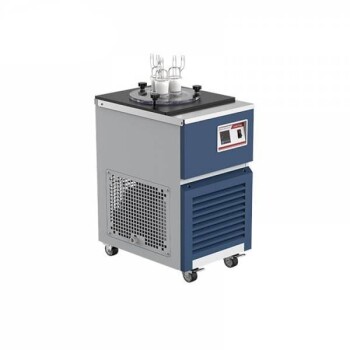
- 20L Chiller Water Bath Cooling Circulator Low Temperature Constant Temperature Reaction Bath
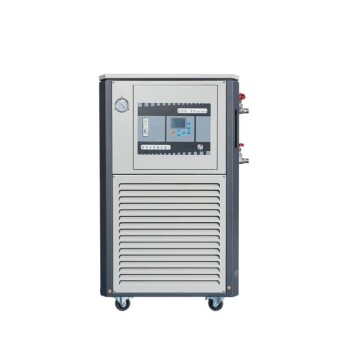
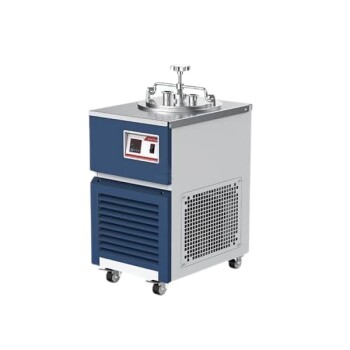
- 10L Heating Chilling Circulator Cooling Water Bath Circulator for High and Low Temperature Constant Temperature Reaction
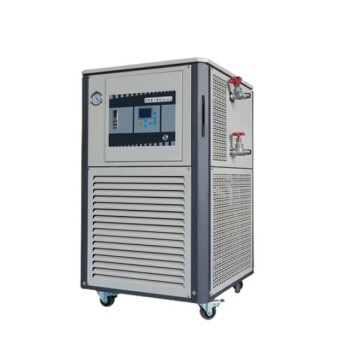
- 80L Chilling Circulator Cooling Water Circulator for Water Bath Cooling and Low Temperature Constant Temperature Reaction Bath
- 5L Heating Chilling Circulator Cooling Water Bath Circulator for High and Low Temperature Constant Temperature Reaction
People Also Ask
- What function does a circulating cooling chiller perform during the gas adsorption isotherm testing of nanoporous carbon?
- Why is a circulating water chiller required for Prussian Blue nanoparticles? Ensure Stability & Batch Reproducibility
- What is the purpose of a cooling circulation water bath system in electrochemical experiments? Enhance Lab Precision
- How does a constant temperature circulator support the leaching reaction of gold scrap? Optimize Gold Recovery Results
- How do constant temperature circulators impact weight-loss immersion tests? Ensure Precision in Corrosion Analysis