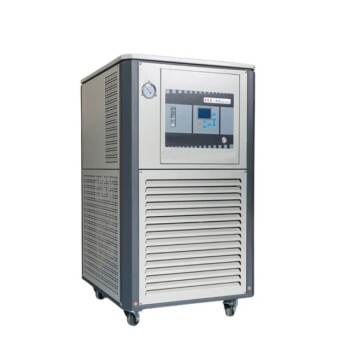
A high-pressure hydrothermal reactor is essential because it creates a sealed, subcritical environment that fundamentally alters the reaction kinetics of aqueous solutions. By elevating temperature and pressure beyond normal limits, it significantly increases precursor solubility, allowing for the precise, repeatable synthesis of mesoporous hydroxyapatite (HA) with controlled crystallinity.
The reactor’s value lies in its ability to decouple temperature from pressure in a closed system. This capability allows you to dictate the material's specific surface area and pore structure, which are the defining metrics for success in catalytic efficiency and biological compatibility.
Creating the Optimal Reaction Environment
The Power of Subcritical Conditions
In a standard open vessel, water boils at 100°C, limiting the energy available for crystal formation. A high-pressure hydrothermal reactor overcomes this by maintaining a liquid phase at much higher temperatures. This subcritical state drastically enhances the solubility of raw materials, facilitating reactions that are thermodynamically impossible at standard pressure.
Ensuring Process Repeatability
Material consistency is the primary challenge in synthesizing hydroxyapatite. The reactor provides a closed, static environment where external variables are eliminated. This ensures that the chemical reaction proceeds exactly the same way in every batch, guaranteeing the high reproducibility required for industrial or medical applications.
Enhancing Crystallinity
The autogenous pressure generated within the vessel does more than just heat the solvent; it physically forces the alignment of the crystal lattice. This pressure promotes in-situ crystallization, resulting in powders with high phase purity and superior structural integrity compared to standard precipitation methods.
Engineering the Microstructure
Controlling Mesoporous Architecture
For applications like catalysis or drug delivery, the empty space within the material is as important as the material itself. By manipulating the reactor's temperature and pressure distribution, you can guide the self-assembly of crystals. This precise control allows you to tune the pore size and distribution, directly optimizing the specific surface area.
Optimizing Dispersibility and Morphology
A common failure point in HA synthesis is particle agglomeration, which ruins performance in bone repair coatings. The hydrothermal environment allows for strict regulation of particle dispersibility and morphology. By adjusting reaction time, you ensure the powder remains fine and uniform rather than clumping into unusable masses.
Facilitating Functional Integration
The high-pressure environment is critical for doping the material with functional groups, such as molybdate anions. The enhanced reactivity forces these components to integrate uniformly into the hydroxyapatite structure. This results in superior multiphase catalytic properties and ion-exchange capabilities that cannot be achieved through surface mixing alone.
Understanding the Trade-offs
Sensitivity to Parameters
While the reactor offers control, it also demands exactness. The phase composition of hydroxyapatite is highly sensitive to the specific combination of temperature and time. Slight deviations in the reactor settings can lead to the formation of unwanted phases or inconsistent pore structures, rendering the batch ineffective for its intended use.
The Necessity of Optimization
The reactor is not a "set it and forget it" tool; it is an instrument of tuning. Achieving the highest specific surface area or ideal biological coating properties requires a rigorous optimization process. You must experimentally determine the precise threshold where the "sweet spot" of pressure and temperature intersects with your specific chemical precursors.
Making the Right Choice for Your Goal
The "best" hydrothermal settings depend entirely on your final application.
- If your primary focus is Multiphase Catalysis: Prioritize conditions that maximize specific surface area and mesoporous porosity to ensure the highest number of active sites for oxidation reactions.
- If your primary focus is Bone Repair: Prioritize conditions that optimize particle dispersibility and phase purity, ensuring the material can be uniformly applied as a biological coating without agglomeration.
The high-pressure hydrothermal reactor turns the synthesis of hydroxyapatite from a game of chance into a precise engineering discipline.
Summary Table:
| Feature | Hydrothermal Reactor Benefit | Impact on Material |
|---|---|---|
| Environment | Subcritical, closed system | Increased solubility & phase purity |
| Kinetics | Decoupled temp/pressure | Controlled crystallinity & morphology |
| Porosity | Tuning of pore distribution | Optimized specific surface area (SSA) |
| Dispersibility | Regulated particle growth | Prevention of agglomeration for coatings |
| Integration | High-energy reactivity | Uniform doping of functional groups |
Elevate Your Material Research with KINTEK Precision
Unlock the full potential of your synthesis with KINTEK’s high-pressure high-pressure reactors and autoclaves. Whether you are engineering mesoporous hydroxyapatite for bone repair or high-performance catalysis, our equipment provides the stability and control required for industrial-grade reproducibility.
Our value to you:
- Comprehensive Range: From dental furnaces and CVD systems to high-pressure autoclaves and rotary furnaces.
- Advanced Solutions: Specialized battery research tools, cooling solutions (ULT freezers), and hydraulic presses.
- Precision Consumables: High-quality PTFE, ceramics, and crucibles to support every stage of your workflow.
Don't leave your material morphology to chance. Contact KINTEK today to find the perfect reactor system for your laboratory's needs.
References
- Nikolay Lumov, Denitsa Yancheva. Saint George the Zograf Monastery, Mount Athos: pigments, binders and other organic materials identification. DOI: 10.21175/rad.abstr.book.2023.19.24
This article is also based on technical information from Kintek Solution Knowledge Base .
Related Products
- Customizable Laboratory High Temperature High Pressure Reactors for Diverse Scientific Applications
- High Pressure Laboratory Autoclave Reactor for Hydrothermal Synthesis
- Customizable High Pressure Reactors for Advanced Scientific and Industrial Applications
- Stainless High Pressure Autoclave Reactor Laboratory Pressure Reactor
- Mini SS High Pressure Autoclave Reactor for Laboratory Use
People Also Ask
- How do high-pressure and high-temperature reactors ensure the effective treatment of lignocellulosic wastewater in WAO?
- What equipment is required for high-pressure high-temperature reactions? Master Extreme Chemistry Safely
- How do you control high pressure in a reactor? A Guide to Safe & Stable Operation
- How does initial oxygen pressure affect the wet oxidation of pharmaceutical sludge? Master Your Oxidation Depth
- Why is argon better than nitrogen for inert atmosphere? Ensure Absolute Reactivity & Stability