A high-pressure nitrogen environment is critical because it serves a dual function as both a necessary reactant and a thermodynamic stabilizer. Specifically, maintaining a pressure of 1 to 3 MPa prevents the thermal decomposition of the silicon oxynitride ($Si_2N_2O$) phase while regulating chemical activity to suppress the formation of unwanted byproducts like silicon nitride ($Si_3N_4$).
Core Insight Achieving a pure $Si_2N_2O$ matrix requires navigating a narrow thermodynamic window. High nitrogen pressure effectively locks the material into the desired phase, preventing it from breaking down at sintering temperatures and stopping competitive reactions that would otherwise produce pure silicon nitride.
The Dual Role of Nitrogen Pressure
Regulating Chemical Activity
Nitrogen is not merely a passive atmosphere in this process; it is an active reactant. The specific pressure range of 1 to 3 MPa dictates the nitrogen chemical activity within the reactor. This precise level of activity is required to drive the synthesis reaction toward the correct stoichiometry for silicon oxynitride.
Suppressing Thermal Decomposition
Synthesizing ceramic matrices requires high temperatures, which introduces the risk of material degradation. $Si_2N_2O$ is prone to thermal decomposition when exposed to these elevated temperatures at standard pressures. The application of high pressure suppresses this decomposition, effectively extending the thermal stability range of the ceramic matrix.
Managing Competitive Phases
Balancing $Si_3N_4$ and $Si_2N_2O$
The synthesis environment creates a competitive landscape between forming silicon nitride ($Si_3N_4$) and silicon oxynitride ($Si_2N_2O$). Without intervention, the thermodynamic conditions might favor the formation of the nitride phase. The high-pressure nitrogen environment acts as a lever to manage this competition, steering the reaction path to favor the oxynitride phase.
Controlling Final Phase Composition
Precision is key to material performance. By adjusting the nitrogen pressure, you directly influence the final phase composition of the matrix. Maintaining the pressure within the 1 to 3 MPa window ensures the final product retains a high content of $Si_2N_2O$, rather than a mixture of degradation products or competitive phases.
Understanding the Trade-offs
The Risk of Incorrect Pressure Settings
While high pressure is necessary, it must be carefully calibrated. Deviating from the optimal pressure window compromises the phase purity.
Consequences of Low Pressure
If the pressure drops below the required threshold, the primary risk is thermal instability. The $Si_2N_2O$ matrix may begin to decompose, leading to structural weaknesses or the loss of the desired ceramic properties.
Consequences of Unregulated Activity
If the nitrogen chemical activity is not properly regulated via pressure, the system may revert to forming $Si_3N_4$. This results in a matrix with different mechanical and thermal properties than intended, potentially failing to meet application specifications.
Optimizing Synthesis Parameters
To achieve a high-quality silicon oxynitride matrix, you must view pressure as a variable for phase control, not just safety.
- If your primary focus is Phase Purity: Strictly maintain pressure to modulate nitrogen activity, preventing the kinetic favorability of silicon nitride ($Si_3N_4$).
- If your primary focus is Thermal Stability: Ensure pressure remains consistently high (up to 3 MPa) to mechanically and thermodynamically suppress the decomposition of $Si_2N_2O$ at peak temperatures.
By treating nitrogen pressure as a precise chemical control lever, you ensure the successful synthesis of a robust $Si_2N_2O$ matrix.
Summary Table:
| Factor | Role in Si2N2O Synthesis | Impact of Incorrect Pressure |
|---|---|---|
| Nitrogen Activity | Drives reaction toward correct stoichiometry | Leads to unwanted Si3N4 (Silicon Nitride) phase |
| Thermal Stability | Suppresses decomposition at high temperatures | Structural weakness due to material degradation |
| Phase Control | Navigates the narrow thermodynamic window | Impure matrix with inconsistent mechanical properties |
Elevate Your Advanced Ceramic Research with KINTEK
Precision in pressure and temperature is the key to mastering $Si_2N_2O$ synthesis. KINTEK provides the specialized equipment needed to maintain stable, high-pressure environments for the most demanding material science applications.
Whether you require high-temperature high-pressure reactors and autoclaves for precise phase control, or advanced muffle and vacuum furnaces for sintering, our comprehensive portfolio is designed to meet the rigorous standards of laboratory and industrial research.
Our Expertise Includes:
- High-Pressure Solutions: Specialized reactors and autoclaves for stable chemical activity.
- Thermal Processing: A wide range of furnaces (CVD, PECVD, Induction) for exact temperature regulation.
- Sample Preparation: Precision crushing, milling, and hydraulic presses for uniform matrices.
Contact KINTEK today to discover how our high-performance laboratory solutions can enhance your synthesis outcomes and ensure material purity.
References
- Brice Taillet, F. Teyssandier. Densification of Ceramic Matrix Composite Preforms by Si2N2O Formed by Reaction of Si with SiO2 under High Nitrogen Pressure. Part 1: Materials Synthesis. DOI: 10.3390/jcs5070178
This article is also based on technical information from Kintek Solution Knowledge Base .
Related Products
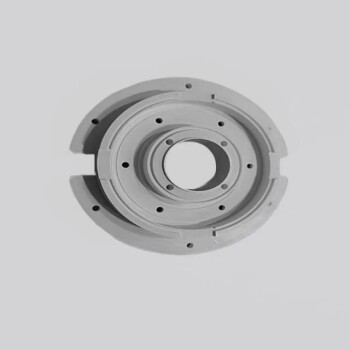
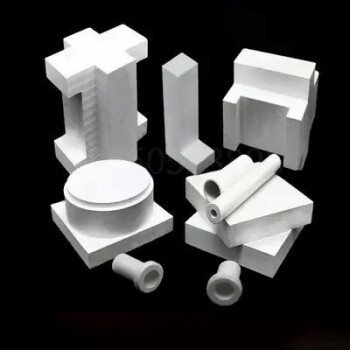
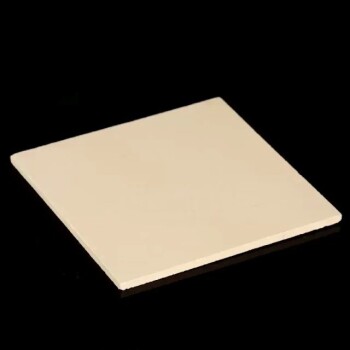
- Precision Machined Silicon Nitride (SiN) Ceramic Sheet for Engineering Advanced Fine Ceramics
- Silicon Carbide (SIC) Ceramic Plate for Engineering Advanced Fine Ceramics
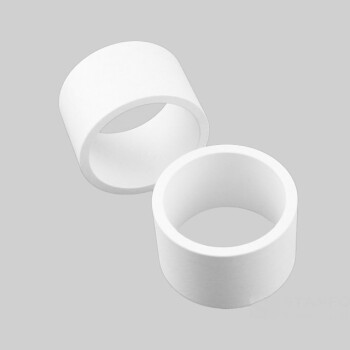
- Hexagonal Boron Nitride HBN Ceramic Ring
- Boron Nitride (BN) Ceramic Plate
- Conductive Boron Nitride BN Ceramics Composite for Advanced Applications
People Also Ask
- What are the methods of high temperature ceramic? Master the 3-Stage Process for Durable Components
- What are pure silicon sputtering targets? Precision Source for High-Performance Thin Films
- Can silicon be sputtered? A Guide to RF & DC Methods for Thin Film Deposition
- What is the most commonly used in semiconductors? Discover Why Silicon Dominates Modern Electronics
- Which is the most preferred material for manufacturing of a semiconductor? Silicon's Dominance Explained