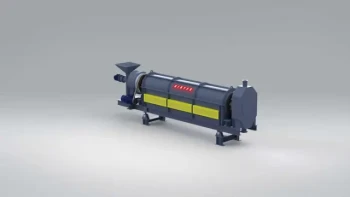
A high-pressure reactor is the fundamental enabler of hydrothermal carbonization (HTC) because it maintains water in a liquid, subcritical state at temperatures significantly above its boiling point (typically 130°C to 250°C). By sealing the system and utilizing autogenous (self-generated) pressure, the reactor prevents water from vaporizing, allowing it to function as a powerful solvent and reaction medium that converts wet biomass directly into hydrochar.
The reactor's pressure enables the creation of "subcritical water," a state that significantly alters water's chemical properties to accelerate the breakdown of biomass. This eliminates the need for energy-intensive pre-drying and produces carbon materials with high energy density and superior dehydration characteristics.
Creating the Subcritical Environment
Maintaining Liquid State at High Temperatures
The primary function of the high-pressure reactor is to suppress the phase change of water. Under normal atmospheric conditions, water boils at 100°C; however, the sealed reactor allows temperatures to reach 130°C to 250°C while keeping water in a liquid phase.
Enhancing Chemical Reactivity
In this pressurized, subcritical state, the properties of water change drastically. The reactor environment increases the ion product of water, allowing it to act as an acid-base catalytic medium. This eliminates the need for external catalysts to drive the chemical transformation of biomass.
Optimization of Solvation Capacity
The high pressure increases the density of the water, enhancing its solvation capacity. This allows the water to penetrate the biomass structure more effectively, facilitating the rapid decomposition of organic components.
Mechanism of Biomass Conversion
Hydrolysis and Depolymerization
The pressurized environment facilitates hydrolysis, where water breaks down complex biomass macromolecules, such as polysaccharides, into simpler monosaccharides. This is the first critical step in converting raw organic matter into a carbon precursor.
Dehydration and Decarboxylation
Once the macromolecules are broken down, the reactor's conditions drive dehydration and decarboxylation reactions. These processes remove oxygen and hydrogen (in the form of water and carbon dioxide) from the biomass, significantly increasing the carbon content of the final product.
Condensation and Polymerization
The final stage facilitated by the reactor is the condensation and polymerization of the intermediates. This reforms the carbon into spherical, porous structures known as hydrochar, which possess high heating values and distinct morphological properties.
Operational and Material Advantages
Processing High-Moisture Feedstocks
Because the reactor uses water as the reaction medium, it enables the direct processing of wet biomass, such as sludge or animal manure. This avoids the massive energy penalty associated with pre-drying raw materials, making the process highly energy-efficient for wet waste streams.
Superior Product Characteristics
The controlled high-pressure environment promotes the formation of mesoporous structures and oxygen-containing functional groups on the hydrochar surface. This results in a material with excellent adsorption performance (e.g., for heavy metals) and improved combustion characteristics compared to the raw substrate.
Understanding the Trade-offs
Equipment Rigidity Requirements
To safely maintain the necessary conditions, the reactor must be engineered to withstand significant pressures, often ranging from 2 to 10 MPa. This requirement dictates the use of specialized, robust materials and safety seals that can tolerate high saturation vapor pressures.
Reaction Uniformity Challenges
While the reactor aims to ensure thermal uniformity, maintaining a consistent environment inside a sealed, high-pressure vessel is complex. Variations in pressure or temperature can impact the phase composition and morphology of the final product, requiring precise control systems.
Making the Right Choice for Your Goal
When evaluating HTC technology for your specific application, consider which outcome drives your project:
- If your primary focus is Waste-to-Energy: The high-pressure reactor is critical for efficiency, as it allows you to bypass the pre-drying of wet feedstocks like sludge, directly producing a solid fuel with a high heating value.
- If your primary focus is Material Science: The reactor's ability to control subcritical conditions allows you to tune the porosity and surface functional groups of the hydrochar, optimizing it for use as a high-performance adsorbent or catalyst.
By leveraging the unique physics of high-pressure subcritical water, you transform a disposal problem into a resource recovery opportunity.
Summary Table:
| Feature | Impact on HTC Process |
|---|---|
| Subcritical Water | Keeps water liquid at 130°C–250°C, acting as a reactive solvent. |
| Auto-catalysis | Increased ion product allows water to act as an acid-base catalyst. |
| Wet Feedstock Processing | Eliminates the need for energy-intensive pre-drying of sludge or manure. |
| Chemical Reactions | Facilitates hydrolysis, dehydration, and decarboxylation for carbon enrichment. |
| Pressure Range | Operates at 2–10 MPa to ensure safe and consistent biomass conversion. |
Elevate Your Biomass Research with KINTEK Precision
Transition from waste disposal to resource recovery with KINTEK’s premium high-temperature high-pressure reactors and autoclaves. Specifically engineered for hydrothermal carbonization (HTC), our reactors provide the precise control and structural integrity required to maintain subcritical water states, ensuring superior hydrochar morphology and high energy density.
Whether you are focused on Waste-to-Energy optimization or Material Science (adsorbents and catalysts), KINTEK offers a comprehensive range of laboratory solutions, including:
- High-Pressure Reactors & Autoclaves for biomass conversion.
- High-Temperature Furnaces (Muffle, Tube, Vacuum) for secondary carbonization.
- Crushing & Milling Systems for feedstock preparation.
- Hydraulic Presses for pelletizing your final products.
Ready to optimize your carbonization process? Contact us today to find the perfect equipment solution for your lab!
References
- Huijuan Wang, Xiqiang Zhao. Applications of Biochar in Fuel and Feedstock Substitution: A Review. DOI: 10.3390/en18174511
This article is also based on technical information from Kintek Solution Knowledge Base .
Related Products
- Customizable Laboratory High Temperature High Pressure Reactors for Diverse Scientific Applications
- High Pressure Laboratory Autoclave Reactor for Hydrothermal Synthesis
- Customizable High Pressure Reactors for Advanced Scientific and Industrial Applications
- Stainless High Pressure Autoclave Reactor Laboratory Pressure Reactor
- Mini SS High Pressure Autoclave Reactor for Laboratory Use
People Also Ask
- How do high-pressure and high-temperature reactors ensure the effective treatment of lignocellulosic wastewater in WAO?
- What equipment is required for high-pressure high-temperature reactions? Master Extreme Chemistry Safely
- How do you control high pressure in a reactor? A Guide to Safe & Stable Operation
- Why is argon better than nitrogen for inert atmosphere? Ensure Absolute Reactivity & Stability
- How does initial oxygen pressure affect the wet oxidation of pharmaceutical sludge? Master Your Oxidation Depth