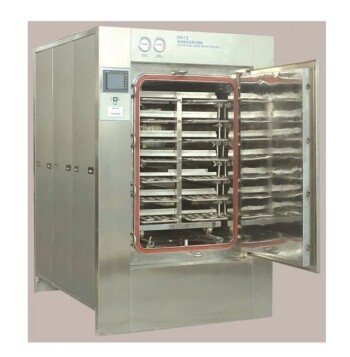
A high-pressure steam autoclave is essential because it creates a closed, pressurized environment that forces chemical agents into the deepest parts of the fiber structure. While standard heating provides temperature, the autoclave generates sustained pressure (such as 1.2 bar) which drives the dilute acid solution through the dense, lignin-wrapped exterior of the biomass, ensuring the reaction occurs throughout the entire material rather than just on the surface.
The autoclave provides the necessary thermodynamic conditions to overcome the "structural recalcitrance" of biomass. By coupling high temperature with high pressure, it enables the acid to disrupt the crystalline structure of the fiber, facilitating the release of fermentable sugars that would otherwise remain inaccessible.
Overcoming Biomass Resistance
Penetrating the Lignin Barrier
Biomass fibers are naturally resistant to degradation. They possess a dense structure "wrapped" in lignin, which acts as a protective shield against chemical attacks.
Standard atmospheric heating often fails to breach this shield effectively. The high-pressure environment of the autoclave is required to physically force the dilute acid solution into this dense matrix.
The Concept of Thermochemical Coupling
The autoclave creates a synergy known as thermochemical coupling. This is the combined effect of thermal energy and chemical action working in unison.
Under high pressure, the pretreatment solution penetrates deep into the lignocellulose structure. This access allows the acid to accelerate the dissolution of hemicellulose and the removal of lignin more effectively than chemical action alone.
The Mechanism of Action at 120°C
Providing Activation Energy
Maintaining a constant temperature of 120°C is critical for the reaction kinetics. The autoclave acts as a stable thermal reservoir, providing the necessary activation energy.
This energy is required to disrupt the complex, crystalline structure of the lignocellulose. Without this sustained heat input, the chemical bonds holding the fiber together remain too stable to break efficiently.
Creating an Open Framework
The ultimate goal of this process is to prepare the material for downstream processing. By degrading the lignin and hydrolyzing hemicellulose, the autoclave process significantly reduces the structural rigidity of the biomass.
This creates an open cellulose framework. By exposing the cellulose, the process ensures that subsequent steps, such as enzymatic hydrolysis, can easily convert complex carbohydrates into fermentable monosaccharides like glucose.
Understanding the Trade-offs
Equipment vs. Efficiency
The primary trade-off in using a high-pressure autoclave is the requirement for specialized, robust equipment compared to simple boiling or oven methods.
However, omitting the pressure component often leads to incomplete hydrolysis. Without the pressure to drive penetration, the acid may only react with surface layers, leaving the internal structure of the fiber intact and significantly lowering sugar yields.
Process Control
Using an autoclave introduces the need for precise control over a closed system.
Because the environment is sealed to maintain pressure, monitoring the reaction in real-time is difficult. The parameters (time, temperature, and acid concentration) must be calculated precisely beforehand to prevent "over-cooking" the biomass, which could degrade the desired sugars.
Making the Right Choice for Your Goal
To maximize the efficiency of your pretreatment process, consider your specific objectives:
- If your primary focus is maximizing sugar release: Ensure your autoclave maintains a pressure of at least 1.2 bar to guarantee the acid penetrates the dense lignin wrapping.
- If your primary focus is downstream enzymatic efficiency: Prioritize the stability of the 120°C temperature to ensure the crystalline structure is sufficiently disrupted to create an open framework for enzymes.
The high-pressure autoclave is not just a heating vessel; it is a penetration tool that unlocks the chemical potential of the fiber.
Summary Table:
| Feature | Standard Heating | High-Pressure Autoclave |
|---|---|---|
| Mechanism | Surface-level heating | Deep fiber penetration via pressure |
| Pressure Level | Atmospheric | Typically 1.2 bar or higher |
| Lignin Barrier | Ineffective at breaching | Forces acid through dense matrix |
| Outcome | Incomplete hydrolysis | Open cellulose framework for enzymes |
| Efficiency | Low sugar yield | Maximized fermentable sugar release |
Revolutionize Your Biomass Research with KINTEK
Don’t let structural recalcitrance stall your lab's productivity. KINTEK specializes in precision laboratory equipment designed to handle the rigors of high-temperature, high-pressure research.
Our advanced high-pressure steam autoclaves and reactors provide the exact thermodynamic conditions—stability at 120°C and consistent 1.2+ bar pressure—necessary to transform dense biomass into fermentable sugars. Beyond autoclaves, we offer a full suite of laboratory solutions, including:
- High-temperature furnaces and vacuum systems
- Crushing, milling, and sieving equipment
- Precision hydraulic presses (pellet, hot, isostatic)
- Electrolytic cells and battery research tools
Ready to optimize your pretreatment yields? Contact KINTEK today to find the perfect high-pressure solution for your specific fiber research and laboratory needs.
References
- Kaouther Zaafouri, Moktar Hamdi. Optimization of Hydrothermal and Diluted Acid Pretreatments of Tunisian<i>Luffa cylindrica</i>(L.) Fibers for 2G Bioethanol Production through the Cubic Central Composite Experimental Design CCD: Response Surface Methodology. DOI: 10.1155/2017/9524521
This article is also based on technical information from Kintek Solution Knowledge Base .
Related Products
- Laboratory High Pressure Steam Sterilizer Vertical Autoclave for Lab Department
- Laboratory High Pressure Horizontal Autoclave Steam Sterilizer for Lab Use
- Portable High Pressure Laboratory Autoclave Steam Sterilizer for Lab Use
- Desktop Fast High Pressure Laboratory Autoclave Sterilizer 16L 24L for Lab Use
- Mini SS High Pressure Autoclave Reactor for Laboratory Use
People Also Ask
- What is the role of a laboratory high-pressure autoclave in the conversion of furfural to piperidine? Optimize Yields
- Why is a laboratory high-pressure autoclave sterilizer necessary? Ensure Accuracy in Antibacterial Research
- What function does a high-pressure laboratory autoclave serve in walnut shell pretreatment? Enhance Biomass Reactivity.
- How does a laboratory high-pressure autoclave function to control Mn3O4 morphology? Precision Particle Engineering
- Autoclave's Role in PAA & MA Nanosheet Assembly? Driving High-Pressure Solvothermal Chemical Integration