The fundamental necessity of using a high-temperature constant temperature drying oven is to eliminate all moisture and residual solvents to establish a precise "dry weight." By maintaining the sample at 105°C until the weight stabilizes, you ensure that the measured mass reflects only the solid biomass, which is the absolute baseline required for accurate chemical accounting in subsequent steps.
Reliable quantitative analysis depends entirely on establishing a true mass balance. Drying residues to a constant weight at 105°C removes variables like moisture and solvents, preventing calculation errors that would distort the results of cellulose enrichment and downstream hydrolysis loading.
The Principles of Accurate Biomass Analysis
Achieving Constant Weight
In biomass processing, "weight" is a variable metric if moisture is present. The drying oven is used to heat the residue at 105°C until the sample stops losing weight.
This "constant weight" serves as the definitive signal that the drying process is complete. It confirms that the recorded mass is stable and represents the actual solid matter, rather than a fluctuating combination of solids and liquids.
Effective Solvent Removal
Recovered residues often contain traces of the solvents used during the initial hydrolysis or washing steps.
The high-temperature environment ensures these volatile components are fully evaporated. Removing these solvents is critical not only for weight accuracy but also to prevent potential inhibition or interference in subsequent chemical reactions.
Implications for Downstream Processing
Calculating Substrate Loading
The success of the second step—whether chemical or enzymatic hydrolysis—relies on specific substrate-to-liquid ratios.
To calculate these loading ratios accurately, you must know the exact mass of the dry substrate. If the residue contains hidden moisture, you will unintentionally under-load the reactor, leading to lower-than-expected yields and inefficient process conditions.
Quantifying Cellulose Enrichment
A primary goal of the initial hydrolysis is often to enrich the cellulose content of the residue.
To quantify this enrichment, you must perform a mass balance calculation comparing the input to the output. Without a verified dry weight from the oven, it is impossible to determine the true degree of cellulose enrichment or the efficiency of the initial step.
Understanding the Trade-offs
Time vs. Accuracy
The process of drying to a constant weight is time-consuming, as it requires repeated weighing and heating cycles.
However, skipping this step or shortening the drying time introduces systematic error. While a quick drying cycle saves time, it invariably leads to "wet" data, rendering high-precision mass balance calculations impossible.
Thermal Degradation Risks
While 105°C is the standard for drying, it is an aggressive temperature.
It is selected because it effectively removes water and common solvents. However, strictly adhering to the "constant weight" metric is vital; exceeding the necessary time indefinitely could potentially alter the physical structure of the biomass, though the primary goal remains moisture elimination.
Making the Right Choice for Your Goal
To ensure the integrity of your hydrolysis workflow, consider the following applications:
- If your primary focus is Mass Balance Analysis: Ensure the sample returns to the oven until two consecutive weighings differ by less than a specific negligible margin (constant weight).
- If your primary focus is Process Optimization: Use the dry weight data to precisely calibrate the substrate loading for the second hydrolysis step to maximize reaction efficiency.
Precision in the drying phase is the invisible foundation of accuracy in the hydrolysis phase.
Summary Table:
| Process Metric | Requirement | Impact on Accuracy |
|---|---|---|
| Temperature | 105°C (Constant) | Ensures complete removal of water and volatile solvents |
| Measurement Goal | Constant Weight | Provides a stable baseline for chemical accounting |
| Substrate Loading | Precise Dry Mass | Prevents under-loading and optimizes reaction yields |
| Mass Balance | Verified Input/Output | Quantifies cellulose enrichment and process efficiency |
Elevate Your Biomass Research with KINTEK Precision
In chemical accounting and biomass processing, accuracy begins with the right thermal equipment. KINTEK specializes in high-performance laboratory solutions, providing the precision needed to achieve stable dry weights and reliable mass balances.
Whether you require high-temperature drying ovens for residue processing, high-pressure reactors and autoclaves for downstream hydrolysis, or muffle furnaces and crucibles for ash content analysis, our portfolio is designed to meet the rigorous demands of material science.
Our value to you:
- Comprehensive Equipment Range: From drying and milling to advanced CVD/PECVD systems.
- Reliable Performance: Achieve consistent 105°C stability for critical moisture elimination.
- Expert Support: Specialized tools for battery research, ceramics, and high-pressure reactions.
Contact KINTEK today to optimize your laboratory workflow!
References
- Nicola Di Fidio, Claudia Antonetti. Multi-Step Exploitation of Raw Arundo donax L. for the Selective Synthesis of Second-Generation Sugars by Chemical and Biological Route. DOI: 10.3390/catal10010079
This article is also based on technical information from Kintek Solution Knowledge Base .
Related Products
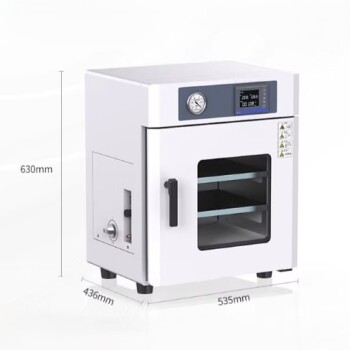
- 23L Laboratory Vacuum Drying Oven
- Laboratory Scientific Electric Heating Blast Drying Oven
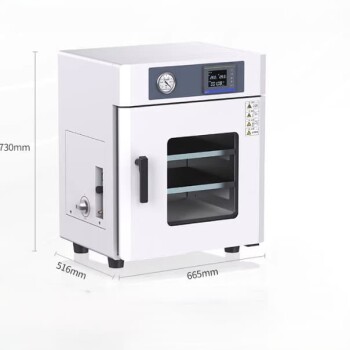
- 56L Vertical Laboratory Vacuum Drying Oven
- High Temperature Muffle Oven Furnace for Laboratory Debinding and Pre Sintering
- 10L Chilling Circulator Cooling Water Bath Low Temperature Constant Temperature Reaction Bath
People Also Ask
- Why is a laboratory vacuum drying oven recommended for rice straw residues? Protect Your Biomass Integrity
- What role does a laboratory vacuum drying oven play in the preparation of modified multi-walled carbon nanotubes?
- What is the importance of using a laboratory vacuum drying oven? Preserving Slow-Release Microcapsule Integrity
- Why is a Laboratory Vacuum Drying Oven recommended for PBAT microspheres? Protect Sensitive Polymer Integrity
- What role does a laboratory vacuum drying oven play in processing nanoparticle powder samples? Protect Sample Integrity