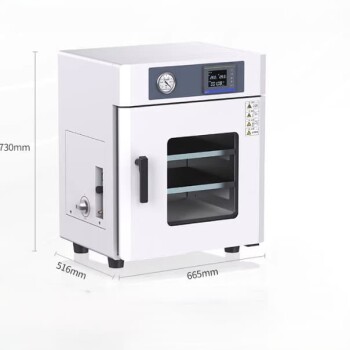
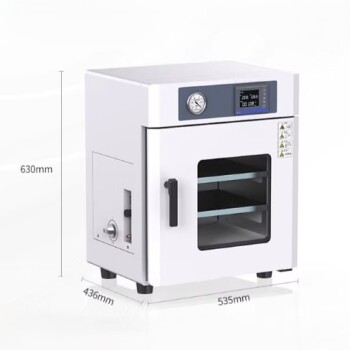
A laboratory drying oven serves as the critical checkpoint for data integrity in biomass liquefaction experiments. Its primary function is to subject solid residues to a constant temperature, typically 105°C, to completely eliminate absorbed moisture and residual solvents. Without this step, the weight of the solid residue would be artificially inflated by trapped liquids, rendering the mass balance calculation—and therefore the conversion rate—inaccurate.
To calculate how much biomass converted into fuel or gas, you must accurately subtract the unreacted solid mass from your starting material. The laboratory drying oven ensures that the "unreacted solid" measurement contains only solids, allowing for a precise calculation of conversion rates, gas yields, and liquid yields via mass balance.
The Principles of Mass Balance in Liquefaction
Defining the Conversion Rate
In biomass liquefaction, the "conversion rate" represents the percentage of raw biomass that successfully reacts to form liquid bio-oil or gas.
You cannot weigh the gas or liquid products directly during the reaction with perfect ease. Instead, you measure what is left behind: the unreacted solid residue.
The Moisture Variable
The fundamental challenge is that solid residue is porous.
After the reaction and washing phases, the residue traps moisture and solvents within its physical structure. If you weigh the residue while it is "wet," you are weighing both the solid and the trapped liquid. This error propagates through the entire mass balance equation, leading to an underestimation of the conversion rate.
Ensuring Accuracy Through Controlled Drying
Elimination of Volatiles
The drying oven provides a stable thermal environment designed to drive off volatiles.
By maintaining a temperature of 105°C, the oven ensures that water (boiling point 100°C) and common volatile washing agents evaporate completely. This leaves behind a "bone-dry" solid, which is the only valid metric for the mass balance calculation.
Achieving Constant Weight
Accuracy in these experiments relies on the concept of "constant weight."
The drying process continues until the mass of the residue stops changing. This indicates that all physically adsorbed water and solvents have been removed from the pores. Only when the weight stabilizes can you confirm that the mass represents the solid structure alone.
Impact on Yield Calculations
The weight of the dried residue is the linchpin for determining other yields.
Once the accurate solid mass is known, it is subtracted from the total input mass. The difference is allocated to liquid and gas products. If the solid weight is wrong, your calculation of total liquid yields and gas yields will be mathematically impossible to correct.
Understanding the Trade-offs
Temperature Sensitivity
While heat is necessary, excessive heat can introduce new errors.
If the oven temperature exceeds the recommended 105°C significantly (approaching 150°C or higher), you risk thermally degrading the residue itself. This would reduce the weight of the solid through combustion or pyrolysis, artificially inflating your calculated conversion rate.
Time vs. Throughput
Proper drying is a time-intensive process, not an instant one.
Achieving a truly moisture-free state often requires keeping samples in the oven for extended periods to ensure deep pore drying. Rushing this stage to increase sample throughput is a common source of experimental error.
Making the Right Choice for Your Goal
To ensure your liquefaction data stands up to peer review, you must align your drying protocol with your specific analytical needs.
- If your primary focus is Precision: Ensure you dry to a constant weight, checking the mass at intervals until it stabilizes, rather than relying on a fixed time duration.
- If your primary focus is Process Efficiency: Standardize the washing solvents used prior to drying; highly volatile solvents evaporate faster in the oven, potentially reducing the required drying time.
Ultimately, the laboratory drying oven is not just a heater; it is the instrument that validates the success of your chemical conversion.
Summary Table:
| Factor | Role in Liquefaction Research | Impact on Data Accuracy |
|---|---|---|
| Moisture Removal | Eliminates trapped solvents/water at 105°C | Prevents artificial inflation of solid residue weight. |
| Constant Weight | Verification that mass no longer changes | Confirms total removal of volatiles from porous solids. |
| Mass Balance | Calculates difference between input and residue | Provides the basis for gas and liquid yield metrics. |
| Temp. Control | Maintains stable thermal environment | Prevents residue degradation or incomplete drying. |
Elevate Your Biomass Research Accuracy with KINTEK
Precision in liquefaction experiments starts with reliable thermal processing. KINTEK specializes in high-performance laboratory equipment, including specialized drying ovens, high-temperature furnaces (muffle, vacuum, and atmosphere), and high-pressure reactors designed for the rigors of biomass conversion.
Whether you need precise moisture removal or advanced crushing and milling systems for sample preparation, our comprehensive portfolio—from PTFE consumables to ULT freezers—is engineered to meet the strictest research standards.
Ready to optimize your lab's conversion rates? Contact KINTEK today to discover how our high-precision equipment can enhance your experimental integrity.
References
- Salih Genel. Hydrothermal liquefaction of <i>Datura stramonium</i> L.: Influence of temperature and heterogeneous catalysts. DOI: 10.1002/ep.14322
This article is also based on technical information from Kintek Solution Knowledge Base .
Related Products
- Laboratory Scientific Electric Heating Blast Drying Oven
- 56L Vertical Laboratory Vacuum Drying Oven
- 23L Laboratory Vacuum Drying Oven
- High Performance Laboratory Freeze Dryer
- High Performance Laboratory Freeze Dryer for Research and Development
People Also Ask
- How does a laboratory electric drying oven contribute to the formation of the initial coating? Expert Insights
- What role does a precision laboratory drying oven play in the synthesis of GO-PANI nanocomposites? Protect Material Integrity
- What role does a laboratory drying oven play in the preparation of zinc oxide nanoparticle precursors?
- What is the necessity of using a laboratory drying oven when processing MoO3/GO composite nanopowders? Find out here.
- What is the role of a laboratory drying oven in cellulose citrate production? Ensure Material Stability & Purity