Knowledge Why is a laboratory electric thermostatic drying oven used at 120°C? Protect Your Fe2O3–CeO2 Nanocomposites
Author avatar

Tech Team · Kintek Solution

Updated 17 hours ago

Why is a laboratory electric thermostatic drying oven used at 120°C? Protect Your Fe2O3–CeO2 Nanocomposites


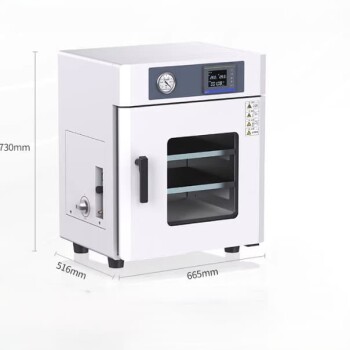
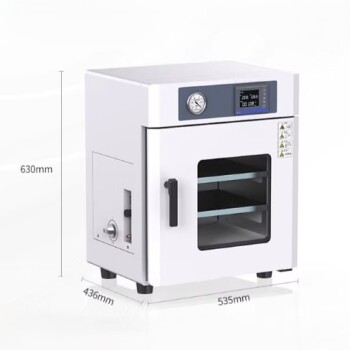
The primary function of the laboratory electric thermostatic drying oven at 120°C is to systematically remove physically adsorbed water and residual solvents trapped within the Fe2O3–CeO2 precursor precipitates. By utilizing controlled hot air circulation, this step prepares the sample for subsequent high-temperature processing without inducing premature chemical changes.

Core Takeaway The transition from wet precursor to finished nanocomposite requires a gradual thermal ramp. The 120°C drying step is a structural safeguard; it eliminates volatile moisture gently to prevent the destructive forces of rapid vaporization—such as pore collapse and agglomeration—during the final calcination phase.

The Role of Controlled Drying in Nanocomposite Synthesis

Elimination of Volatiles

The synthesis of Fe2O3–CeO2 nanocomposites often involves wet chemical methods, resulting in a precursor saturated with physically adsorbed water and solvents.

Directly exposing this wet mass to high calcination temperatures would be catastrophic to the material's structure.

The electric thermostatic oven ensures these volatiles are evaporated at a steady rate, leaving behind a dry solid suitable for high-heat treatment.

The Significance of 120°C

A temperature of 120°C is specifically selected because it sits safely above the boiling point of water (100°C).

This ensures the complete removal of moisture and standard solvents without requiring excessive time.

Simultaneously, this temperature is generally too low to trigger significant phase transformations or sintering, preserving the chemical identity of the precursor until the calcination stage.

Protecting Nanostructure Integrity

Preventing Particle Agglomeration

One of the greatest risks in nanomaterial synthesis is the fusing of distinct particles into larger, irregular masses.

If moisture remains during high-temperature treatment, the surface tension and capillary forces can pull particles together, causing agglomeration.

Drying at 120°C removes the liquid medium that facilitates this clumping, ensuring the nanoparticles remain discrete and well-dispersed.

Avoiding Pore Collapse

Nanocomposites rely heavily on their internal pore structure for performance, particularly in catalytic or sensing applications.

If wet precursors are calcined immediately, trapped water turns to steam instantly, expanding rapidly within the delicate framework.

This violent vaporization can fracture the material, leading to the collapse of the pore structure. The 120°C step mitigates this pressure by removing the water gently before the material hardens.

Understanding the Trade-offs

Temperature Precision is Vital

While 120°C is standard, deviation can lead to sub-optimal results.

If the temperature is set too low (e.g., <100°C), moisture removal will be incomplete, leading to structural damage during calcination.

Conversely, significantly overheating during this "drying" phase could induce premature crystallization or uneven shrinkage, compromising the final morphology.

The Necessity of Circulation

The "thermostatic" and "electric" nature of the oven implies precise control, but air circulation is the hidden variable.

Without adequate hot air circulation, humidity builds up around the sample surface.

This creates a micro-environment that slows drying, potentially leaving moisture trapped deep within the bulk material even if the surface appears dry.

Making the Right Choice for Your Goal

Optimizing Your Heat Treatment Strategy

  • If your primary focus is Surface Area: Ensure the drying phase is strictly maintained at 120°C to prevent pore collapse, maximizing the available active sites.
  • If your primary focus is Particle Size Uniformity: Prioritize the complete removal of solvents to prevent agglomeration, which guarantees a narrower particle size distribution.

Proper drying is not merely a preparatory step; it is the foundation that defines the structural quality of the final Fe2O3–CeO2 nanocomposite.

Summary Table:

Process Objective Temperature Key Benefit for Nanocomposites
Moisture Removal 120°C Eliminates physically adsorbed water and residual solvents.
Structural Integrity 120°C Prevents rapid vaporization that causes pore collapse.
Agglomeration Control 120°C Reduces capillary forces to keep nanoparticles discrete.
Phase Preservation <150°C Avoids premature crystallization or sintering of precursors.

Elevate Your Material Research with KINTEK Precision

Don't let improper drying compromise your nanocomposite synthesis. KINTEK provides industry-leading laboratory electric thermostatic drying ovens and high-temperature furnaces designed for absolute thermal precision. Whether you are synthesizing Fe2O3–CeO2 composites or developing advanced catalysts, our equipment—ranging from vacuum and atmosphere furnaces to crushing systems and hydraulic presses—ensures your materials maintain superior surface area and structural integrity.

Ready to optimize your heat treatment workflow? Contact KINTEK Experts Today to find the perfect laboratory solution tailored to your research goals.

References

  1. Manar S. Radwan, Mohamed R. Shehata. Synergetic Effect of Fe2O3 Doped-CeO2 Nanocomposites Prepared via Different Techniques on Photocatalytic Desulfurization of Heavy Gas Oil. DOI: 10.1007/s13369-023-07633-y

This article is also based on technical information from Kintek Solution Knowledge Base .

Related Products

People Also Ask

Related Products

Laboratory Scientific Electric Heating Blast Drying Oven

Laboratory Scientific Electric Heating Blast Drying Oven

The desktop fast autoclave sterilizer is a compact and reliable device used for rapid sterilization of medical, pharmaceutical, and research items.

High Temperature Muffle Oven Furnace for Laboratory Debinding and Pre Sintering

High Temperature Muffle Oven Furnace for Laboratory Debinding and Pre Sintering

KT-MD High temperature debinding and pre-sintering furnace for ceramic materials with various molding processes. Ideal for electronic components such as MLCC and NFC.

1200℃ Muffle Furnace Oven for Laboratory

1200℃ Muffle Furnace Oven for Laboratory

Upgrade your lab with our 1200℃ Muffle Furnace. Achieve fast, precise heating with Japan alumina fibers and Molybdenum coils. Features TFT touch screen controller for easy programming and data analysis. Order now!

Benchtop Laboratory Freeze Dryer for Lab Use

Benchtop Laboratory Freeze Dryer for Lab Use

Premium benchtop laboratory freeze dryer for lyophilization, preserving samples with ≤ -60°C cooling. Ideal for pharmaceuticals & research.

Vertical Laboratory Tube Furnace

Vertical Laboratory Tube Furnace

Elevate your experiments with our Vertical Tube Furnace. Versatile design allows for operation under various environments and heat treatment applications. Order now for precise results!

5L Heating Chilling Circulator Cooling Water Bath Circulator for High and Low Temperature Constant Temperature Reaction

5L Heating Chilling Circulator Cooling Water Bath Circulator for High and Low Temperature Constant Temperature Reaction

KinTek KCBH 5L Heating Chilling Circulator - Ideal for labs and industrial conditions with multi-functional design and reliable performance.

Custom PTFE Teflon Parts Manufacturer for Culture Dish and Evaporation Dish

Custom PTFE Teflon Parts Manufacturer for Culture Dish and Evaporation Dish

The PTFE culture dish evaporating dish is a versatile laboratory tool known for its chemical resistance and high-temperature stability. PTFE, a fluoropolymer, offers exceptional non-stick properties and durability, making it ideal for various applications in research and industry, including filtration, pyrolysis, and membrane technology.

Vacuum Heat Treat and Pressure Sintering Furnace for High Temperature Applications

Vacuum Heat Treat and Pressure Sintering Furnace for High Temperature Applications

Vacuum pressure sintering furnaces are designed for high temperature hot pressing applications in metal and ceramic sintering. Its advanced features ensure precise temperature control, reliable pressure maintenance, and a robust design for seamless operation.

Dental Porcelain Zirconia Sintering Ceramic Furnace Chairside with Transformer

Dental Porcelain Zirconia Sintering Ceramic Furnace Chairside with Transformer

Experience top-notch sintering with Chairside Sintering Furnace with Transformer. Easy to operate, noise-free pallet, and automatic temperature calibration. Order now!

Vacuum Cold Trap Direct Cold Trap Chiller

Vacuum Cold Trap Direct Cold Trap Chiller

Improve vacuum system efficiency and extend pump life with our Direct Cold Trap. No chilling fluid required, compact design with swivel casters. Stainless steel and glass options available.

Silicon Carbide SiC Thermal Heating Elements for Electric Furnace

Silicon Carbide SiC Thermal Heating Elements for Electric Furnace

Experience the advantages of Silicon Carbide (SiC) Heating Element: Long service life, high corrosion and oxidation resistance, fast heating speed, and easy maintenance. Learn more now!

Vibratory Sieve Shaker Machine Dry Three-Dimensional Vibrating Sieve

Vibratory Sieve Shaker Machine Dry Three-Dimensional Vibrating Sieve

The KT-V200 product focuses on solving common sieving tasks in the laboratory. It is suitable for sieving 20g-3kg dry samples.

Lab Blown Film Extrusion Three Layer Co-Extrusion Film Blowing Machine

Lab Blown Film Extrusion Three Layer Co-Extrusion Film Blowing Machine

Lab blown film extrusion is mainly used to detect the feasibility of film blowing of polymer materials and the colloid condition in the materials, as well as the dispersion of colored dispersions, controlled mixtures, and extrudates;

Custom PTFE Teflon Parts Manufacturer for PTFE Mesh F4 Sieve

Custom PTFE Teflon Parts Manufacturer for PTFE Mesh F4 Sieve

PTFE mesh sieve is a specialized test sieve designed for particle analysis in various industries, featuring a non-metallic mesh woven from PTFE filament. This synthetic mesh is ideal for applications where metal contamination is a concern . PTFE sieves are crucial for maintaining the integrity of samples in sensitive environments, ensuring accurate and reliable results in particle size distribution analysis.

Shaking Incubators for Diverse Laboratory Applications

Shaking Incubators for Diverse Laboratory Applications

Precision lab shaking incubators for cell culture & research. Quiet, reliable, customizable. Get expert advice today!

Custom PTFE Teflon Parts Manufacturer for PTFE Measuring Cylinder 10/50/100ml

Custom PTFE Teflon Parts Manufacturer for PTFE Measuring Cylinder 10/50/100ml

PTFE measuring cylinder are a rugged alternative to traditional glass cylinders. They are chemically inert over a wide temperature range (up to 260º C), have excellent corrosion resistance and maintain a low coefficient of friction, ensuring ease of use and cleaning.

Twin Screw Extruder Plastic Granulation Machine

Twin Screw Extruder Plastic Granulation Machine

Twin screw extruder plastic granulation machine is designed for the mixing and processing experiments of engineering plastics, modified plastics, waste plastics and masterbatches.

Custom PTFE Teflon Parts Manufacturer for Hydrothermal Synthesis Reactor Polytetrafluoroethylene Carbon Paper and Carbon Cloth Nano-growth

Custom PTFE Teflon Parts Manufacturer for Hydrothermal Synthesis Reactor Polytetrafluoroethylene Carbon Paper and Carbon Cloth Nano-growth

Acid and alkali resistant polytetrafluoroethylene experimental fixtures meet different requirements. The material is made of brand new polytetrafluoroethylene material, which has excellent chemical stability, corrosion resistance, airtightness, high lubricity and non-stickiness, electrical corrosion and good anti-aging ability, and can work for a long time at temperatures from -180℃ to +250℃.

Laboratory Oscillating Orbital Shaker

Laboratory Oscillating Orbital Shaker

Mixer-OT orbital shaker uses brushless motor, which can run for a long time. It is suitable for vibration tasks of culture dishes, flasks and beakers.

Engineering Advanced Fine Ceramics Alumina Crucibles (Al2O3) for Thermal Analysis TGA DTA

Engineering Advanced Fine Ceramics Alumina Crucibles (Al2O3) for Thermal Analysis TGA DTA

TGA/DTA thermal analysis vessels are made of aluminum oxide (corundum or aluminum oxide). It can withstand high temperature and is suitable for analyzing materials that require high temperature testing.


Leave Your Message