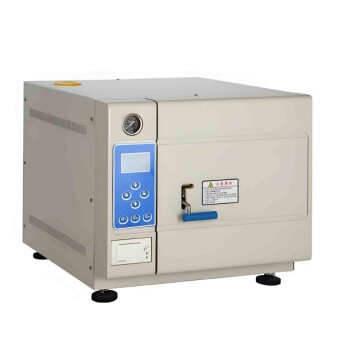
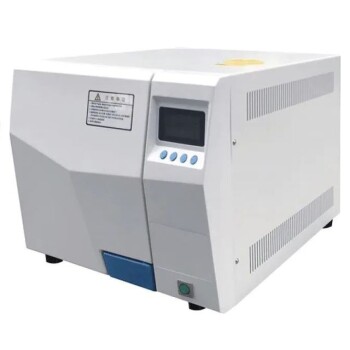
A laboratory oven serves as a critical stabilization stage prior to high-temperature treatment. It subjects the material to a moderate temperature of approximately 80°C to gently remove residual ethanol and moisture from the gel structure, ensuring the material is physically stable before it faces extreme heat.
The pre-drying step acts as a safety valve for the material's internal structure. Without it, trapped solvents would turn into expanding gas too quickly during calcination, shattering the catalyst's microscopic architecture.
The Function of Low-Temperature Drying
Gentle Solvent Removal
The primary purpose of the laboratory oven is to create a controlled environment for evaporation.
By maintaining a temperature of approximately 80°C, the oven effectively targets residual ethanol and moisture trapped within the zeolite-titanate gel.
This temperature is sufficient to drive off solvents without inducing thermal shock or aggressive chemical changes.
Stabilizing the Precursor Structure
Before the material can become a functional photocatalyst, its precursor form must be solidified.
The drying process stabilizes the gel structure, transforming it from a wet, volatile mix into a coherent solid.
This physical stabilization is the foundation required for the material to survive the rigorous calcination process that follows.
Preventing Structural Failure
The Threat of Rapid Volatilization
If a wet precursor is introduced directly into a high-temperature furnace, the internal liquids do not evaporate gracefully.
Instead, the intense heat causes rapid volatilization, causing the trapped moisture and ethanol to expand explosively into gas.
Avoiding Pore Collapse and Bursting
This rapid gas expansion generates immense internal pressure.
Without pre-drying, this pressure results in particle bursting or the total collapse of the material's pore structure.
By pre-drying, you preserve the physical integrity of the catalyst, ensuring the pores remain open and the particles remain intact.
Common Pitfalls to Avoid
Rushing the Drying Phase
It is often tempting to increase the oven temperature above 80°C to speed up the process.
However, exceeding this threshold can trigger the very evaporation issues you are trying to avoid, leading to micro-cracking before calcination even begins.
Incomplete Moisture Removal
Removing the material from the oven too early is a frequent error.
If significant moisture remains deep within the gel structure, the structural integrity will still be compromised once the material hits the high heat of the furnace.
Ensuring Catalyst Quality
If your primary focus is Physical Integrity: Ensure the oven temperature remains strictly around 80°C to prevent thermal stress during solvent removal.
If your primary focus is Surface Area: Prioritize a complete drying cycle to prevent pore collapse, which directly reduces the active surface area available for photocatalysis.
By treating the pre-drying phase as a mandatory quality control step, you ensure your zeolite-titanate photocatalyst achieves maximum structural stability and performance.
Summary Table:
| Stage | Temperature | Primary Function | Risks if Omitted |
|---|---|---|---|
| Pre-drying | ~80°C | Gentle solvent & moisture removal | Rapid volatilization, particle bursting |
| Stabilization | Constant Low Heat | Gel structure solidification | Pore collapse, micro-cracking |
| Calcination | High Temperature | Final catalyst activation | Total structural failure (if wet) |
Elevate Your Material Research with KINTEK Precision
Don't let improper drying compromise your catalyst's surface area or structural integrity. KINTEK provides high-performance laboratory ovens and high-temperature furnaces designed specifically for the rigorous demands of zeolite and titanate research.
From precise low-temperature drying to advanced calcination in our muffle, tube, and vacuum furnaces, we offer the reliable thermal solutions your lab needs. Beyond heating, explore our comprehensive range of crushing systems, hydraulic presses, and high-pressure reactors to streamline your entire synthesis workflow.
Ready to optimize your photocatalyst production? Contact our technical experts today for a tailored solution that brings precision and durability to your laboratory.
References
- Narges Farhadi, Fazel Amiri. Optimization and characterization of zeolite-titanate for ibuprofen elimination by sonication/hydrogen peroxide/ultraviolet activity. DOI: 10.1016/j.ultsonch.2020.105122
This article is also based on technical information from Kintek Solution Knowledge Base .
Related Products
- Laboratory Scientific Electric Heating Blast Drying Oven
- 56L Vertical Laboratory Vacuum Drying Oven
- 23L Laboratory Vacuum Drying Oven
- 1200℃ Muffle Furnace Oven for Laboratory
- 1700℃ Muffle Oven Furnace for Laboratory
People Also Ask
- How does a laboratory electric drying oven contribute to the formation of the initial coating? Expert Insights
- What role does a precision laboratory drying oven play in the synthesis of GO-PANI nanocomposites? Protect Material Integrity
- What role does a laboratory drying oven play in the preparation of zinc oxide nanoparticle precursors?
- What is the necessity of using a laboratory drying oven when processing MoO3/GO composite nanopowders? Find out here.
- What is the role of a laboratory drying oven in cellulose citrate production? Ensure Material Stability & Purity