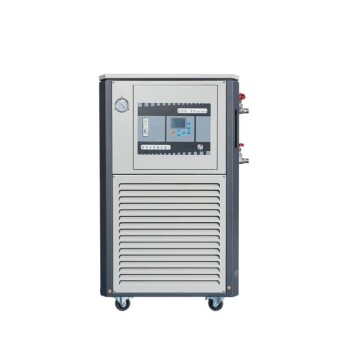
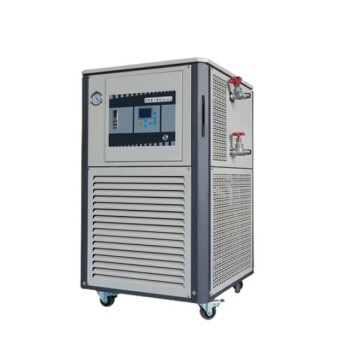
The primary purpose of using a laboratory reactor with vacuum and temperature control is to aggressively and precisely dehydrate oligotetramethylene oxide (OTMO) prior to synthesis. By maintaining temperatures between 88-92 °C and absolute pressures of 0.2-0.4 kPa, the reactor removes trace moisture that would otherwise catastrophically interfere with the subsequent reaction between isocyanates and the oligomer.
Core Takeaway: Isocyanate chemistry is strictly intolerant of moisture. The reactor’s precise environmental control is the only way to guarantee the removal of water, preventing the formation of carbon dioxide bubbles and unwanted cross-linking that would ruin the final epoxy urethane oligomer.
The Critical Need for Dehydration
To understand why this equipment is necessary, you must understand the chemical volatility of the synthesis process. The target reaction requires a pristine environment to ensure the correct molecular structure is formed.
The Isocyanate-Water Conflict
The synthesis of epoxy urethane oligomers (EUO) relies on isocyanate groups. These groups are highly sensitive to moisture.
If water is present, the isocyanate prefers to react with the water rather than the OTMO. This side reaction destroys the isocyanate groups required for the polymer chain, halting the intended synthesis.
Preventing Gas Generation
When isocyanates react with water, they produce carbon dioxide (CO2) as a byproduct. In a closed reactor or a curing material, this gas generation creates bubbles.
This results in foaming or voids within the material, compromising the physical integrity and mechanical properties of the final product.
Avoiding Unwanted Cross-Linking
Beyond gas generation, moisture triggers unwanted cross-linking. Instead of forming linear, predictable polymer chains, the molecules bind together in a disorderly network.
This leads to a product that may be too brittle, too viscous, or chemically distinct from the intended oligomer, effectively ruining the batch.
The Role of Reactor Parameters
A standard heating vessel is insufficient for this process. The laboratory reactor provides two specific variables that must work in tandem to ensure success.
Thermal Optimization (88-92 °C)
The reactor maintains the OTMO at a steady temperature range of 88-92 °C. This heat reduces the viscosity of the oligomer and increases the volatility of any trapped water molecules.
However, heat alone is rarely enough to drive off all trace moisture to the levels required for urethane chemistry.
Deep Vacuum Application (0.2-0.4 kPa)
The application of deep vacuum—specifically 0.2-0.4 kPa of absolute pressure—is the driving force of the dehydration.
By drastically lowering the boiling point of water, the vacuum forces moisture to evaporate rapidly out of the bulk liquid, even at temperatures below water's standard boiling point.
Risks of Improper Process Control
While the reactor setup is standard, failing to adhere to the specific parameters creates significant trade-offs in quality.
Incomplete Stoichiometry
The ultimate goal of drying is to ensure correct stoichiometric ratios during the subsequent polyurethane prepolymerization.
If the drying is incomplete (due to insufficient vacuum or low temperature), the remaining water consumes the isocyanate. This upsets the calculated chemical ratio, leaving unreacted components and resulting in a "soft" or uncured final product.
Process Stability
Without precise control, the reaction becomes unpredictable. The generation of CO2 can pressurize the vessel unexpectedly, and the exotherm from the water-isocyanate reaction can make temperature control difficult during the synthesis phase.
Making the Right Choice for Your Goal
The use of this specific equipment is not merely procedural; it is a chemical necessity for working with isocyanates.
- If your primary focus is Chemical Purity: Ensure your reactor can sustain 0.2-0.4 kPa reliably; insufficient vacuum is the most common cause of moisture contamination.
- If your primary focus is Material Structural Integrity: Prioritize the dehydration step to eliminate CO2 generation, which is the primary cause of voids and defects in the final solid.
By strictly controlling the vacuum and temperature during drying, you effectively remove the variables that cause chemical failure.
Summary Table:
| Parameter | Targeted Value | Purpose in OTMO Dehydration |
|---|---|---|
| Temperature | 88 - 92 °C | Reduces viscosity and increases water molecule volatility. |
| Absolute Pressure | 0.2 - 0.4 kPa | Lowers boiling point to force rapid evaporation of trace moisture. |
| Moisture Sensitivity | Critical | Prevents CO2 gas generation and unwanted cross-linking. |
| Process Goal | Stoichiometric Balance | Ensures correct chemical ratios for high-quality EUO production. |
Optimize Your Polymer Synthesis with KINTEK
Don't let trace moisture compromise your material integrity. KINTEK specializes in advanced laboratory solutions designed for rigorous chemical processes. Our high-performance vacuum reactors, high-temperature autoclaves, and precision cooling systems provide the stable environment needed to eliminate unwanted side reactions and CO2 foaming.
Whether you are synthesizing epoxy urethane oligomers or conducting complex battery research, KINTEK offers the crushing, milling, and thermal equipment required for peak stoichiometric accuracy.
Ready to elevate your lab's precision? Contact our technical experts today to find the perfect reactor configuration for your specific application.
References
- Daria Slobodinyuk, Dmitriy Kiselkov. Simple and Efficient Synthesis of Oligoetherdiamines: Hardeners of Epoxyurethane Oligomers for Obtaining Coatings with Shape Memory Effect. DOI: 10.3390/polym15112450
This article is also based on technical information from Kintek Solution Knowledge Base .
Related Products
- Customizable Laboratory High Temperature High Pressure Reactors for Diverse Scientific Applications
- High Pressure Laboratory Autoclave Reactor for Hydrothermal Synthesis
- Mini SS High Pressure Autoclave Reactor for Laboratory Use
- 23L Laboratory Vacuum Drying Oven
- Stainless High Pressure Autoclave Reactor Laboratory Pressure Reactor
People Also Ask
- How do high-pressure and high-temperature reactors ensure the effective treatment of lignocellulosic wastewater in WAO?
- What equipment is required for high-pressure high-temperature reactions? Master Extreme Chemistry Safely
- How do you control high pressure in a reactor? A Guide to Safe & Stable Operation
- How does initial oxygen pressure affect the wet oxidation of pharmaceutical sludge? Master Your Oxidation Depth
- Why is argon better than nitrogen for inert atmosphere? Ensure Absolute Reactivity & Stability