The preparation of MnCO3 nanopolyhedrons requires a PTFE-lined high-pressure reactor to create a controlled subcritical environment where citric acid can simultaneously reduce potassium permanganate and provide carbonate ions. This specific setup ensures the chemical reduction occurs in a sealed system while the inert liner prevents metallic impurities from the reactor walls from disrupting the crystal structure.
Core Takeaway: The high-pressure reactor enables the high-temperature reduction and carbonation chemistry necessary for MnCO3 formation, while the PTFE liner acts as a critical barrier to maintain the high purity and morphological regularity of the resulting nanopolyhedrons.
Driving the MnCO3 Hydrothermal Transformation
Facilitating Citric Acid Reduction
The high-temperature, high-pressure (HTHP) environment is essential for the hydrothermal co-precipitation of manganese carbonate. In this sealed system, citric acid acts as a dual-purpose agent: it reduces potassium permanganate into manganese and decomposes to produce the carbonate ions necessary for the crystal lattice.
Achieving Subcritical Conditions
Under high pressure, the solubility and reactivity of the chemical precursors are significantly enhanced. This allows the manganese ions and carbonate ions to nucleate and grow into nanopolyhedron structures with a level of precision that is impossible at atmospheric pressure.
Ensuring Structural Integrity
The external stainless steel shell of the reactor provides the mechanical strength required to contain these high-pressure reactions. This ensures the safety of the process while maintaining the constant temperature and pressure needed for stable crystal growth over time.
The Critical Role of the PTFE Liner
Preventing Metallic Contamination
The polytetrafluoroethylene (PTFE) liner is utilized for its exceptional chemical inertness and corrosion resistance. It prevents the reaction solution—which often contains strong electrolytes—from coming into direct contact with the stainless steel body of the reactor.
Preserving Morphological Regularity
If the solution were to react with the metal shell, iron or nickel ions could leach into the mixture. These impurities would disrupt the growth of the MnCO3 nanopolyhedrons, leading to irregular shapes and compromised material performance.
Maintaining Chemical Stability
PTFE remains stable in the presence of the aggressive chemical environments typical of hydrothermal synthesis. This stability ensures that the liner itself does not degrade or introduce carbonaceous impurities into the synthesized precursors.
Understanding the Trade-offs
Temperature Limitations
While PTFE is highly resistant to chemicals, it has a strict thermal ceiling, typically around 220°C to 250°C. Exceeding these temperatures can cause the liner to soften or deform, potentially compromising the seal and the safety of the reactor.
Heat Transfer Barriers
PTFE is an effective thermal insulator, which means it can slow down the rate at which the internal solution reaches the target temperature. Operators must account for this thermal lag when timing the reaction to ensure the precursors have sufficient time to form.
Pressure Sensitivity
The seal between the PTFE liner and the reactor cap is a common point of failure if the pressure rises too rapidly. Regular inspection of the liner's rim is necessary to prevent "creeping," where the plastic flows under pressure and breaks the hermetic seal.
How to Apply This to Your Project
Making the Right Choice for Your Goal
When setting up your hydrothermal synthesis, your choice of equipment should align with your specific material requirements:
- If your primary focus is high purity: Always use a fresh or thoroughly cleaned PTFE liner to ensure zero metallic ion leaching from the stainless steel shell.
- If your primary focus is morphology control: Ensure your reactor maintains a constant temperature, as fluctuations in the HTHP environment will lead to irregular particle sizes.
- If your primary focus is safety and longevity: Never exceed the pressure and temperature ratings of the PTFE liner, and inspect the liner for discoloration or thinning after every five uses.
The PTFE-lined reactor is the definitive tool for balancing the aggressive chemistry required for nanostructure growth with the extreme purity demanded by modern material science.
Summary Table:
| Feature | Role in MnCO3 Synthesis | Key Benefit |
|---|---|---|
| PTFE Liner | Chemical inertness & barrier | Prevents metallic ion (Fe/Ni) leaching |
| HTHP Environment | Subcritical hydrothermal state | Enhances solubility and crystal growth |
| Citric Acid | Dual-purpose chemical agent | Reducer and carbonate ion source |
| Stainless Shell | Mechanical pressure vessel | Ensures safety under high-pressure reactions |
Achieve Precision in Your Nanomaterial Synthesis with KINTEK
Elevate your research with KINTEK’s specialized laboratory equipment. Our high-temperature high-pressure reactors and autoclaves are designed specifically to meet the rigorous demands of hydrothermal synthesis, ensuring the high purity and morphological regularity required for MnCO3 nanopolyhedrons and other advanced precursors.
Why choose KINTEK?
- Unmatched Purity: Our PTFE-lined systems eliminate metallic contamination for sensitive chemical reactions.
- Comprehensive Portfolio: From CVD/PECVD furnaces and crushing systems to hydraulic presses and electrolytic cells, we provide the full spectrum of tools for material science.
- Reliable Performance: Engineered for safety and thermal stability, our equipment supports your most critical battery research and chemical engineering projects.
Ready to optimize your lab’s efficiency and material quality? Contact KINTEK today to find the perfect reactor solution for your application!
References
- Peng Yang, J.P. Cheng. Nanocapsule of MnS Nanopolyhedron Core@CoS Nanoparticle/Carbon Shell@Pure Carbon Shell as Anode Material for High-Performance Lithium Storage. DOI: 10.3390/molecules28020898
This article is also based on technical information from Kintek Solution Knowledge Base .
Related Products
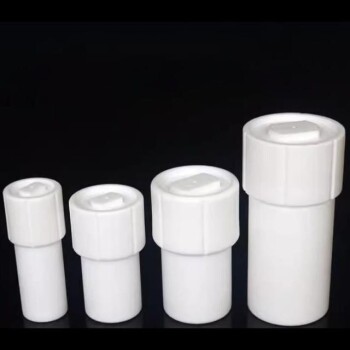
- Custom PTFE Teflon Parts Manufacturer for Reagent Wide Mouth Fine Mouth Sample High Temperature Bottles
- Customizable Laboratory High Temperature High Pressure Reactors for Diverse Scientific Applications
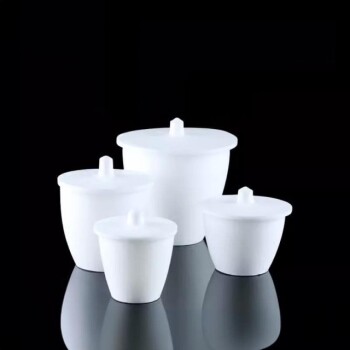
- Custom Machined and Molded PTFE Teflon Parts Manufacturer with PTFE Crucible and Lid
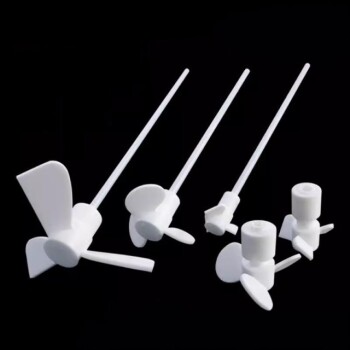
- Custom PTFE Teflon Parts Manufacturer Laboratory High Temperature Mixing Paddle Mixer
- Custom PTFE Teflon Parts Manufacturer for Hydrothermal Synthesis Reactor Polytetrafluoroethylene Carbon Paper and Carbon Cloth Nano-growth
People Also Ask
- What makes PTFE bottles suitable for static leaching? Ensure Zero-Contamination for Glass Testing
- Why Use PTFE Sample Bottles for Coal Demineralization? Ensure Chemical Stability and Data Integrity
- Why are PTFE containers necessary for selective HF etching of MAX phases? Ensure Safe & Pure MXene Synthesis
- Why use high-quality PTFE containers for CO2 reduction electrolytes? Eliminate silicon contamination and ensure data.
- Why is a PTFE container required for acid leaching of silicon nanosheets? Ensure High Purity and Safety