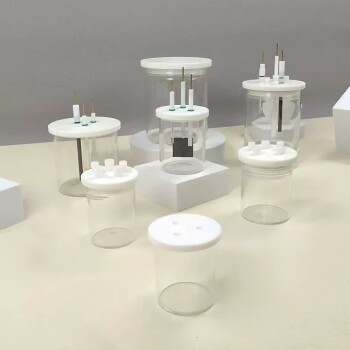
Quartz reactors are the definitive choice for catalytic carbon monoxide (CO) oxidation testing because they combine complete chemical neutrality with exceptional thermal resilience. By eliminating the risk of vessel contamination and allowing for direct visual or spectroscopic monitoring, quartz ensures that the data you collect reflects the catalyst's performance alone, not artifacts of the experimental setup.
Core Takeaway The value of a quartz reactor lies in data integrity. Its chemical inertness prevents background reactions from interfering with results, while its transparency allows for real-time verification of catalyst physical states, ensuring that evaluation metrics like conversion efficiency are strictly accurate.
Preserving Chemical Integrity
Eliminating Background Interference
The primary challenge in CO oxidation testing is ensuring that the reaction is driven solely by the catalyst, not the vessel walls.
Quartz provides excellent chemical inertness, effectively preventing the reactor material from participating in the reaction. This is critical for avoiding background reaction interference, ensuring that the conversion data you measure is generated exclusively by the catalyst formulation.
Resistance to Corrosive Environments
CO oxidation often involves exposure to reducing gases like Hydrogen (H2) or Carbon Monoxide itself at elevated temperatures.
Quartz maintains its stability even during long-term exposure to these corrosive agents. Unlike metal reactors that might alter surface chemistry under these conditions, quartz remains neutral, protecting the accuracy of catalytic evaluation data.
Managing Thermal Extremes
Handling Drastic Temperature Shifts
Catalytic testing often requires sweeping across wide temperature ranges to determine the "light-off" temperature (the point where the reaction becomes self-sustaining).
Quartz reactors possess high-temperature thermal stability, capable of withstanding environments from room temperature up to 873 K. Crucially, they can endure drastic temperature changes without structural failure or chemical degradation.
Simulating Industrial Conditions
To accurately predict how a catalyst will perform in real-world scenarios, such as exhaust purification, the test environment must simulate high heat.
Quartz enables the creation of a stable, high-temperature gas-solid contact environment. This allows researchers to reliably determine conversion efficiency under dynamic conditions that mimic industrial stresses.
Utilizing Optical Transparency
Monitoring Physical Catalyst States
Beyond just holding the sample, a reactor should act as a window into the process.
The transparency of quartz facilitates the observation of physical changes, such as metal evaporation or deposition at the reactor outlet. This visual check is vital for confirming that the catalyst remains encapsulated and intact during high-temperature runs.
Enabling In-Situ Spectroscopy
For advanced characterization, the ability to pass light through the reactor wall is indispensable.
Because quartz allows light beams to pass through unimpeded, it facilitates the integration of in-situ UV-Vis spectroscopy. This allows you to simultaneously monitor the chemical state of the catalyst and the reaction products in real-time, providing a deeper understanding of the reaction mechanism.
Understanding the Trade-offs
Physical Fragility
While quartz is chemically robust, it is physically brittle compared to stainless steel or Inconel reactors.
Care must be taken during assembly and handling to avoid breakage, particularly when connecting the reactor to metal fittings or flow control systems. It does not possess the mechanical ductility of metal vessels.
Pressure Limitations
Quartz is ideal for atmospheric or low-pressure testing, but it has lower pressure tolerances than metal alternatives.
If your experimental design requires extremely high-pressure environments to simulate specific industrial catalytic processes, the structural limits of a quartz tube may become a constraint.
Making the Right Choice for Your Goal
To maximize the value of your experimental setup, align your equipment choice with your specific analytical needs.
- If your primary focus is Kinetic Accuracy: Choose quartz to ensure chemical inertness, guaranteeing that conversion rates are not skewed by background wall reactions.
- If your primary focus is Mechanistic Study: Choose quartz to leverage its transparency, enabling the use of in-situ spectroscopy to observe catalyst behavior in real-time.
Select quartz when the purity of your data is paramount and the elimination of experimental variables is your definition of success.
Summary Table:
| Feature | Benefit for CO Oxidation Testing | Performance Metric |
|---|---|---|
| Chemical Inertness | Eliminates background wall reactions | Kinetic Accuracy |
| Thermal Stability | Withstands temperatures up to 873 K | Light-off Temp Testing |
| Optical Transparency | Enables in-situ UV-Vis spectroscopy | Mechanistic Insight |
| Corrosion Resistance | Stable under H2 and CO exposure | Catalyst Longevity |
| Visual Monitoring | Detects metal evaporation/deposition | Structural Integrity |
Elevate Your Catalytic Research with KINTEK Precision
Maximize the accuracy of your experimental data with KINTEK’s high-performance laboratory solutions. From specialized quartz reactors and high-temperature furnaces to precision high-pressure reactors, electrolytic cells, and hydraulic presses, we provide the robust equipment necessary for cutting-edge material science.
Why choose KINTEK?
- Unmatched Purity: Our quartz and ceramic consumables ensure zero background interference.
- Extreme Versatility: Wide range of tube, muffle, and vacuum furnaces for diverse thermal profiles.
- Comprehensive Support: We supply everything from battery research tools to specialized PTFE and milling systems.
Don't let experimental variables compromise your results. Contact KINTEK today to find the perfect vessel or system for your laboratory needs!
References
- Nina M. Wichner, Hubert Koller. Preventing sintering of Au and Ag nanoparticles in silica-based hybrid gels using phenyl spacer groups. DOI: 10.1039/c000105h
This article is also based on technical information from Kintek Solution Knowledge Base .
Related Products
- Visual High-Pressure Reactor for In-Situ Observation
- Laboratory Rapid Thermal Processing (RTP) Quartz Tube Furnace
- Quartz Electrolytic Electrochemical Cell for Electrochemical Experiments
- Customizable Laboratory High Temperature High Pressure Reactors for Diverse Scientific Applications
- Mini SS High Pressure Autoclave Reactor for Laboratory Use
People Also Ask
- How do high-pressure reactors enhance biochar redox activity? Optimize Surface Functionalization and Energy Density
- What is the purpose of a high-pressure reactor in oleophilic GO modification? Optimize Grafting and Oil Dispersion.
- How does a high-pressure reactor facilitate reductive amidation? Maximize Yield & Speed in Tandem Reactions
- How does a high-pressure reactor assist in catalytic hydrogenation of 2,6-dimethylnitrobenzene? Optimize Your Process
- What is the significance of using a high-pressure reactor for the treatment of rice husk? Boost Furfural Yield & Speed