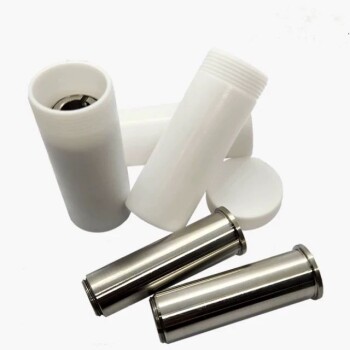
The combination of a stainless steel shell and a polytetrafluoroethylene (PTFE) liner creates a synergistic vessel capable of withstanding the rigorous physical demands of high-pressure synthesis while maintaining a chemically inert interior. This setup allows the reactor to safely contain the high pressures required for boehmite synthesis, while the liner acts as a critical barrier to prevent the acidic or alkaline reaction medium from corroding the steel and contaminating the final product.
The core advantage of this configuration is the separation of mechanical strength from chemical resistance. While stainless steel contains the pressure, the PTFE liner isolates the reaction, ensuring that the synthesized boehmite achieves high purity free from leached metallic impurities.
Preserving Chemical Integrity
Combatting Corrosive Environments
Boehmite synthesis often requires reaction environments that are either strongly acidic or strongly alkaline.
Direct contact with these harsh solutions can rapidly corrode standard stainless steel. The PTFE liner provides exceptional chemical resistance, acting as a shield that remains unaffected by aggressive pH levels.
Elimination of Contaminants
A critical requirement for high-quality boehmite is purity.
If the reaction medium were to contact the stainless steel shell, metal ions (such as iron, chromium, or nickel) could leach into the solution. The PTFE liner is chemically inert, ensuring that no metallic impurities are introduced into the crystal lattice of the boehmite, thereby maintaining the reproducibility of your results.
Facilitating Hydrothermal Conditions
Structural Containment
PTFE is a polymer and cannot withstand high internal pressures on its own without deforming or bursting.
The stainless steel outer shell provides the necessary mechanical strength to contain the pressure generated during the hydrothermal process. This allows the system to operate safely as a sealed unit.
Exceeding Atmospheric Limits
The sealed nature of the steel reactor allows the reaction to proceed at temperatures well above the atmospheric boiling point of water.
By increasing the temperature (e.g., to 150°C or 200°C), the internal pressure rises, which in turn increases the solubility of precursors and accelerates reaction rates. This controlled environment facilitates the uniform nucleation and growth required for specific boehmite nanostructures.
Understanding the Trade-offs
Temperature Ceilings
While PTFE is highly resistant to chemicals, it has thermal limitations compared to metals or ceramics.
Most PTFE liners are safe for operation up to approximately 200°C to 220°C. Exceeding this threshold can cause the liner to soften, deform, or release fluorine-containing gases, potentially ruining the sample and damaging the reactor seal.
Heat Transfer Efficiency
PTFE is a thermal insulator, unlike stainless steel, which is a conductor.
This means that heating and cooling cycles may take longer compared to unlined metal reactors. You must account for this thermal lag when designing your temperature ramp rates to ensure the internal reaction temperature matches your set points.
Making the Right Choice for Your Synthesis
To ensure you are selecting the correct equipment for your specific synthesis goals, consider the following:
- If your primary focus is High Purity: The PTFE liner is non-negotiable; it is the only reliable way to prevent metal ion leaching from the reactor walls.
- If your primary focus is Extreme Temperature (>250°C): A standard PTFE liner is unsuitable; you should consider a PPL (polyphenylene) liner or a reactor made from specialized alloys capable of withstanding the medium without a liner.
- If your primary focus is Reaction Speed: Remember that the sealed high-pressure environment increases solubility and kinetics, but the insulating liner will slightly delay the time it takes for the solution to reach the target temperature.
The stainless steel reactor with a PTFE liner represents the optimal balance between mechanical safety and chemical purity for standard hydrothermal boehmite synthesis.
Summary Table:
| Feature | Stainless Steel Outer Shell | PTFE (Teflon) Inner Liner |
|---|---|---|
| Primary Role | Mechanical strength & pressure containment | Chemical resistance & purity preservation |
| Chemical Stability | Vulnerable to acidic/alkaline corrosion | Exceptionally inert to most chemicals |
| Temperature Limit | Very high (>500°C) | Typically up to 200°C - 220°C |
| Thermal Property | Heat conductor (fast ramp) | Thermal insulator (slower ramp) |
| Key Benefit | Prevents vessel bursting or deformation | Eliminates metallic ion contamination |
Elevate Your Material Synthesis with KINTEK
Precision and purity are non-negotiable in advanced hydrothermal research. KINTEK specializes in high-performance laboratory equipment, offering a premium range of high-temperature high-pressure reactors and autoclaves designed specifically for demanding applications like boehmite synthesis.
Whether you need standard PTFE-lined vessels for maximum chemical inertness or specialized high-temperature alloys for extreme conditions, our technical experts are ready to help you find the perfect solution. Beyond reactors, we provide a comprehensive suite of laboratory tools—from crushing and milling systems to ultracold storage and ceramics—ensuring your entire workflow is optimized for success.
Ready to achieve superior boehmite purity? Contact KINTEK today for a customized consultation!
References
- Junkai Wang, Yuzheng Wang. The Influence of Hydrothermal Temperature on Alumina Hydrate and Ammonioalunite Synthesis by Reaction Crystallization. DOI: 10.3390/cryst13050763
This article is also based on technical information from Kintek Solution Knowledge Base .
Related Products
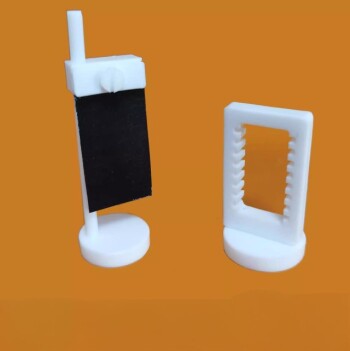
- Custom PTFE Teflon Parts Manufacturer for Hydrothermal Synthesis Reactor Polytetrafluoroethylene Carbon Paper and Carbon Cloth Nano-growth
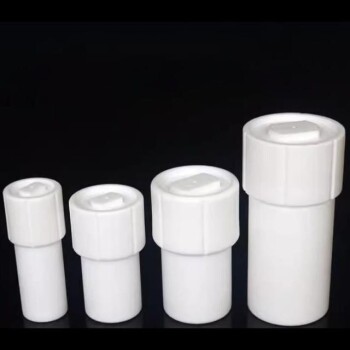
- Custom PTFE Teflon Parts Manufacturer for Microwave Digestion Tank
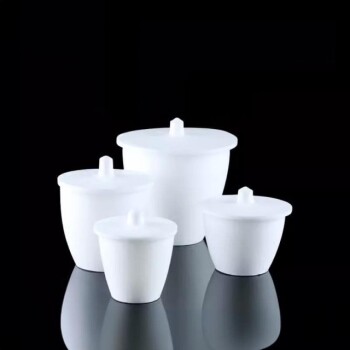
- Custom Machined and Molded PTFE Teflon Parts Manufacturer with PTFE Crucible and Lid
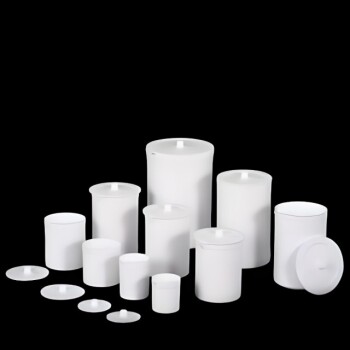
- Custom PTFE Teflon Parts Manufacturer PTFE Beaker and Lids
- Custom PTFE Teflon Parts Manufacturer for PTFE Containers
People Also Ask
- What is the function of a PTFE reactor in MXene etching? Ensure Safe, High-Purity MAX Phase Conversion
- Why is a PTFE reactor required for titanium-based nano-ceramic coating solutions? Ensure Chemical Inertness & Purity
- Why must a Polytetrafluoroethylene (PTFE) reactor be used for Ti3C2TX MXene etching? Ensure Safety and Purity
- Why are PTFE reactors preferred for silver phosphate glass testing? Ensure Purity and Kinetic Accuracy
- What are the advantages of using polytetrafluoroethylene (PTFE) liners in hydrothermal synthesis reactors? High Purity