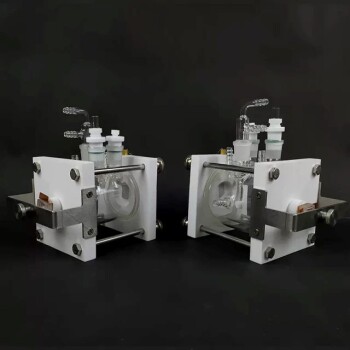
Accurate corrosion analysis requires electrical isolation. A three-electrode system is necessary for Tafel Extrapolation because it separates the roles of current transmission and potential measurement. By employing a working electrode, an auxiliary electrode (often platinum), and a reference electrode, the system forces current to flow exclusively between the working and auxiliary electrodes, preventing electrical interference at the reference point.
Core Takeaway The three-electrode configuration isolates the reference electrode from current flow, ensuring stable voltage readings while the auxiliary electrode handles the electrical load. This separation is the only way to obtain the precise corrosion potential and current density data required to calculate metal corrosion rates.
The Roles of the Three Electrodes
To understand why this system is non-negotiable for Tafel Extrapolation, you must first understand the specific function of each component defined in the setup.
The Working Electrode
This is the specific metal sample you are testing. It is the site where the corrosion reaction occurs and is the primary subject of your analysis.
The Auxiliary Electrode
Also known as the counter electrode, this component completes the electrical circuit. As noted in standard methodologies, a platinum electrode is commonly used for this role.
Its sole purpose is to allow current to flow through the solution without affecting the chemical stability of the reference measurement.
The Reference Electrode
This electrode provides a stable, known potential against which the working electrode is measured. Crucially, in a three-electrode system, no current flows through the reference electrode.
Why Isolation is Critical for Tafel Extrapolation
The primary reference emphasizes that the value of this system lies in isolation. Here is why that isolation translates to data accuracy.
Eliminating Current Interference
In electrochemical testing, passing current through an electrode changes its potential. If current were allowed to flow through the reference electrode, its potential would shift, rendering it a useless benchmark.
The three-electrode setup directs all current to the auxiliary electrode. This keeps the reference electrode stable and interference-free.
Precise Measurement of Fundamentals
Tafel Extrapolation relies on plotting potential against the log of current density.
Because the reference is isolated, the system can record an accurate corrosion potential ($E_{corr}$). Simultaneously, the current flowing to the auxiliary electrode allows for the calculation of the corrosion current density ($I_{corr}$).
Without isolating these variables, you cannot validly perform the mathematical extrapolation needed to determine the corrosion rate.
Understanding the Trade-offs
While the three-electrode system is the standard for precision, it introduces specific complexities that must be managed.
Complexity of Setup
Compared to a simple two-electrode multimeter reading, this system requires a potentiostat and careful cell geometry. Misalignment of electrodes can introduce uncompensated resistance (IR drop), even in a three-electrode system.
Material Constraints
The auxiliary electrode must be inert to prevent contaminating the solution. The reliance on materials like platinum (as cited in the primary text) ensures functionality but increases the initial cost of the apparatus.
Making the Right Choice for Your Goal
To ensure your Tafel Extrapolation yields valid corrosion rates, follow these guidelines based on your specific objectives.
- If your primary focus is Accuracy: Ensure your reference electrode is physically positioned to sense the potential without blocking the current path between the working and auxiliary electrodes.
- If your primary focus is Equipment Selection: Select an auxiliary electrode made of an inert material, such as platinum, to carry the current load without participating in the reaction.
By strictly isolating the reference electrode from current flow, you transform a noisy electrical signal into a definitive measurement of corrosion behavior.
Summary Table:
| Electrode Type | Primary Role | Key Requirement |
|---|---|---|
| Working Electrode | Site of corrosion reaction | The metal sample under test |
| Auxiliary Electrode | Completes the circuit/current flow | Inert material (e.g., Platinum) |
| Reference Electrode | Provides stable potential benchmark | Must remain isolated from current flow |
Elevate Your Corrosion Research with KINTEK Precision
Don't let electrical interference compromise your Tafel Extrapolation data. KINTEK specializes in high-performance laboratory equipment designed for the most demanding electrochemical research.
Whether you need specialized electrolytic cells and electrodes (including platinum auxiliary electrodes), high-temperature high-pressure reactors, or precise battery research tools, KINTEK delivers the reliability your analysis requires. Our comprehensive portfolio supports global laboratories with top-tier consumables like PTFE products and ceramics, alongside robust crushing, milling, and heating systems.
Ready to achieve definitive corrosion measurements? Contact KINTEK experts today to find the perfect electrochemical setup for your laboratory.
References
- Zainab Abed Janabi, Safa A. Hussien. Increasing of the corrosion resistance by preparing the trivalent nickel complex. DOI: 10.21608/ejchem.2021.100733.4683
This article is also based on technical information from Kintek Solution Knowledge Base .
Related Products
- H Type Electrolytic Cell Triple Electrochemical Cell
- PTFE Electrolytic Cell Electrochemical Cell Corrosion-Resistant Sealed and Non-Sealed
- Electrolytic Electrochemical Cell with Five-Port
- Electrolytic Electrochemical Cell Gas Diffusion Liquid Flow Reaction Cell
- Quartz Electrolytic Electrochemical Cell for Electrochemical Experiments
People Also Ask
- What is a H type cell? A Guide to Divided Electrochemical Cells for Accurate Experiments
- How should the electrolyte be prepared and added to the H-type electrolytic cell? Best Practices for Purity and Safety
- What is the technical necessity of using an H-type electrolytic cell for NO3RR tests? Protect Your Ammonia Yields
- How does the design of an H-type electrolytic cell benefit the neutral water electrolysis process for metal recovery?
- What is the primary function of an H-type electrolytic cell in NitRR? Ensure Accurate Product Yields