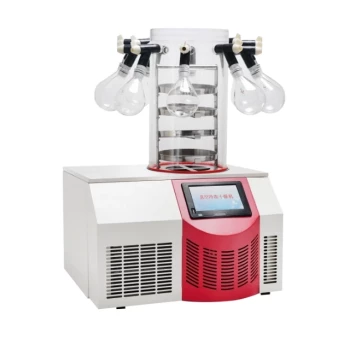
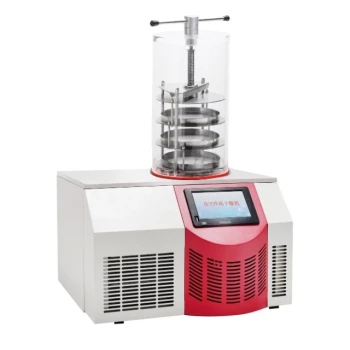
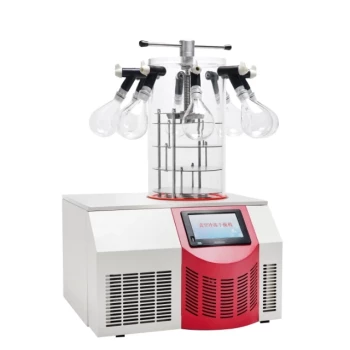
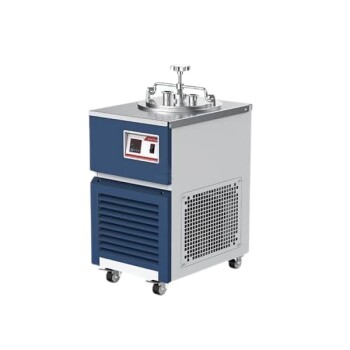
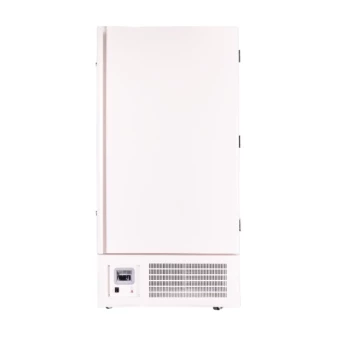
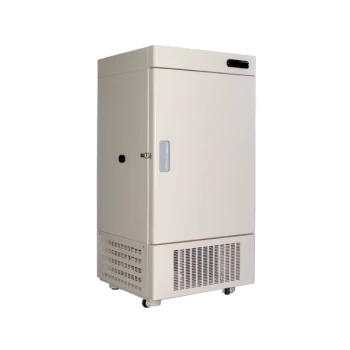
A vacuum freeze dryer is the critical enabling tool for preparing Reduced Graphene Oxide Aerogel (RGOA) because it removes moisture via sublimation. Unlike conventional drying, this process bypasses the liquid phase entirely, eliminating the surface tension forces that inevitably destroy delicate pore structures. Without this equipment, the aerogel would suffer from structural collapse, rendering it useless for high-performance applications.
By transitioning solvent directly from solid to gas, vacuum freeze drying preserves the intricate, interlaced graphene network that conventional heat drying destroys, ensuring the high surface area required for advanced applications.
The Mechanics of Structural Preservation
Overcoming Liquid Surface Tension
The primary challenge in drying graphene hydrogels is the destructive force of liquid surface tension.
During conventional thermal drying, as liquid evaporates, the receding meniscus creates capillary forces that pull the structural walls together.
A vacuum freeze dryer negates this by freezing the moisture and removing it as vapor (sublimation), ensuring no liquid surface tension is ever exerted on the material.
Preserving the 3D Network
RGOA relies on a sophisticated, three-dimensional interconnected porous network.
This structure is formed by interlaced graphene layers that are highly susceptible to deformation.
Freeze drying "locks" this geometry in place, resulting in a dry aerogel that retains the exact volume and porosity of the original wet hydrogel.
Functional Implications for RGOA
Maximizing Specific Surface Area
The utility of an aerogel is defined by its specific surface area.
By preventing pore collapse, freeze drying ensures that the maximum amount of graphene surface is exposed rather than bundled or stacked.
This massive surface area is essential for the material's reactivity and interaction with other mediums.
Enabling Chemical Penetration
For RGOA to be effective in subsequent processing, it must possess open contact channels.
The primary reference notes that this preserved structure allows for the effective penetration of fluorinating gases.
If the pores were collapsed, these gases could not permeate the material, leading to incomplete chemical modification.
Understanding the Trade-offs
The Pitfalls of Thermal Drying
It is important to understand why alternative methods fail.
Conventional thermal drying is not a viable alternative for aerogels because it leads to significant shrinkage.
The internal framework collapses under the stress of evaporation, resulting in a dense, non-porous solid rather than a lightweight, functional aerogel.
Process Intensity
While essential, vacuum freeze drying is generally a more time-consuming and energy-intensive process than heat drying.
However, for RGOA, this is a necessary trade-off to achieve the required structural integrity that cheaper methods cannot provide.
Making the Right Choice for Your Goal
To ensure you are applying this process correctly based on your specific objectives:
- If your primary focus is Structural Integrity: Use vacuum freeze drying to avoid capillary pressure and strictly maintain the 3D interconnected network of the graphene layers.
- If your primary focus is Chemical Functionalization: Rely on freeze drying to keep contact channels open, ensuring gases (like fluorinating agents) can fully penetrate the material.
Ultimately, the vacuum freeze dryer is not just a drying tool; it is a structural preservation device that defines the final quality of your aerogel.
Summary Table:
| Feature | Vacuum Freeze Drying | Conventional Thermal Drying |
|---|---|---|
| Phase Transition | Solid to Gas (Sublimation) | Liquid to Gas (Evaporation) |
| Structural Impact | Preserves 3D Interconnected Pores | Capillary Force Causes Pore Collapse |
| Surface Tension | Eliminated | High (Destructive to Walls) |
| Volume Retention | High (Retains original hydrogel volume) | Low (Significant shrinkage/densification) |
| Primary Benefit | Maximizes Specific Surface Area | Low Cost/Process Simplicity |
| Key Application | High-performance RGOA & Fluorination | Non-porous Graphene Solids |
Elevate Your Nanomaterial Synthesis with KINTEK Precision
Achieving the perfect 3D structure in Reduced Graphene Oxide Aerogels requires more than just a drying step—it requires precise control over sublimation and vacuum parameters. KINTEK specializes in high-performance laboratory equipment designed for advanced material science. Our range of vacuum freeze dryers and cold traps ensures your delicate aerogels maintain their maximum specific surface area and structural integrity.
Beyond drying, KINTEK provides a comprehensive ecosystem for battery research and advanced chemistry, including:
- High-temperature furnaces (tube, muffle, and CVD) for graphene reduction.
- Crushing and milling systems for precursor preparation.
- High-pressure reactors and autoclaves for hydrogel synthesis.
- PTFE products and ceramics for chemical resistance.
Ready to optimize your RGOA production? Contact our technical experts today to find the ideal vacuum freeze drying solution tailored to your research goals.
References
- Xu Bi, Jin Zhou. Fluorinated Graphene Prepared by Direct Fluorination of N, O-Doped Graphene Aerogel at Different Temperatures for Lithium Primary Batteries. DOI: 10.3390/ma11071072
This article is also based on technical information from Kintek Solution Knowledge Base .
Related Products
- Benchtop Laboratory Vacuum Freeze Dryer
- High Performance Laboratory Freeze Dryer
- High Performance Laboratory Freeze Dryer for Research and Development
- Benchtop Laboratory Freeze Dryer for Lab Use
- Vacuum Cold Mounting Machine for Sample Preparation
People Also Ask
- What are the technical advantages of using a laboratory freeze dryer for porous carbon precursors? Preserve 3D Networks
- How do laboratory freeze dryers support scientific research? Preserve Sample Integrity for Reproducible Results
- Why is a laboratory freeze dryer preferred over traditional heating? Preserve Biochar Structure & Maximize Porosity
- What types of liquid samples can be processed using a laboratory freeze dryer? Preserve Your Sensitive Materials
- What role do laboratory freeze dryers play in the food industry? Unlock Superior Food Preservation