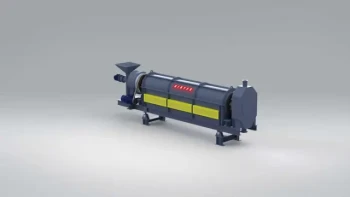
The fundamental requirement for lignin pyrolysis is the complete exclusion of oxygen from the reactor environment. An oxygen-free ("anaerobic") system is strictly necessary to prevent the biomass from simply burning when subjected to high temperatures. Instead of combustion, this controlled atmosphere forces the lignin to undergo chemical decomposition, converting solid mass into valuable bio-oils.
Core Insight: Pyrolysis is a thermal degradation process, not a combustion process. By strictly removing oxygen, the reactor ensures that high heat breaks down complex lignin structures into useful liquid fuels and chemicals, rather than oxidizing them into ash and carbon dioxide.
The Chemistry of Oxygen Exclusion
Preventing Biomass Combustion
If oxygen were introduced into the reactor, the high temperatures required for processing would trigger immediate combustion.
The oxygen-free reactor acts as a necessary barrier. It ensures the biomass is subjected to heat without the chemical reactants needed for fire.
This preservation of the material is what allows the solid biomass to transition into liquid and gaseous states rather than being destroyed.
Facilitating Macromolecular Degradation
Lignin is constructed of complex, large-scale molecular structures known as macromolecules.
In a completely anaerobic environment, high thermal energy causes these large structures to crack and degrade.
This specific type of degradation is the mechanism that converts raw lignin into phenolic compounds, bio-oil, and syngas.
Process Optimization and Yield
Generating High-Value Products
The anaerobic reactor environment allows for the distinct creation of specific chemical byproducts.
Rather than waste heat and smoke, the process yields a usable mix of bio-oil and syngas.
It also facilitates the recovery of phenolic compounds, which are high-value-added chemicals derived specifically from pyrolytic lignin.
Regulating Liquid Yields
The reactor setup allows for precise control over the heating temperature within the oxygen-free atmosphere.
By optimizing this temperature, operators can accurately regulate the yield of liquid fractions.
This control is essential for maximizing the production of the most valuable output: bio-oil.
Operational Constraints and Trade-offs
The Requirement for Precision
While an oxygen-free reactor is effective, it demands rigorous control over the atmosphere.
The system relies entirely on the ability to prevent air leaks, which would compromise the chemical reaction.
Consequently, the process requires equipment capable of maintaining strict isolation to ensure the "macromolecular degradation" occurs exactly as intended.
Maximizing Production Value
To ensure the efficient conversion of lignin, your operational focus must be on maintaining environmental integrity and thermal precision.
- If your primary focus is maximizing liquid fuel: Prioritize the optimization of heating temperatures to regulate and increase the yield of liquid fractions.
- If your primary focus is chemical production: Ensure the reactor conditions favor the complete macromolecular degradation of lignin into phenolic compounds.
The strict absence of oxygen is the single most critical variable in transforming waste lignin into a valuable energy resource.
Summary Table:
| Feature | Oxygen-Free Environment (Pyrolysis) | Oxygen-Present Environment (Combustion) |
|---|---|---|
| Primary Reaction | Thermal Degradation (Macromolecular Cracking) | Rapid Oxidation (Burning) |
| Final Product | Bio-oil, Syngas, Phenolic Compounds | Ash, Carbon Dioxide, Heat |
| Material State | Conversion of solids to liquid/gas | Destruction of organic matter |
| Process Control | High (Yield optimization via temperature) | Low (Self-sustaining fire) |
| Value Addition | Production of high-value chemicals | Energy recovery only |
Elevate Your Bio-Energy Research with KINTEK
Achieving the perfect anaerobic environment is critical for successful lignin pyrolysis. KINTEK specializes in advanced laboratory equipment designed to maintain the strict environmental integrity and thermal precision required for your most demanding reactions.
Whether you are scaling up bio-oil production or refining chemical recovery, our comprehensive range of high-temperature high-pressure reactors and autoclaves, rotary furnaces, and CVD systems ensures superior atmospheric control and macromolecular degradation.
Our value to you:
- Precision Engineering: Reactors designed to eliminate air leaks and ensure complete oxygen exclusion.
- Versatile Solutions: From crushing and milling systems for feedstock preparation to ULT freezers and cooling solutions for product preservation.
- Expert Support: Equipment tailored for battery research, chemical synthesis, and sustainable fuel development.
Contact KINTEK today to optimize your pyrolysis yields!
References
- Celeste Libretti, Michaël A. R. Meier. From waste to resource: advancements in sustainable lignin modification. DOI: 10.1039/d4gc00745j
This article is also based on technical information from Kintek Solution Knowledge Base .
Related Products
- Stainless High Pressure Autoclave Reactor Laboratory Pressure Reactor
- Customizable Laboratory High Temperature High Pressure Reactors for Diverse Scientific Applications
- Mini SS High Pressure Autoclave Reactor for Laboratory Use
- Customizable High Pressure Reactors for Advanced Scientific and Industrial Applications
- Electric Rotary Kiln Small Rotary Furnace Biomass Pyrolysis Plant
People Also Ask
- Why is a laboratory high-pressure reactor used in the hydrothermal synthesis of hydroxyapatite catalysts?
- Why is a laboratory high-pressure reactor necessary for synthesizing fly ash-based zeolite? Achieve Pure Crystallization
- What role does a laboratory high-pressure reactor play in the leaching process of spent cathode materials? Optimize Recovery
- What conditions do laboratory high-pressure reactors provide for HTC? Optimize Your Biochar Production Processes
- How are high-pressure reactors used to prepare metaphosphate electrocatalysts? Master In-Situ Precursor Growth