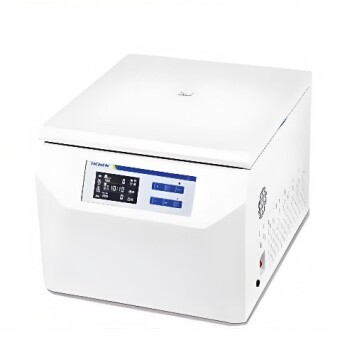
The application of high-pressure reactors is critical because the conversion of carbon dioxide (CO2) to methanol is a reaction that is thermodynamically limited at low pressures. By utilizing high-pressure environments, you provide the necessary force to shift the chemical equilibrium toward methanol production while simultaneously stabilizing the active intermediates on the catalyst surface.
Core Insight Carbon dioxide is a remarkably stable molecule that resists chemical transformation. High-pressure systems are the essential lever to overcome this inertia, driving higher equilibrium conversion rates and reducing the energy barrier required to activate the CO2 for methanol synthesis.
Overcoming Thermodynamic Limitations
Shifting the Equilibrium
The hydrogenation of CO2 to methanol is a process thermodynamically driven by pressure. Under standard conditions, the reaction does not favor the formation of methanol.
By applying high pressure, the system seeks to reduce volume, which naturally pushes the equilibrium toward the product side (methanol). Without this external pressure, conversion rates remain inefficiently low.
The Challenge of Molecular Stability
CO2 is a thermodynamically stable molecule, meaning it requires significant energy to break its bonds and form new ones.
High-pressure reactors define the physical environment necessary to tackle this stability. They provide the thermodynamic "push" required to turn a stable greenhouse gas into a reactive chemical feedstock.
Enhancing Catalytic Performance
Stabilizing Active Intermediates
Pressure does more than just shift equilibrium; it fundamentally changes how the reactants interact with the catalyst. High-pressure environments help stabilize active intermediates on the catalyst surface.
These intermediates are short-lived transition states that occur before methanol is fully formed. Stabilizing them ensures the reaction proceeds to completion rather than reverting to reactants.
Reducing the Energy Barrier
Ultra-high pressure systems, specifically those exceeding 10 MPa, can significantly reduce the reaction energy barrier.
By forcing reactants into close proximity, the system facilitates the chemical bonding between carbon dioxide and hydrogen. This interaction is essential for the effective resource utilization of greenhouse gases.
The Role of Supercritical States
Increasing Reactant Concentration
When pressure is increased to ultra-high levels, CO2 can be brought to a supercritical state or an extremely high-concentration phase.
In this state, the fluid possesses the density of a liquid but the diffusivity of a gas. This unique property maximizes the contact between the reactants and the catalyst, accelerating the reaction rate.
Understanding the Trade-offs
The Balance of Pressure and Temperature
While pressure drives conversion, it must be paired with precise temperature control to be effective.
Pressure alone increases the rate, but without the correct temperature, you risk producing unwanted byproducts. The optimization of product selectivity—ensuring you get methanol rather than methane or carbon monoxide—relies on the synergy between high pressure and controlled temperature.
Operational Complexity
Implementing ultra-high pressure systems (above 10 MPa) introduces significant engineering challenges.
These systems require specialized materials and safety protocols to contain the energy involved. However, this complexity is a necessary trade-off to achieve viable conversion rates for CO2 hydrogenation.
Making the Right Choice for Your Goal
To optimize your methanol synthesis process, consider your specific operational targets:
- If your primary focus is maximizing conversion rates: Implement ultra-high pressure systems (>10 MPa) to leverage supercritical CO2 states and overcome thermodynamic limits.
- If your primary focus is product selectivity: Prioritize a system that balances high pressure with rigorous temperature control to stabilize specific intermediates and minimize byproducts.
Ultimately, high pressure is not just an operational variable; it is the fundamental enabler that transforms inert CO2 into high-value methanol.
Summary Table:
| Factor | Influence of High Pressure | Benefit for Methanol Synthesis |
|---|---|---|
| Thermodynamics | Shifts equilibrium to the product side | Higher conversion rates of stable CO2 molecules |
| Catalysis | Stabilizes active surface intermediates | Prevents reaction reversal and ensures completion |
| Energy Barrier | Reduces activation energy requirements | Facilitates bonding between CO2 and Hydrogen |
| Fluid State | Enables supercritical CO2 conditions | Maximizes reactant-catalyst contact and diffusion |
| Selectivity | Works with temperature to control paths | Minimizes unwanted byproducts like CO or CH4 |
Maximize Your Carbon Conversion Efficiency with KINTEK
Transitioning from CO2 to high-value methanol requires precision engineering and the ability to withstand extreme conditions. KINTEK specializes in advanced laboratory solutions, offering a comprehensive range of high-temperature high-pressure reactors and autoclaves designed specifically for demanding hydrogenation research.
Whether you are focusing on catalyst development or optimizing supercritical fluid dynamics, our robust systems provide the safety and control necessary to achieve superior product selectivity. Beyond reactors, KINTEK supports your entire workflow with high-temperature furnaces (muffle, tube, vacuum), crushing and milling systems, and essential lab consumables like PTFE products and ceramics.
Ready to scale your CO2 utilization research? Contact our technical experts today to find the perfect reactor system for your laboratory's needs!
References
- Ioannis V. Yentekakis, Fan Dong. Grand Challenges for Catalytic Remediation in Environmental and Energy Applications Toward a Cleaner and Sustainable Future. DOI: 10.3389/fenvc.2020.00005
This article is also based on technical information from Kintek Solution Knowledge Base .
Related Products
- Customizable Laboratory High Temperature High Pressure Reactors for Diverse Scientific Applications
- Customizable High Pressure Reactors for Advanced Scientific and Industrial Applications
- Stainless High Pressure Autoclave Reactor Laboratory Pressure Reactor
- Mini SS High Pressure Autoclave Reactor for Laboratory Use
- High Pressure Laboratory Autoclave Reactor for Hydrothermal Synthesis
People Also Ask
- How do high-pressure and high-temperature reactors ensure the effective treatment of lignocellulosic wastewater in WAO?
- What equipment is required for high-pressure high-temperature reactions? Master Extreme Chemistry Safely
- How do you control high pressure in a reactor? A Guide to Safe & Stable Operation
- How does initial oxygen pressure affect the wet oxidation of pharmaceutical sludge? Master Your Oxidation Depth
- Why is argon better than nitrogen for inert atmosphere? Ensure Absolute Reactivity & Stability