Wet milling is the preferred technique for preparing Fe-Cr-Mo-C alloy powder because it drastically reduces the frictional heat generated during the grinding process. By using a high-energy vibratory ball mill with ethanol, this method prevents the powder from oxidizing or undergoing stress-induced phase transformations, ensuring the sample remains chemically identical to the original alloy.
Reliable neutron diffraction requires a sample that perfectly mimics the bulk material. Wet milling prevents heat-driven structural changes, ensuring your data reflects the true properties of the as-cast alloy rather than artifacts of the preparation process.
The Challenge of Sample Preparation
The Problem with Frictional Heat
When grinding metal alloys into powder, the mechanical energy creates significant friction. In a dry environment, this friction translates rapidly into heat.
This temperature spike is often localized but intense enough to alter the material's state. For sensitive alloys like Fe-Cr-Mo-C, uncontrolled heat is the primary enemy of data integrity.
Risks of Oxidation
The presence of heat in an oxygen-rich environment promotes rapid oxidation of the metal powder surfaces.
If the powder oxidizes, the chemical composition changes. This contaminates the sample, leading to neutron diffraction results that measure oxides rather than the pure alloy.
Stress-Induced Phase Transformations
Mechanical stress combined with heat can force the alloy's crystal structure to change, a phenomenon known as stress-induced phase transformation.
This means the powder no longer represents the structure of the bulk "as-cast" material. The resulting diffraction data would be scientifically accurate for the powder, but misleading for the alloy you intended to study.
How Wet Milling Solves the Problem
Ethanol as a Thermal Buffer
Wet milling introduces a liquid medium—typically ethanol—into the high-energy vibratory ball mill.
The ethanol acts as a coolant, absorbing and dissipating the frictional heat generated by the grinding balls. This keeps the temperature of the alloy powder low and stable throughout the process.
Preserving "As-Cast" Integrity
By mitigating heat and excluding excess oxygen, wet milling acts as a protective shield.
This ensures that the final powder retains the exact chemical and structural properties of the original as-cast alloy. Consequently, the data collected during in-situ neutron diffraction is a high-quality, accurate representation of the material.
Understanding the Trade-offs
Process Complexity vs. Data Quality
While dry milling is simpler, it sacrifices sample fidelity for ease of operation.
Wet milling adds a layer of complexity by requiring the handling of solvents (ethanol) and post-milling drying steps. However, this trade-off is necessary; the slight increase in preparation effort is the only way to guarantee that the absence of oxidation and phase changes is genuine.
Ensuring Data Fidelity for Neutron Diffraction
To ensure your neutron diffraction analysis yields valid scientific conclusions, you must prioritize sample integrity over preparation speed.
- If your primary focus is material characterization: Use wet milling with ethanol to guarantee the powder structurally matches the bulk alloy.
- If your primary focus is preventing contamination: Rely on the ethanol medium to suppress oxidation that would otherwise skew chemical analysis.
By controlling the thermal environment during milling, you transform your sample preparation from a source of error into a foundation for accurate discovery.
Summary Table:
| Feature | Dry Milling | Wet Milling (Ethanol) |
|---|---|---|
| Temperature Control | High frictional heat | Low, stable (Coolant effect) |
| Oxidation Risk | High (Oxygen exposure + heat) | Low (Liquid barrier) |
| Phase Stability | Risk of stress-induced change | Preserves "as-cast" structure |
| Data Fidelity | Likely to show artifacts/oxides | Accurate representation of bulk |
| Complexity | Simple & fast | Requires solvent handling & drying |
Elevate Your Material Research with KINTEK Precision
Don't let sample preparation artifacts compromise your neutron diffraction results. KINTEK specializes in advanced laboratory solutions designed to maintain the structural integrity of your most sensitive materials. From high-energy vibratory ball mills and crushing and milling systems to precision sieving equipment and hydraulic presses, we provide the tools necessary to ensure your powder samples perfectly mimic bulk characteristics.
Whether you are performing complex alloy characterization or battery research, our comprehensive range—including high-temperature furnaces, isostatic presses, and PTFE consumables—is engineered for excellence.
Ready to achieve superior data fidelity? Contact our technical experts today to find the perfect milling and characterization equipment for your lab!
References
- Krzysztof Wieczerzak, P. Balá. An in situ and ex situ study of χ phase formation in a hypoeutectic Fe-based hardfacing alloy. DOI: 10.1016/j.matdes.2019.108438
This article is also based on technical information from Kintek Solution Knowledge Base .
Related Products
- Laboratory Ball Mill Jar Mill with Metal Alloy Grinding Jar and Balls
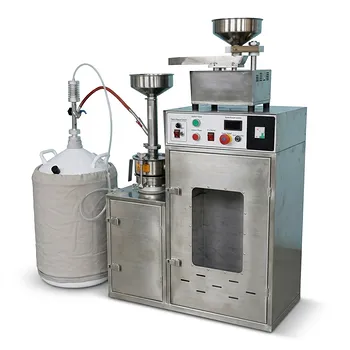
- Liquid Nitrogen Cryogenic Grinder Mill Cryomill with Screw Feeder
People Also Ask
- What is the function of a laboratory ball mill in the preparation of AMMCs? Optimize Dispersion & Grain Refinement
- What is the primary function of a laboratory ball mill in the modification of sulfide-based solid electrolytes with LiPO2F2?
- What is the function of a laboratory ball mill in the pretreatment of waste tire char (WTC)? Optimize Material Reactivity
- What is the primary function of a laboratory ball mill in Rice Husk Ash (RHA) modification? Achieve Peak Densification
- How do laboratory ball mills facilitate the mechanochemical synthesis of ZIF-8? Solvent-Free Synthesis Explained