Knowledge Why is Vacuum Drying Equipment used for Na3SbS4-xSex? Ensure High-Purity Sulfide Electrolyte Processing
Author avatar

Tech Team · Kintek Solution

Updated 4 days ago

Why is Vacuum Drying Equipment used for Na3SbS4-xSex? Ensure High-Purity Sulfide Electrolyte Processing


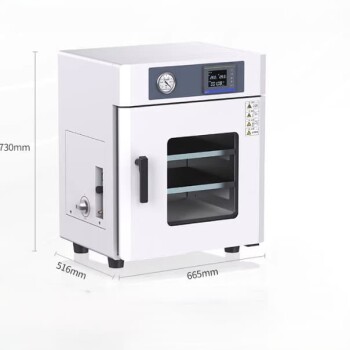
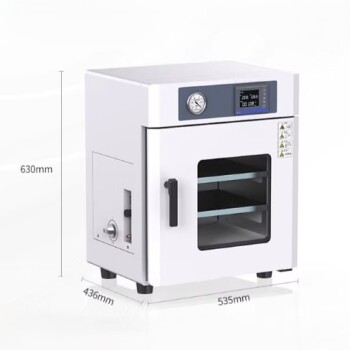
Vacuum drying is the critical processing step used to remove solvents from $Na_3SbS_{4-x}Se_x$ precursor solutions without compromising the material's chemical structure. By lowering the atmospheric pressure, this equipment allows solvents like acetonitrile to evaporate at significantly lower temperatures, preventing the heat-sensitive precursors from degrading or oxidizing before they can be processed further.

Core Takeaway Processing sulfide-based electrolytes requires a delicate balance between thorough drying and material preservation. Vacuum drying solves this by altering the physics of evaporation, enabling the complete removal of solvents at low temperatures to ensure the precursors remain pure, stable, and ready for milling and sintering.

The Mechanism of Preservation

Lowering the Boiling Point

The primary function of vacuum drying equipment is to reduce the atmospheric pressure surrounding the mixture.

This physical change significantly lowers the boiling point of the solvent (such as acetonitrile). Instead of requiring high heat to evaporate the liquid, the solvent can transition to a gas phase at a moderate or even ambient temperature.

Avoiding Thermal Decomposition

$Na_3SbS_{4-x}Se_x$ precursors are classified as heat-sensitive materials.

Subjecting these mixtures to the standard boiling temperatures of solvents would likely break down their chemical structure. Vacuum drying bypasses this risk entirely by facilitating evaporation below the thermal threshold where decomposition occurs.

Preventing Oxidation

In addition to heat sensitivity, these sulfide precursors are prone to oxidation.

The vacuum environment inherently removes air and oxygen from the chamber. This creates a protective atmosphere that prevents the material from reacting with oxygen during the drying process, ensuring the final product maintains its intended chemical composition.

Ensuring Downstream Quality

Achieving High Purity

The goal of this process is not just drying, but achieving complete removal of residual solvents.

Vacuum drying is highly efficient at extracting solvent traces that might otherwise remain trapped within the solid matrix. Eliminating these residues is vital for creating high-purity raw materials.

Preparation for Milling and Sintering

The output of the drying phase dictates the success of subsequent manufacturing steps.

By delivering a pure, undecomposed solid, vacuum drying ensures the material is chemically correct for the milling and sintering phases. If the precursor were partially decomposed or oxidized during drying, the final sintered product would likely suffer from poor performance or structural defects.

Understanding the Operational Constraints

The Necessity of Specialized Equipment

Unlike simple oven drying, this process requires a sealed vacuum chamber and a pump system capable of maintaining consistent low pressure.

This adds a layer of complexity to the manufacturing line, as the system must be strictly monitored to ensure the vacuum seal is never compromised during the cycle.

Process Speed vs. Material Integrity

There is often a trade-off between the speed of drying and the gentleness of the process.

While adding heat would speed up evaporation even under vacuum, the strict temperature limits of $Na_3SbS_{4-x}Se_x$ mean the process must rely heavily on pressure reduction rather than thermal energy. This prioritizes material integrity over processing speed.

Making the Right Choice for Your Goal

To optimize the processing of sulfide precursors, align your drying parameters with your specific quality requirements:

  • If your primary focus is Material Stability: Prioritize the lowest possible pressure settings to minimize the need for any supplemental heat, ensuring zero thermal decomposition.
  • If your primary focus is Chemical Purity: Ensure the drying cycle is sufficiently long to remove all traces of acetonitrile, as residual solvent can interfere with the densification during the sintering phase.

The effective use of vacuum drying is the gateway to producing high-performance sulfide solid electrolytes.

Summary Table:

Feature Vacuum Drying Benefit Impact on Precursor
Boiling Point Significant reduction under low pressure Enables low-temp solvent evaporation
Atmosphere Oxygen-free environment Prevents oxidation of sulfide compounds
Temperature Below thermal decomposition threshold Preserves chemical structure and stability
Solvent Removal High-efficiency extraction Ensures purity for milling and sintering

Elevate Your Materials Research with KINTEK Precision

At KINTEK, we understand that the integrity of your sulfide-based electrolytes depends on precise environmental control. Our advanced vacuum drying systems and laboratory equipment are engineered to protect heat-sensitive precursors from oxidation and decomposition, ensuring your research leads to high-performance results.

From high-temperature furnaces (muffle, vacuum, CVD) to crushing and milling systems and isostatic hydraulic presses, KINTEK provides the comprehensive tools required for every stage of your material synthesis. Our portfolio also includes specialized high-temperature high-pressure reactors, electrolytic cells, and essential ceramic and PTFE consumables.

Ready to optimize your drying process? Contact our technical experts today to discover how KINTEK's tailored laboratory solutions can enhance your material purity and structural stability.

Related Products

People Also Ask

Related Products

Laboratory Scientific Electric Heating Blast Drying Oven

Laboratory Scientific Electric Heating Blast Drying Oven

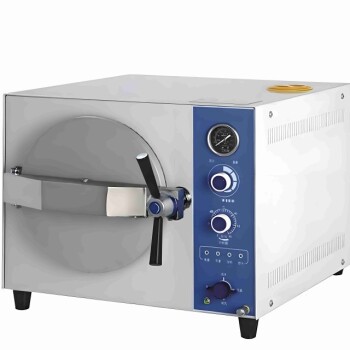
The desktop fast autoclave sterilizer is a compact and reliable device used for rapid sterilization of medical, pharmaceutical, and research items.

Vacuum Heat Treat and Pressure Sintering Furnace for High Temperature Applications

Vacuum Heat Treat and Pressure Sintering Furnace for High Temperature Applications

Vacuum pressure sintering furnaces are designed for high temperature hot pressing applications in metal and ceramic sintering. Its advanced features ensure precise temperature control, reliable pressure maintenance, and a robust design for seamless operation.

Vacuum Heat Treat Furnace with Ceramic Fiber Liner

Vacuum Heat Treat Furnace with Ceramic Fiber Liner

Vacuum furnace with polycrystalline ceramic fiber insulation liner for excellent heat insulation and uniform temperature field. Choose from 1200℃ or 1700℃ max. working temperature with high vacuum performance and precise temperature control.

Small Vacuum Heat Treat and Tungsten Wire Sintering Furnace

Small Vacuum Heat Treat and Tungsten Wire Sintering Furnace

The small vacuum tungsten wire sintering furnace is a compact experimental vacuum furnace specially designed for universities and scientific research institutes. The furnace features a CNC welded shell and vacuum piping to ensure leak-free operation. Quick-connect electrical connections facilitate relocation and debugging, and the standard electrical control cabinet is safe and convenient to operate.

Graphite Vacuum Furnace High Thermal Conductivity Film Graphitization Furnace

Graphite Vacuum Furnace High Thermal Conductivity Film Graphitization Furnace

The high thermal conductivity film graphitization furnace has uniform temperature, low energy consumption and can operate continuously.

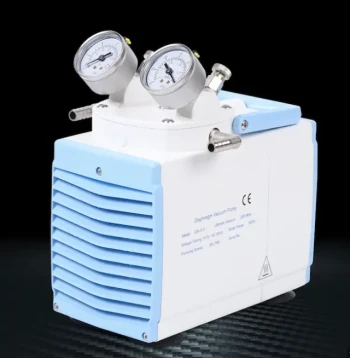
Oil Free Diaphragm Vacuum Pump for Laboratory and Industrial Use

Oil Free Diaphragm Vacuum Pump for Laboratory and Industrial Use

Oil-free diaphragm vacuum pump for labs: clean, reliable, chemical-resistant. Ideal for filtration, SPE, and rotary evaporation. Maintenance-free operation.

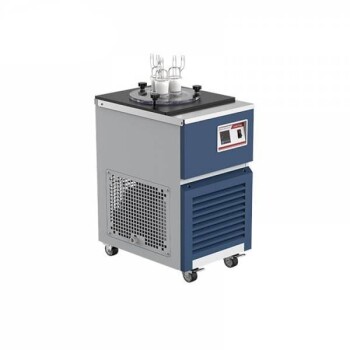
Vacuum Cold Trap Chiller Indirect Cold Trap Chiller

Vacuum Cold Trap Chiller Indirect Cold Trap Chiller

Boost vacuum system efficiency and prolong pump life with our Indirect Cold Trap. Built-in chilling system with no need for fluid or dry ice. Compact design and easy to use.

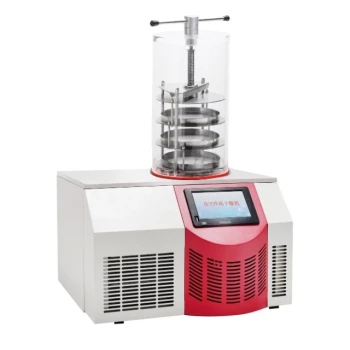
Benchtop Laboratory Freeze Dryer for Lab Use

Benchtop Laboratory Freeze Dryer for Lab Use

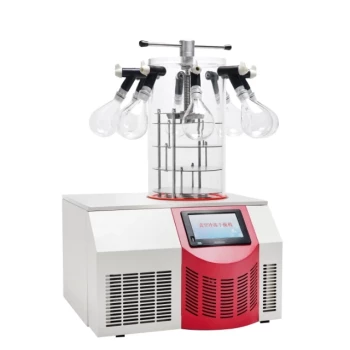
Premium benchtop laboratory freeze dryer for lyophilization, preserving samples with ≤ -60°C cooling. Ideal for pharmaceuticals & research.

Stainless Steel Quick Release Vacuum Chain Three-Section Clamp

Stainless Steel Quick Release Vacuum Chain Three-Section Clamp

Discover our stainless steel quick release clamp vacuum clamp, Ideal for high vacuum applications, Strong connections, reliable sealing, Easy installation, and durable design.

1200℃ Muffle Furnace Oven for Laboratory

1200℃ Muffle Furnace Oven for Laboratory

Upgrade your lab with our 1200℃ Muffle Furnace. Achieve fast, precise heating with Japan alumina fibers and Molybdenum coils. Features TFT touch screen controller for easy programming and data analysis. Order now!

Dental Porcelain Zirconia Sintering Ceramic Furnace Chairside with Transformer

Dental Porcelain Zirconia Sintering Ceramic Furnace Chairside with Transformer

Experience top-notch sintering with Chairside Sintering Furnace with Transformer. Easy to operate, noise-free pallet, and automatic temperature calibration. Order now!

Graphite Vacuum Furnace Bottom Discharge Graphitization Furnace for Carbon Materials

Graphite Vacuum Furnace Bottom Discharge Graphitization Furnace for Carbon Materials

Bottom-out graphitization furnace for carbon materials, ultra-high temperature furnace up to 3100°C, suitable for graphitization and sintering of carbon rods and carbon blocks. Vertical design, bottom discharging, convenient feeding and discharging, high temperature uniformity, low energy consumption, good stability, hydraulic lifting system, convenient loading and unloading.

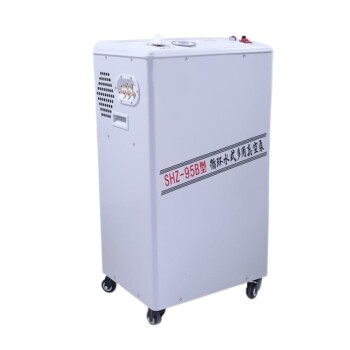
Circulating Water Vacuum Pump for Laboratory and Industrial Use

Circulating Water Vacuum Pump for Laboratory and Industrial Use

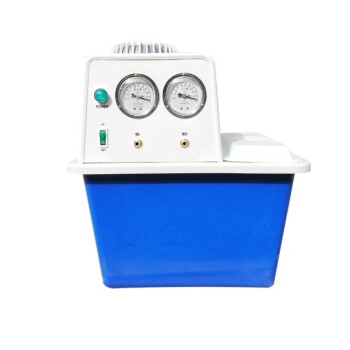
Efficient circulating water vacuum pump for labs - oil-free, corrosion-resistant, quiet operation. Multiple models available. Get yours now!

Custom PTFE Teflon Parts Manufacturer for Culture Dish and Evaporation Dish

Custom PTFE Teflon Parts Manufacturer for Culture Dish and Evaporation Dish

The PTFE culture dish evaporating dish is a versatile laboratory tool known for its chemical resistance and high-temperature stability. PTFE, a fluoropolymer, offers exceptional non-stick properties and durability, making it ideal for various applications in research and industry, including filtration, pyrolysis, and membrane technology.

Lab Blown Film Extrusion Three Layer Co-Extrusion Film Blowing Machine

Lab Blown Film Extrusion Three Layer Co-Extrusion Film Blowing Machine

Lab blown film extrusion is mainly used to detect the feasibility of film blowing of polymer materials and the colloid condition in the materials, as well as the dispersion of colored dispersions, controlled mixtures, and extrudates;

CF Ultra-High Vacuum Observation Window Window Flange High Borosilicate Glass Sight Glass

CF Ultra-High Vacuum Observation Window Window Flange High Borosilicate Glass Sight Glass

Discover CF ultra-high vacuum observation window flanges with high borosilicate glass, perfect for semiconductor manufacturing, vacuum coating, and optical instruments. Clear observation, durable design, easy installation.

Vertical Laboratory Tube Furnace

Vertical Laboratory Tube Furnace

Elevate your experiments with our Vertical Tube Furnace. Versatile design allows for operation under various environments and heat treatment applications. Order now for precise results!

Custom PTFE Teflon Parts Manufacturer for PTFE Mesh F4 Sieve

Custom PTFE Teflon Parts Manufacturer for PTFE Mesh F4 Sieve

PTFE mesh sieve is a specialized test sieve designed for particle analysis in various industries, featuring a non-metallic mesh woven from PTFE filament. This synthetic mesh is ideal for applications where metal contamination is a concern . PTFE sieves are crucial for maintaining the integrity of samples in sensitive environments, ensuring accurate and reliable results in particle size distribution analysis.

High Temperature Muffle Oven Furnace for Laboratory Debinding and Pre Sintering

High Temperature Muffle Oven Furnace for Laboratory Debinding and Pre Sintering

KT-MD High temperature debinding and pre-sintering furnace for ceramic materials with various molding processes. Ideal for electronic components such as MLCC and NFC.

Twin Screw Extruder Plastic Granulation Machine

Twin Screw Extruder Plastic Granulation Machine

Twin screw extruder plastic granulation machine is designed for the mixing and processing experiments of engineering plastics, modified plastics, waste plastics and masterbatches.


Leave Your Message