The requirement to process coal to sub-74μm dimensions is a fundamental prerequisite for effective triboelectric separation. This ultra-fine sizing maximizes the surface area available for charge transfer and ensures that mineral impurities are physically detached from the coal organic matter. Without this precise preparation, the electrical potential difference required for separation cannot be consistently achieved, leading to poor recovery rates.
Reducing coal particle size below 74μm maximizes surface charge density through increased specific surface area and ensures mechanical mineral liberation. This physical transformation is the critical catalyst for achieving high-precision separation and effective impurity removal.
Maximizing Electrostatic Charge Potential
Increasing Specific Surface Area
Triboelectric separation relies entirely on the surface properties of particles. By crushing coal to below 74μm, you exponentially increase the specific surface area, providing more "contact real estate" for friction to occur.
Improving Friction Charging Efficiency
A higher surface-to-volume ratio allows for a more intense accumulation of static electricity. This increases the surface charge density, ensuring that the electrical forces acting on the particle are strong enough to overcome gravity and air resistance during separation.
Enhancing Charge Uniformity
Fine grinding ensures that the particles behave more predictably within the electric field. When particles are uniform and small, the influence of particle geometry on the resulting charge is minimized, leading to a more stable and controlled separation process.
Achieving Mechanical Liberation of Impurities
Separation of Macerals and Minerals
In its raw state, coal is a complex matrix where organic macerals (like vitrinite) and inorganic minerals (like halite) are interlocked. Grinding to 74μm reaches the liberation point, physically snapping the bonds between these different components.
Precision in Sodium Removal
For applications requiring low-sodium coal, liberation is non-negotiable. Effective sodium removal is only possible when sodium-containing minerals are freed from the coal structure, allowing them to take on a different charge and move to the opposite electrode.
Eliminating Matrix Effects
Consistent particle size ensures that the internal composition of each grain is relatively homogeneous. This eliminates matrix effects where hidden mineral inclusions inside a larger coal particle would cause it to move toward the wrong collection bin.
Optimizing Physical and Kinetic Behavior
Reducing Diffusion Resistance
Small particle sizes eliminate differences in internal heat and charge diffusion resistance. This uniformity is critical if the separation process is paired with thermal treatments, as it ensures all particles react at the same rate.
Ensuring Sample Representativeness
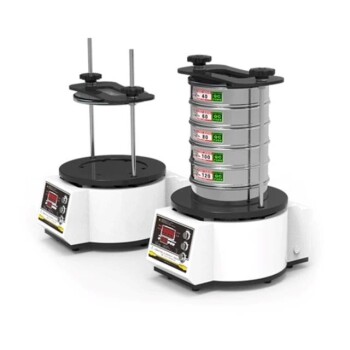
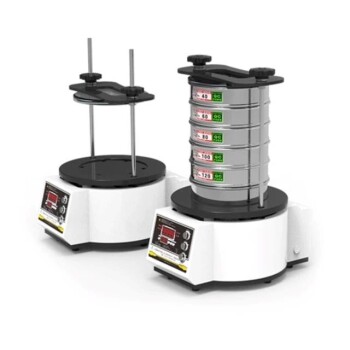
Using high-standard sieving equipment to maintain the 74μm threshold guarantees that the processed batch is representative of the whole. This consistency is vital for maintaining the repeatability of the separation results across different coal batches.
Improving Flow Characteristics
While ultra-fine powders can be difficult to handle, the 74μm size often represents a "sweet spot." It is fine enough for high-precision charging but still manageable within specialized tribo-electrostatic separators designed for dry powder processing.
Understanding the Trade-offs
Increased Energy Consumption
Achieving a particle size below 74μm requires significant mechanical energy. The cost of fine grinding and milling must be weighed against the increased value of the high-purity coal produced.
Risks of Agglomeration
At sizes significantly below 74μm, particles may begin to clump together due to Van der Waals forces. If particles agglomerate, the separation efficiency drops because the "clumps" contain both coal and minerals, defeating the purpose of liberation.
Handling and Dust Control
Processing materials at this level of fineness creates significant dust management challenges. Specialized equipment is required to transport and feed the sub-74μm powder into the separator without loss of material or environmental contamination.
How to Apply This to Your Process
Recommendations for Implementation
- If your primary focus is Maximum Purity: Prioritize the use of high-energy milling to ensure you stay strictly below the 74μm threshold to maximize mineral liberation.
- If your primary focus is Throughput Efficiency: Use a closed-circuit grinding system with a vibrating sieve to quickly remove particles already below 74μm, preventing over-grinding and saving energy.
- If your primary focus is Sodium Removal: Ensure your crushing equipment is specifically calibrated to detach halite from vitrinite, as this specific liberation is key to meeting low-sodium specifications.
By strictly controlling the particle size distribution through precise crushing and sieving, you transform a heterogeneous raw material into a responsive feedstock optimized for high-precision electrostatic separation.
Summary Table:
| Key Factor | Mechanism | Benefit to Separation |
|---|---|---|
| Specific Surface Area | Exponentially increases contact area | Higher surface charge density & friction efficiency |
| Mineral Liberation | Snaps bonds between macerals and minerals | Precise removal of impurities (e.g., sodium) |
| Charge Uniformity | Minimizes influence of particle geometry | Stable, predictable movement in electric fields |
| Diffusion Resistance | Eliminates internal resistance gradients | Consistent reaction rates for thermal/electrical processing |
| Sample Integrity | High-standard sieving ensures homogeneity | Repeatable results across different coal batches |
Optimize Your Sample Preparation with KINTEK Precision
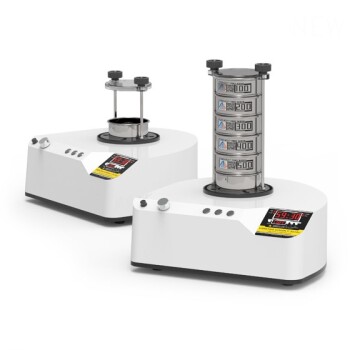
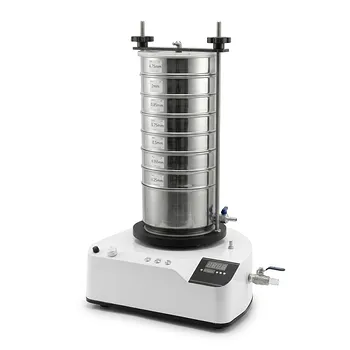
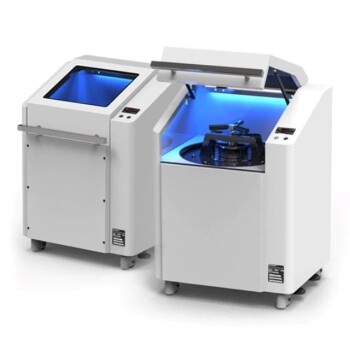
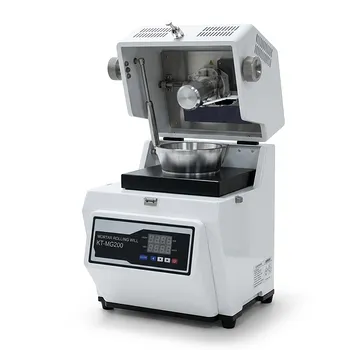
Achieving the critical 74μm threshold is the first step toward successful triboelectric separation. KINTEK specializes in high-performance laboratory equipment designed to meet these exacting standards. Our advanced crushing and milling systems and high-precision sieving equipment ensure you reach the liberation point of your materials without over-grinding.
From coal research to advanced material processing, KINTEK provides a comprehensive range of tools including:
- Crushing & Milling Systems: For uniform particle size reduction.
- Sieving Equipment: To guarantee representative and consistent sample batches.
- High-Temperature Furnaces & Reactors: For downstream thermal analysis and processing.
Ready to enhance your lab's efficiency and purity results? Contact our experts today to find the perfect equipment solution tailored to your specific research needs.
References
- Xin He, Wenfeng Wang. Occurrence Mode of Sodium in Zhundong Coal, China: Relationship to Maceral Groups. DOI: 10.3390/min13091155
This article is also based on technical information from Kintek Solution Knowledge Base .
Related Products
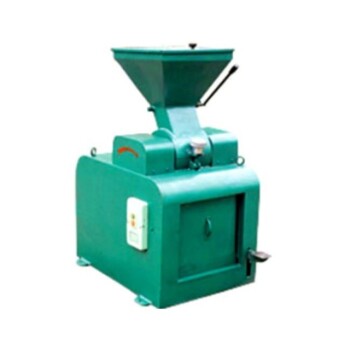
- Laboratory Sealed Hammer Crusher for Efficient Sample Preparation
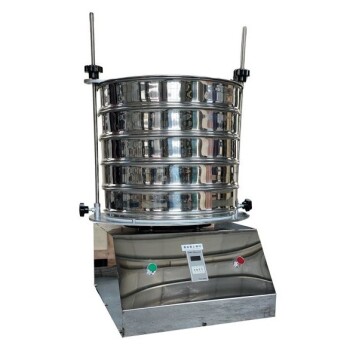
- Laboratory Test Sieves and Sieving Machines
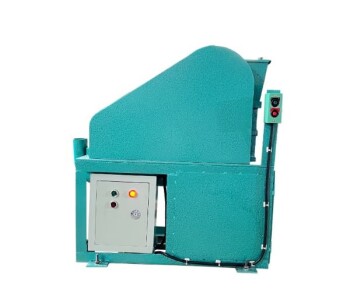
- Sealed Jaw Crusher High Efficiency Environmental Protection Safe and Reliable
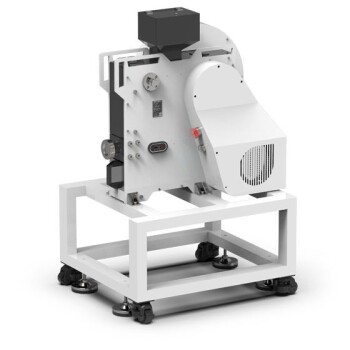
- Laboratory Jaw Crusher
- Three-dimensional electromagnetic sieving instrument
People Also Ask
- What role do laboratory crushers and standard sieves play in Datura stramonium pretreatment? Optimize Your HTL Yield
- What is the primary function of a laboratory crusher? Optimize Biomass & Coal Co-Gasification Efficiency
- What lab equipment would be use to crush or grind a substance? A Guide to Choosing the Right Tool
- What is the purpose of sample preparation? Ensure Accurate & Reliable Analytical Results
- What kind of material is a hammer mill used for? Process Brittle, Dry, and Crystalline Materials Efficiently