Introduction to Rotary Evaporators
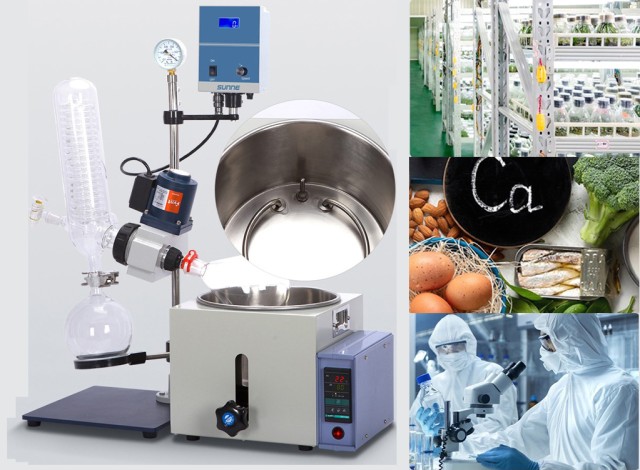
Rotary evaporators are laboratory instruments used for solvent removal. They work by rotating a flask containing a liquid sample, which creates a thin film on the surface of the flask. This increases the surface area of the sample, allowing for faster and more efficient evaporation. Rotary evaporators are commonly used in chemical, pharmaceutical, and biotechnology industries for the concentration of solvents and extraction of compounds. They offer a range of benefits, including improved efficiency, scalability, and safety. When selecting a rotary evaporator, factors such as sample size, application, and budget should be considered.
Table of Contents
How Rotary Evaporators Work
Rotary evaporators are a widely used tool in the laboratory for solvent removal. Understanding how they work can help laboratory professionals take advantage of their many benefits to improve their research and analysis. In this section, we will discuss the step-by-step process of how rotary evaporators work.
Step 1: Placing the Sample in a Flask
The first step is to place the sample in a flask that is designed for use with a rotary evaporator. The flask is then attached to the rotary evaporator, and the process begins.
Step 2: Rotary Evaporation Process
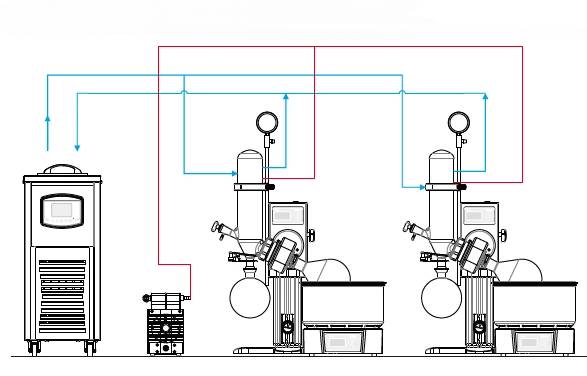
The rotary evaporation process is a method of solvent removal that uses a rotating flask, which is heated in a water bath, to evaporate the solvent from a sample. The evaporation process occurs under reduced pressure, which helps to lower the boiling point of the solvent.
Step 3: Heating and Rotation
As the flask rotates, the solvent evaporates and is collected in a condenser. The heating process occurs evenly, and materials with a lower boiling point rapidly evaporate. Recycling of the solvent stream occurs in the receiving flask, following cooling by the glass condenser.
Step 4: Solvent Removal
The reduced pressure in the system helps to lower the boiling point of the solvent, making it easier to evaporate. The process continues until all the solvent has been removed from the sample, leaving behind a dry residue.
In conclusion, the rotary evaporator works by placing the sample in a flask, which is then rotated at a controlled speed by a motor. The flask is heated by a water bath, which is set to a specific temperature. As the flask rotates, the solvent evaporates and is collected in a condenser. The condenser cools the solvent vapors, causing them to condense back into a liquid, which is then collected in a receiving flask. The reduced pressure in the system helps to lower the boiling point of the solvent, making it easier to evaporate. The process continues until all the solvent has been removed from the sample, leaving behind a dry residue.
Benefits of Using Rotary Evaporators
Rotary evaporators are extensively used in laboratory settings for solvent removal. They offer several advantages over other methods of solvent removal, including speed, precision, and safety. In this section, we will discuss the benefits of using rotary evaporators step by step.
Rapid Solvent Removal
Rotary evaporators allow for the rapid removal of solvents from samples without exposing them to high temperatures or pressure. This is particularly important for delicate or heat-sensitive materials, which can be damaged by traditional methods of solvent removal. Using a rotary evaporator, researchers can remove solvents from samples quickly and efficiently.
Precise Control
Rotary evaporators are designed to be highly precise, allowing researchers to control the rate of solvent removal with great accuracy. This is essential for ensuring that samples are not over-dried or damaged during the process. Researchers can control the vacuum, temperature, and rotation speed of the rotary evaporator, allowing for precise control over the concentration of the sample.
Closed System
Another advantage of using a rotary evaporator is that it is a closed system, which greatly reduces the risk of contamination or exposure to hazardous chemicals. This makes it a safer and more efficient method of solvent removal, especially when working with volatile or toxic substances. The closed system also prevents the loss of solvent and ensures the sample remains pure.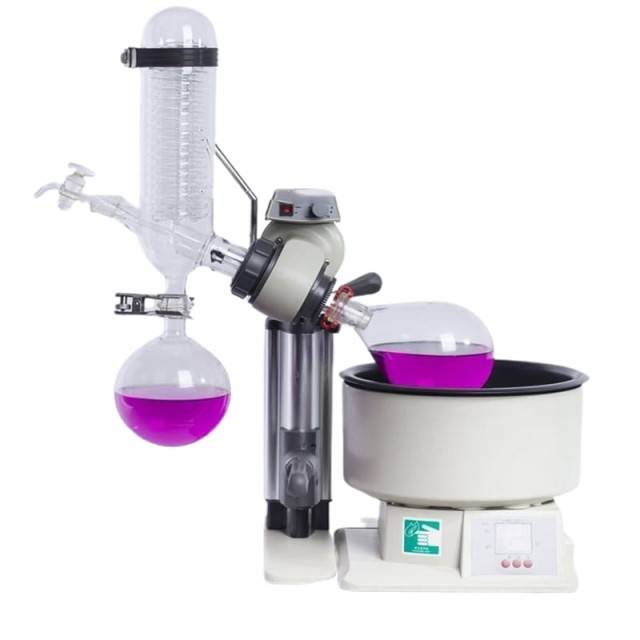
Higher Efficiency
Rotary evaporators are more efficient in removing solvents than traditional methods of solvent removal. The evaporation is done at reduced pressure, and the distillation is performed at a low temperature, making it very useful for heat-sensitive compounds. The rate of evaporation is fast, and separation can be done in a very short time.
Versatile Applications
Rotary evaporators are used in a wide range of applications, including the purification of samples, solvent recovery, distillation of complex mixtures, and the purification of plant extracts and essential oils from natural products. They are preferred over standard distillation systems due to their distillation efficiency and ability to accommodate samples sizes of up to 1 litre.
In conclusion, the benefits of using rotary evaporators for solvent removal are clear, and they are an essential tool for any laboratory that needs to remove solvents from samples quickly, safely, and accurately. Rotary evaporators offer rapid solvent removal, precise control, a closed system, higher efficiency, and versatile applications. These advantages make rotary evaporators the preferred method for solvent removal in various industries, including the cannabis extraction, chemical, and biotechnology industries.

In conclusion, selecting the right rotary evaporator is essential for efficient and gentle solvent removal or concentration. Factors to consider when selecting a rotary evaporator include the size, vacuum pump type, type of solvent being used, temperature range, ease of use and maintenance, and overall cost. By carefully considering these factors, scientists and researchers can select the most appropriate instrument for their specific needs, ensuring accurate and reliable results.
Related Products
- Electric Rotary Kiln Small Rotary Furnace for Activated Carbon Regeneration
- Inclined Rotary Plasma Enhanced Chemical Vapor Deposition PECVD Equipment Tube Furnace Machine
- Electric Rotary Kiln Small Rotary Furnace Biomass Pyrolysis Plant
- Inclined Rotary Plasma Enhanced Chemical Vapor Deposition PECVD Equipment Tube Furnace Machine
- Laboratory Vacuum Tilt Rotary Tube Furnace Rotating Tube Furnace
Related Articles
- Optimizing Industrial Processes: Rotary Kiln and Laboratory Furnace Solutions
- Maximize Rotary Furnace Performance: Design Advancements for Efficient Material Processing
- A Comprehensive Guide to Rotary Kilns: Applications, Types, and Working Principles
- Rotary Furnaces: Advanced Materials Processing and Applications
- All About ACTIVATED CARBON THERMAL REGENERATION