Consumables such as starch, sawdust, and synthetic polymers act as sacrificial pore-forming agents. These materials are mixed into the ceramic precursor to occupy specific volumes within the structure. During the high-temperature sintering process, they completely oxidize and volatilize, vanishing from the matrix and leaving behind an interconnected network of voids that constitute the membrane's pores.
By functioning as temporary templates that are removed via heat, these agents allow for the precise engineering of void space within a solid ceramic body, converting it from a dense material into a functional filter.
The Mechanism of Pore Formation
The Sacrificial Role
In the initial stages of fabrication, these consumables serve as space-holders. They are distributed throughout the ceramic matrix to define where the future pores will be located.
The Sintering Transformation
The critical transformation occurs during sintering, the high-temperature heating phase. As the temperature rises, the organic nature of materials like starch or sawdust causes them to burn out.
Creation of the Void Network
The primary reference notes that these materials oxidize and volatilize completely. As they turn into gas and escape, they leave behind empty cavities, creating a porous structure without residual contaminants.
Tuning Membrane Properties
Adjusting Porosity via Ratio
Technicians can control the total volume of open space—the porosity—by altering the ratio of the consumable agent added to the ceramic mix. Higher quantities of consumables generally lead to higher porosity.
Defining Pore Size via Material Type
The physical characteristics of the consumable directly influence the size of the resulting pores. By selecting specific types of polymers or natural agents with distinct particle sizes, engineers can dictate the average pore size of the final membrane.
Targeting Specific Applications
This tunability enables the production of membranes tailored for distinct water treatment categories. By manipulating these variables, manufacturers can target microfiltration, ultrafiltration, or nanofiltration specifications.
Understanding the Trade-offs
Balancing Permeability and Strength
While increasing the amount of pore-forming agents improves flow (permeability), it creates more void space. This can potentially weaken the mechanical integrity of the ceramic matrix if the ratio is too high.
Precision of the Agent
Natural materials like sawdust may offer cost advantages but can have irregular particle sizes. Synthetic polymers often provide more uniform particle sizes, allowing for tighter control over pore distribution but potentially at a different cost point.
Making the Right Choice for Your Goal
To effectively utilize pore-forming agents in membrane development, consider your specific filtration requirements.
- If your primary focus is High Permeability (Microfiltration): Prioritize larger particle-size consumables or higher ratios to create larger, more interconnected channels for rapid flow.
- If your primary focus is High Selectivity (Ultra/Nanofiltration): Utilize finer synthetic polymers and carefully controlled ratios to produce smaller, uniform pores that can trap minute contaminants.
Success in ceramic membrane fabrication lies in the precise calibration of these sacrificial agents to achieve the perfect balance between structural stability and filtration efficiency.
Summary Table:
| Sacrificial Agent Type | Primary Benefit | Typical Application |
|---|---|---|
| Starch | Cost-effective, natural pore former | Microfiltration |
| Sawdust | Large pore generation, economical | High-flow pre-treatment |
| Synthetic Polymers | High precision, uniform pore size | Ultrafiltration & Nanofiltration |
| Volatilization | Leaves no residual contaminants | High-purity ceramic matrices |
Elevate Your Material Research with KINTEK Precision Solutions
Unlock the full potential of your ceramic membrane development with KINTEK’s world-class laboratory equipment. Whether you are precisely controlling the sintering process for sacrificial agents or testing the mechanical integrity of your porous structures, we provide the tools you need for success.
Our extensive portfolio includes:
- High-Temperature Furnaces: Muffle, vacuum, and atmosphere furnaces for precise burnout and sintering.
- Crushing & Milling Systems: Achieve the perfect particle size for your ceramic precursors and pore-forming agents.
- Hydraulic Presses: Pellet and isostatic presses for consistent membrane forming.
- Sieving & Characterization: Ensure uniformity in your consumable agents.
From high-performance crucibles and ceramics to advanced cooling solutions, KINTEK is the trusted partner for laboratory professionals and researchers worldwide.
Ready to optimize your filtration technology? Contact KINTEK today to discuss your specific requirements and find out how our comprehensive range of equipment and consumables can streamline your workflow.
References
- Gülzade Artun, Ayşegül Aşkın. Studies on Production of Low-Cost Ceramic Membranes and Their Uses in Wastewater Treatment Processes. DOI: 10.56038/ejrnd.v2i2.39
This article is also based on technical information from Kintek Solution Knowledge Base .
Related Products
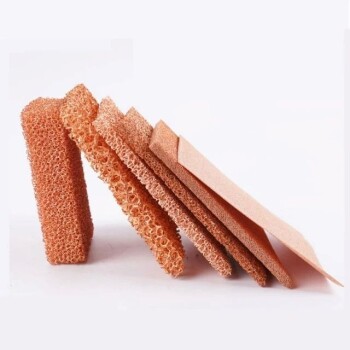
- Copper Foam
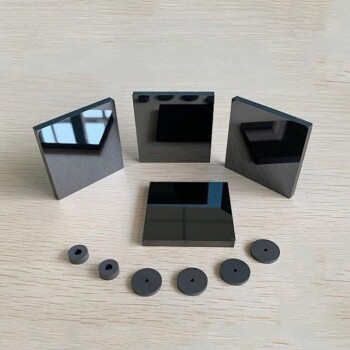
- Silicon Carbide (SIC) Ceramic Sheet Wear-Resistant Engineering Advanced Fine Ceramics
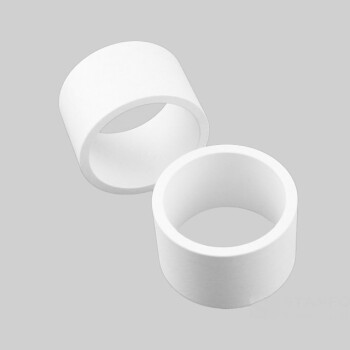
- Boron Nitride (BN) Ceramic Tube
- Boron Nitride (BN) Ceramic Plate
- Zirconia Ceramic Gasket Insulating Engineering Advanced Fine Ceramics
People Also Ask
- What is copper foam used for? A Guide to Its High-Performance Thermal and Energy Applications
- How do you make copper foam? A Step-by-Step Guide to Creating Porous Metal Structures
- What are the available sizes and thicknesses for copper foam? Optimize Your Thermal and Filtration Performance
- What are the characteristics of copper foam? Unlock High-Performance Thermal and Electrical Solutions
- Is copper foam safe? Discover the facts about its antimicrobial and cooling benefits