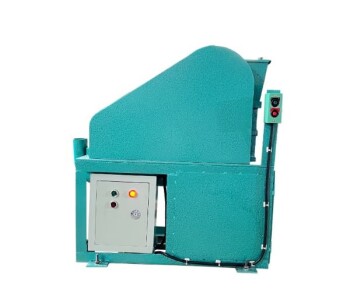
Knowledge How do industrial crushing and grinding systems optimize antimony ore separation? Achieve Maximum Mineral Liberation
Author avatar

Tech Team · Kintek Solution

Updated 2 days ago

How do industrial crushing and grinding systems optimize antimony ore separation? Achieve Maximum Mineral Liberation


Industrial crushing and grinding systems optimize separation efficiency by mechanically pulverizing stibnite-bearing rock into a fine slurry to achieve complete mineral liberation. This physical process detaches valuable antimony minerals from waste rock, creating the specific particle conditions required for effective downstream processing.

The core function of these systems is to fully expose antimony minerals from gangue such as quartz or calcite. By establishing the ideal particle size through mechanical liberation, operators significantly improve both the grade and recovery rate of the final antimony concentrate during flotation.

The Mechanics of Liberation

To understand how efficiency is optimized, one must look at the physical interaction between the valuable mineral and the host rock.

Breaking the Mineral Lock

Antimony minerals, specifically stibnite, are often embedded within host rocks. In their raw state, these valuable minerals are "locked" inside waste material.

The crushing process applies mechanical force to fracture these rocks. The goal is to break the physical bonds holding the stibnite and the gangue together.

Separating from Gangue

Efficiency is determined by how well the system separates the target mineral from gangue minerals like quartz or calcite.

If the rock is not ground sufficiently, the antimony remains attached to the waste. This mechanical liberation ensures the two components can be treated as distinct particles in later stages.

Preparing for Downstream Flotation

The crushing and grinding phase is not an isolated step; it is a pretreatment specifically designed to facilitate flotation.

Creating the Ideal Slurry

Flotation processes rely on chemical reactions that occur on the surface of mineral particles. To make this possible, the rock must be converted into a fine slurry.

Grinding systems pulverize the rock to increase the available surface area of the antimony minerals.

Optimizing Particle Size

The definition of "optimization" in this context refers to achieving an ideal particle size.

If particles are too large, they may sink or fail to attach to flotation bubbles. The grinding system ensures particles are within the specific size range that maximizes recovery rates.

Critical Considerations for Efficiency

While the primary goal is liberation, the process requires precision to ensure the resulting concentrate is high quality.

Impact on Grade and Recovery

The ultimate measure of the system's success is the grade and recovery rate of the antimony concentrate.

Proper grinding directly correlates to higher recovery; more accessible antimony means less valuable mineral is lost to tailings.

Balancing Liberation and Processing

Achieving full exposure of the mineral is critical, but it must be balanced against the requirements of the flotation equipment.

The system must pulverize the rock enough to free the stibnite, but maintains a consistency that aligns with the "ideal conditions" required for the subsequent chemical separation.

Making the Right Choice for Your Goal

The effectiveness of your crushing and grinding circuit dictates the success of your entire separation line.

  • If your primary focus is Recovery Rate: Ensure your grinding stage achieves maximum liberation to minimize the amount of stibnite still locked in quartz or calcite.
  • If your primary focus is Concentrate Grade: Prioritize precise particle sizing to ensure the flotation process can efficiently distinguish between valuable ore and gangue.

Optimization in antimony processing is fundamentally about preparation—ensure the mineral is free and the size is right, and the chemistry will do the rest.

Summary Table:

Optimization Factor Process Impact Benefit for Antimony Extraction
Mineral Liberation Detaches stibnite from quartz/calcite gangue Ensures valuable minerals are accessible for flotation.
Particle Sizing Creates an ideal slurry consistency Maximizes bubble attachment and reduces mineral loss in tailings.
Surface Area Increases exposure of target minerals Enhances chemical reaction efficiency during downstream processing.
Circuit Precision Balances grinding intensity Improves both final concentrate grade and overall recovery rates.

Maximize Your Ore Recovery with KINTEK Precision Systems

Don't let valuable minerals go to waste due to inefficient liberation. KINTEK specializes in high-performance crushing and milling systems, sieving equipment, and hydraulic presses designed to meet the rigorous demands of mineral pretreatment and laboratory research.

Whether you are processing antimony ore or developing advanced materials, our comprehensive range of laboratory equipment—from high-temperature furnaces and vacuum reactors to specialized PTFE and ceramic consumables—ensures your results are consistent, precise, and scalable.

Ready to optimize your mineral processing workflow? Contact KINTEK today to discover how our tailored solutions can enhance your lab's efficiency and recovery rates!

Related Products

People Also Ask

Related Products

Laboratory Micro Horizontal Jar Mill for Precision Sample Preparation in Research and Analysis

Laboratory Micro Horizontal Jar Mill for Precision Sample Preparation in Research and Analysis

Discover the Micro Horizontal Jar Mill for precise sample preparation in research and analysis. Ideal for XRD, geology, chemistry, and more.

Laboratory Four-Body Horizontal Jar Mill

Laboratory Four-Body Horizontal Jar Mill

The four-body horizontal tank mill ball mill can be used with four horizontal ball mill tanks with a volume of 3000ml. It is mostly used for mixing and grinding laboratory samples.

Laboratory Single Horizontal Jar Mill

Laboratory Single Horizontal Jar Mill

KT-JM3000 is a mixing and grinding instrument for placing a ball milling tank with a volume of 3000ml or less. It adopts frequency conversion control to realize timing, constant speed, direction change, overload protection and other functions.

Open Type Two Roll Mixing Mill Machine for Rubber Crusher

Open Type Two Roll Mixing Mill Machine for Rubber Crusher

Rubber crusher open mixing mill/Open two roller rubber mixing mill machine is suitable for mixing and dispersing rubber, plastic raw materials, pigments, masterbatches and other high molecular polymers.

Laboratory Jar Mill with Agate Grinding Jar and Balls

Laboratory Jar Mill with Agate Grinding Jar and Balls

Grind your materials with ease using Agate Grinding Jars with Balls. Sizes from 50ml to 3000ml, perfect for planetary and vibration mills.

Laboratory Hybrid Tissue Grinding Mill

Laboratory Hybrid Tissue Grinding Mill

KT-MT20 is a versatile laboratory device used for rapid grinding or mixing of small samples, whether dry, wet, or frozen. It comes with two 50ml ball mill jars and various cell wall breaking adapters for biological applications such as DNA/RNA and protein extraction.

High Energy Planetary Ball Mill for Laboratory Horizontal Tank Type Milling Machine

High Energy Planetary Ball Mill for Laboratory Horizontal Tank Type Milling Machine

KT-P4000H uses the unique Y-axis planetary motion trajectory, and utilizes the collision, friction and gravity between the sample and the grinding ball to have a certain anti-sinking ability, which can obtain better grinding or mixing effects and further improve the sample output.

Laboratory Ten-Body Horizontal Jar Mill for Lab Use

Laboratory Ten-Body Horizontal Jar Mill for Lab Use

The Ten-body horizontal jar mill is for 10 ball mill pots (3000ml or less). It has frequency conversion control, rubber roller movement, and PE protective cover.

Laboratory Horizontal Planetary Ball Mill Milling Machine

Laboratory Horizontal Planetary Ball Mill Milling Machine

Improve sample uniformity with our Horizontal Planetary Ball Mills. KT-P400H reduces sample deposition and KT-P400E has multi-directional capabilities. Safe, convenient and efficient with overload protection.

Stainless Steel Laboratory Ball Mill for Dry Powder and Liquid with Ceramic Polyurethane Lining

Stainless Steel Laboratory Ball Mill for Dry Powder and Liquid with Ceramic Polyurethane Lining

Discover the versatile stainless steel dry powder/liquid horizontal ball mill with ceramic/polyurethane lining. Ideal for ceramic, chemical, metallurgical, and building materials industries. High grinding efficiency and uniform particle size.

High Energy Planetary Ball Mill Milling Machine for Laboratory

High Energy Planetary Ball Mill Milling Machine for Laboratory

The biggest feature is that the high energy planetary ball mill can not only perform fast and effective grinding, but also has good crushing ability

High Energy Planetary Ball Mill Milling Machine for Laboratory

High Energy Planetary Ball Mill Milling Machine for Laboratory

Experience fast and effective sample processing with the F-P2000 high-energy planetary ball mill. This versatile equipment offers precise control and excellent grinding capabilities. Perfect for laboratories, it features multiple grinding bowls for simultaneous testing and high output. Achieve optimal results with its ergonomic design, compact structure, and advanced features. Ideal for a wide range of materials, it ensures consistent particle size reduction and low maintenance.

Liquid Nitrogen Cryogenic Grinder Mill Cryomill with Screw Feeder

Liquid Nitrogen Cryogenic Grinder Mill Cryomill with Screw Feeder

Discover the Liquid Nitrogen Cryogenic Pulverizer with Screw Feeder, perfect for fine material processing. Ideal for plastics, rubber, and more. Boost your lab efficiency now!

Vibrating Disc Mill Small Laboratory Grinding Machine

Vibrating Disc Mill Small Laboratory Grinding Machine

Discover the versatile Vibrating Disc Mill for efficient laboratory grinding. Ideal for geology, metallurgy, biology, and more. Explore now!

High-Energy Omnidirectional Planetary Ball Mill Machine for Laboratory

High-Energy Omnidirectional Planetary Ball Mill Machine for Laboratory

The KT-P2000E is a new product derived from the vertical high-energy planetary ball mill with a 360°rotation function. The product not only has the characteristics of the vertical high-energy ball mill, but also has a unique 360°rotation function for the planetary body.

Mini Planetary Ball Mill Machine for Laboratory Milling

Mini Planetary Ball Mill Machine for Laboratory Milling

Discover the KT-P400 desktop planetary ball mill, ideal for grinding and mixing small samples in the lab. Enjoy stable performance, long service life, and practicality. Functions include timing and overload protection.

Disc Cup Vibrating Mill Multi-Platform for Lab

Disc Cup Vibrating Mill Multi-Platform for Lab

The multi-platform vibrating disc mill is suitable for non-destructive crushing and fine grinding of samples with large particle sizes. It is suitable for crushing and grinding applications of medium-hard, high-hard, brittle, fibrous, and elastic materials.

Laboratory Planetary Ball Mill Rotating Ball Milling Machine

Laboratory Planetary Ball Mill Rotating Ball Milling Machine

KT-P400E is a desktop multi-directional planetary ball mill with unique grinding and mixing capabilities. It offers continuous and intermittent operation, timing, and overload protection, making it ideal for various applications.

Lab Vibration Mill

Lab Vibration Mill

Vibration Mill for Efficient Sample Preparation, Suitable for Crushing and Grinding a Variety of Materials with Analytical Precision. Supports Dry / Wet / Cryogenic Grinding and Vacuum/Inert Gas Protection.

High Energy Vibratory Laboratory Ball Mill Grinding Mill Single Tank Type

High Energy Vibratory Laboratory Ball Mill Grinding Mill Single Tank Type

High-energy vibration ball mill is a small desktop laboratory grinding instrument.It can be ball-milled or mixed with different particle sizes and materials by dry and wet methods.


Leave Your Message