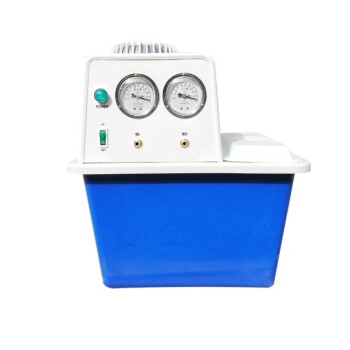
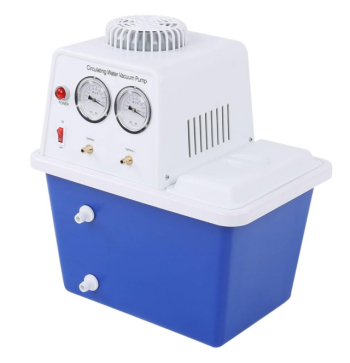
Liquid nitrogen and vacuum equipment work in tandem to neutralize the volatile chemical environment inside a battery during the discharge process. Liquid nitrogen freezes the internal components to halt ionic movement, while vacuum equipment manages the thermal environment to prevent heat buildup and subsequent explosions.
The synergy between extreme cold and vacuum pressure creates a controlled state of "suspended animation" for the battery, neutralizing its conductivity and eliminating the thermal risks associated with discharge.
The Role of Liquid Nitrogen: Inducing Inertia
Freezing the Electrolyte
The primary function of liquid nitrogen is to generate an extremely low-temperature environment. This rapid cooling penetrates the battery casing to reach the core components.
Halting Ionic Conductivity
When exposed to these cryogenic temperatures, the liquid electrolyte inside the battery freezes solid.
In this frozen state, the electrolyte loses its ability to transport ions between the cathode and anode. This effectively breaks the internal circuit, causing the battery to enter a chemically inert state where spontaneous reactions are suppressed.
The Role of Vacuum Equipment: Thermal Control
Preventing Heat Accumulation
Following the freezing process, the battery is placed into a vacuum environment.
According to the specific discharge protocol, this vacuum setting is critical for preventing heat accumulation as the battery undergoes discharge or processing. It acts as a safeguard against the thermal energy that typically builds up during these operations.
Stopping Rapid Temperature Spikes
By mitigating heat accumulation, the vacuum equipment ensures there are no rapid temperature increases.
This thermal stability is the key to preventing thermal runaway. By controlling the temperature rise, the system effectively avoids explosions, ensuring the physical safety of the pretreatment facility.
Understanding the Trade-offs
Equipment Complexity
Implementing this dual-stage process requires specialized infrastructure.
Facilities must maintain cryogenic storage for liquid nitrogen and robust vacuum chambers capable of handling potentially unstable hardware. This adds a layer of operational complexity compared to ambient-temperature discharge methods.
Process Dependency
The safety of this method relies on the sequence of operations.
The vacuum step is explicitly designed to follow the freezing stage ("Subsequently"). If the electrolyte is not sufficiently frozen before vacuum processing, the risk of thermal instability may not be fully mitigated.
Making the Right Choice for Your Goal
To ensure the safety of your battery discharge process, consider these priorities:
- If your primary focus is Maximum Safety: Ensure the liquid nitrogen exposure time is sufficient to completely freeze the electrolyte volume before moving to the vacuum stage.
- If your primary focus is Process Stability: Monitor the vacuum pressure to confirm it is effectively preventing heat accumulation during the critical discharge phase.
By combining cryogenic freezing with vacuum control, you convert a volatile chemical system into a stable, manageable component.
Summary Table:
| Component | Primary Function | Impact on Safety |
|---|---|---|
| Liquid Nitrogen | Freezes liquid electrolyte | Halts ionic movement and induces a chemically inert state |
| Vacuum Equipment | Manages thermal environment | Prevents heat accumulation and stops rapid temperature spikes |
| Synergy | Combined cryogenic/vacuum control | Eliminates explosion risks and ensures stable battery pretreatment |
Maximize Your Battery Research Safety with KINTEK
Transitioning volatile batteries into a stable state requires precision-engineered equipment. KINTEK specializes in providing the specialized laboratory tools needed for advanced energy research. From robust vacuum systems and ULT freezers to high-performance crushing and milling systems, we empower labs to handle hazardous materials with confidence.
Whether you are focusing on battery recycling, electrolyte analysis, or material synthesis, our portfolio of high-temperature furnaces, isostatic presses, and PTFE consumables ensures your facility meets the highest safety standards.
Ready to upgrade your battery discharge and testing protocols? Contact KINTEK today for expert guidance and custom solutions.
References
- Weihao Liu, Zhe Chen. Recovery process of waste ternary battery cathode material. DOI: 10.1051/e3sconf/202339401004
This article is also based on technical information from Kintek Solution Knowledge Base .
Related Products
- Electric button battery sealing machine
- Vacuum Cold Mounting Machine for Sample Preparation
- Stainless Steel Quick Release Vacuum Chain Three-Section Clamp
- Vacuum Cold Trap Chiller Indirect Cold Trap Chiller
- Oil Free Diaphragm Vacuum Pump for Laboratory and Industrial Use
People Also Ask
- What is the primary function of industrial crushers in battery dismantling? Optimize Your Recovery Feedstock
- What is the purpose of using a high-pressure hydraulic crimper for CR2032 coin cell assembly? Ensure Superior Sealing
- Why is a coin cell sealing machine critical during the assembly of coin-type supercapacitors for performance testing? Guide
- Why are high-precision hydraulic presses or coating machines necessary for Li-S cathodes? Ensure Peak Battery Performance
- What role do high-performance battery separators play in RT Na-S batteries? Enhancing Stability and Cycle Life