Knowledge How do vacuum pumps and pressure control systems affect LCVD thin film quality? Master Morphological Engineering
Author avatar

Tech Team · Kintek Solution

Updated 3 weeks ago

How do vacuum pumps and pressure control systems affect LCVD thin film quality? Master Morphological Engineering


Vacuum pumps and pressure control systems are the defining mechanisms for determining thin film microstructure in Laser Chemical Vapor Deposition (LCVD). By actively regulating the total pressure within the deposition chamber—typically between 400 and 950 Pa—these systems control the mean free path of gas molecules and gas-phase supersaturation, which ultimately dictates the physical quality of the film.

Core Insight: Pressure control in LCVD is not merely about maintaining a vacuum; it is a precise tuning lever for morphological engineering. By manipulating the pressure, you directly alter the gas-phase dynamics, allowing you to deliberately switch the film’s structure between powdery, granular, or crystalline forms based on the application's need.

The Physics of Pressure Control

To understand how vacuum systems affect quality, you must look beyond the gauge reading to the behavior of the gas molecules themselves.

Regulating the Mean Free Path

The vacuum pump establishes the baseline environment that determines the mean free path of the precursor gas molecules.

This metric defines the average distance a molecule travels before colliding with another. By tightening pressure control, you modify how gas molecules interact with the laser-heated spot on the substrate.

Controlling Gas-Phase Supersaturation

Pressure systems directly influence the supersaturation level of the gas phase.

This thermodynamic state dictates how eager the gas is to condense into a solid. Precise management of this variable is required to ensure the deposition occurs strictly on the laser-heated area rather than precipitating prematurely in the gas volume.

Impact on Microstructure and Morphology

The most tangible effect of your pressure control system is the resulting shape and structure of the film grains.

Determining Film Morphology

Adjusting the total pressure allows you to transition the film through distinct structural phases.

Depending on the pressure settings, the film can manifest as powdery, Wulff-shaped (equilibrium crystal shape), or granular. This means the difference between a high-quality solid coating and a loose powder often lies entirely in the pressure regulation.

Influencing Crystallinity

Beyond the outer shape, pressure impacts the internal order of the material.

The system's ability to maintain stable pressure affects the overall crystallinity of the film. This is critical for semiconductor and dielectric applications where specific crystal lattice structures are required for performance.

Understanding the Trade-offs

While pressure control offers versatility, it introduces sensitivity into the manufacturing process.

The Sensitivity of Morphological Transitions

The transition between a desirable "Wulff-shaped" structure and an undesirable "powdery" structure can happen within a relatively narrow pressure window.

If the vacuum system fluctuates or fails to hold the specific pressure (e.g., drifting outside the 400–950 Pa range), the process may inadvertently cross the threshold into a different supersaturation regime. This results in inconsistent film quality across the substrate or between batches.

Making the Right Choice for Your Goal

The "correct" pressure setting depends entirely on the desired physical properties of your thin film.

  • If your primary focus is High-Quality Crystalline Films: Maintain stable pressure control to target Wulff-shaped or granular morphologies, ensuring the mean free path supports ordered growth.
  • If your primary focus is Porous or High-Surface-Area Coatings: Adjust the pressure to induce higher supersaturation, deliberately targeting a powdery or highly granular microstructure.

Ultimately, the quality of an LCVD film is less about the laser power and more about the precision with which your vacuum system maintains the thermodynamic conditions for growth.

Summary Table:

Parameter Influence on LCVD Process Resulting Film Quality/Morphology
Mean Free Path Regulates molecule collision frequency Determines deposition precision on laser-heated spots
Supersaturation Controls gas-to-solid phase transition Prevents premature precipitation; ensures solid coating
Pressure Stability Manages thermodynamic growth conditions Influences crystallinity and lattice structure integrity
Target Range (400-950 Pa) Balances gas-phase dynamics Transitions between powdery, granular, and Wulff-shaped structures

Elevate Your Thin Film Precision with KINTEK

Achieving the perfect crystalline morphology in Laser Chemical Vapor Deposition requires more than just a laser—it demands uncompromising vacuum stability and pressure control. At KINTEK, we specialize in providing high-performance laboratory equipment designed for the rigors of advanced material research.

From high-precision vacuum pumps and CVD/PECVD furnace systems to specialized reactors and autoclaves, our solutions empower researchers to master morphological engineering. Whether you are developing semiconductors or high-surface-area coatings, KINTEK offers the technical expertise and robust hardware—including hydraulic presses, crushing systems, and cooling solutions—to ensure your results are consistent and high-quality.

Ready to optimize your deposition environment? Contact our experts today to find the ideal vacuum and thermal solutions for your lab!

References

  1. Dongyun Guo, Lianmeng Zhang. Preparation of rutile TiO2 thin films by laser chemical vapor deposition method. DOI: 10.1007/s40145-013-0056-y

This article is also based on technical information from Kintek Solution Knowledge Base .

Related Products

People Also Ask

Related Products

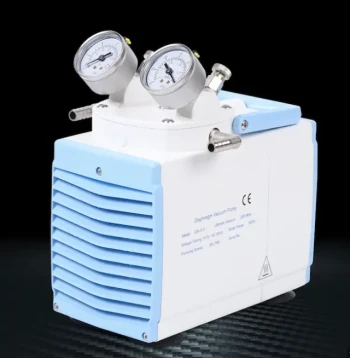
Oil Free Diaphragm Vacuum Pump for Laboratory and Industrial Use

Oil Free Diaphragm Vacuum Pump for Laboratory and Industrial Use

Oil-free diaphragm vacuum pump for labs: clean, reliable, chemical-resistant. Ideal for filtration, SPE, and rotary evaporation. Maintenance-free operation.

Inclined Rotary Plasma Enhanced Chemical Vapor Deposition PECVD Equipment Tube Furnace Machine

Inclined Rotary Plasma Enhanced Chemical Vapor Deposition PECVD Equipment Tube Furnace Machine

Upgrade your coating process with PECVD coating equipment. Ideal for LED, power semiconductors, MEMS and more. Deposits high-quality solid films at low temps.

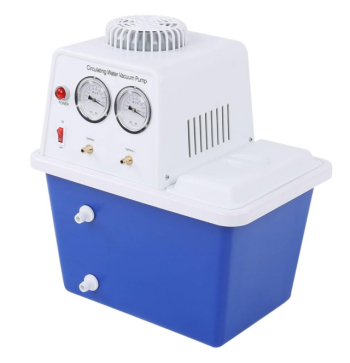
Circulating Water Vacuum Pump for Laboratory and Industrial Use

Circulating Water Vacuum Pump for Laboratory and Industrial Use

Efficient circulating water vacuum pump for labs - oil-free, corrosion-resistant, quiet operation. Multiple models available. Get yours now!

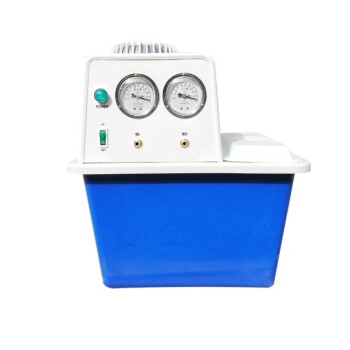
Laboratory Benchtop Water Circulating Vacuum Pump for Lab Use

Laboratory Benchtop Water Circulating Vacuum Pump for Lab Use

Need a water circulating vacuum pump for your lab or small-scale industry? Our Benchtop Water Circulating Vacuum Pump is perfect for evaporation, distillation, crystallization, and more.

Laboratory Rotary Vane Vacuum Pump for Lab Use

Laboratory Rotary Vane Vacuum Pump for Lab Use

Experience high vacuum pumping speed and stability with our UL-certified Rotary Vane Vacuum Pump. Two-shift gas ballast valve and dual oil protection. Easy maintenance and repair.

Customer Made Versatile CVD Tube Furnace Chemical Vapor Deposition Chamber System Equipment

Customer Made Versatile CVD Tube Furnace Chemical Vapor Deposition Chamber System Equipment

Get your exclusive CVD furnace with KT-CTF16 Customer Made Versatile Furnace. Customizable sliding, rotating, and tilting functions for precise reactions. Order now!

HFCVD Machine System Equipment for Drawing Die Nano-Diamond Coating

HFCVD Machine System Equipment for Drawing Die Nano-Diamond Coating

The nano-diamond composite coating drawing die uses cemented carbide (WC-Co) as the substrate, and uses the chemical vapor phase method ( CVD method for short ) to coat the conventional diamond and nano-diamond composite coating on the surface of the inner hole of the mold.

Cylindrical Resonator MPCVD Machine System Reactor for Microwave Plasma Chemical Vapor Deposition and Lab Diamond Growth

Cylindrical Resonator MPCVD Machine System Reactor for Microwave Plasma Chemical Vapor Deposition and Lab Diamond Growth

Learn about Cylindrical Resonator MPCVD Machine, the microwave plasma chemical vapor deposition method used for growing diamond gemstones and films in the jewelry and semi-conductor industries. Discover its cost-effective advantages over traditional HPHT methods.

Heated Hydraulic Press Machine with Heated Plates for Vacuum Box Laboratory Hot Press

Heated Hydraulic Press Machine with Heated Plates for Vacuum Box Laboratory Hot Press

Enhance your lab's precision with our lab press for vacuum box. Press pills and powders with ease and precision in a vacuum environment, reducing oxidation and improving consistency. Compact and easy to use with a digital pressure gauge.

Small Vacuum Heat Treat and Tungsten Wire Sintering Furnace

Small Vacuum Heat Treat and Tungsten Wire Sintering Furnace

The small vacuum tungsten wire sintering furnace is a compact experimental vacuum furnace specially designed for universities and scientific research institutes. The furnace features a CNC welded shell and vacuum piping to ensure leak-free operation. Quick-connect electrical connections facilitate relocation and debugging, and the standard electrical control cabinet is safe and convenient to operate.

Graphite Vacuum Furnace High Thermal Conductivity Film Graphitization Furnace

Graphite Vacuum Furnace High Thermal Conductivity Film Graphitization Furnace

The high thermal conductivity film graphitization furnace has uniform temperature, low energy consumption and can operate continuously.

Vacuum Induction Melting Spinning System Arc Melting Furnace

Vacuum Induction Melting Spinning System Arc Melting Furnace

Develop metastable materials with ease using our Vacuum Melt Spinning System. Ideal for research and experimental work with amorphous and microcrystalline materials. Order now for effective results.

Vacuum Heat Treat Sintering Brazing Furnace

Vacuum Heat Treat Sintering Brazing Furnace

A vacuum brazing furnace is a type of industrial furnace used for brazing, a metalworking process that joins two pieces of metal using a filler metal that melts at a lower temperature than the base metals. Vacuum brazing furnaces are typically used for high-quality applications where a strong, clean joint is required.

30T 40T Split Automatic Heated Hydraulic Press Machine with Heated Plates for Laboratory Hot Press

30T 40T Split Automatic Heated Hydraulic Press Machine with Heated Plates for Laboratory Hot Press

Discover our split automatic heated lab press 30T/40T for precise sample preparation in material research, pharmacy, ceramics, and electronics industries. With a small footprint and heating up to 300°C, it's perfect for processing under vacuum environment.

304 316 Stainless Steel Vacuum Ball Valve Stop Valve for High Vacuum Systems

304 316 Stainless Steel Vacuum Ball Valve Stop Valve for High Vacuum Systems

Discover 304/316 stainless steel vacuum ball valves, Ideal for high vacuum systems, Ensure precise control and durability. Explore now!

Molybdenum Vacuum Heat Treat Furnace

Molybdenum Vacuum Heat Treat Furnace

Discover the benefits of a high-configuration molybdenum vacuum furnace with heat shield insulation. Ideal for high-purity, vacuum environments like sapphire crystal growth and heat treatment.

Stainless Steel Quick Release Vacuum Chain Three-Section Clamp

Stainless Steel Quick Release Vacuum Chain Three-Section Clamp

Discover our stainless steel quick release clamp vacuum clamp, Ideal for high vacuum applications, Strong connections, reliable sealing, Easy installation, and durable design.

KF ISO Stainless Steel Vacuum Flange Blind Plate for High Vacuum Systems

KF ISO Stainless Steel Vacuum Flange Blind Plate for High Vacuum Systems

Discover KF/ISO stainless steel vacuum flange blind plates, ideal for high vacuum systems in semiconductor, photovoltaic, and research labs. High-quality materials, efficient sealing, and easy installation.<|end▁of▁sentence|>

Vacuum Bellows for Efficient Connection and Stable Vacuum in High-Performance Systems

Vacuum Bellows for Efficient Connection and Stable Vacuum in High-Performance Systems

Discover high-quality vacuum bellows for stable vacuum in high-performance systems. Made from 304 and 316 stainless steel, these bellows ensure efficient connections and excellent sealing. Ideal for

Vacuum Heat Treat Furnace with Ceramic Fiber Liner

Vacuum Heat Treat Furnace with Ceramic Fiber Liner

Vacuum furnace with polycrystalline ceramic fiber insulation liner for excellent heat insulation and uniform temperature field. Choose from 1200℃ or 1700℃ max. working temperature with high vacuum performance and precise temperature control.


Leave Your Message