Knowledge How do you use sieving method? A Step-by-Step Guide to Accurate Particle Separation
Author avatar

Tech Team · Kintek Solution

Updated 6 days ago

How do you use sieving method? A Step-by-Step Guide to Accurate Particle Separation


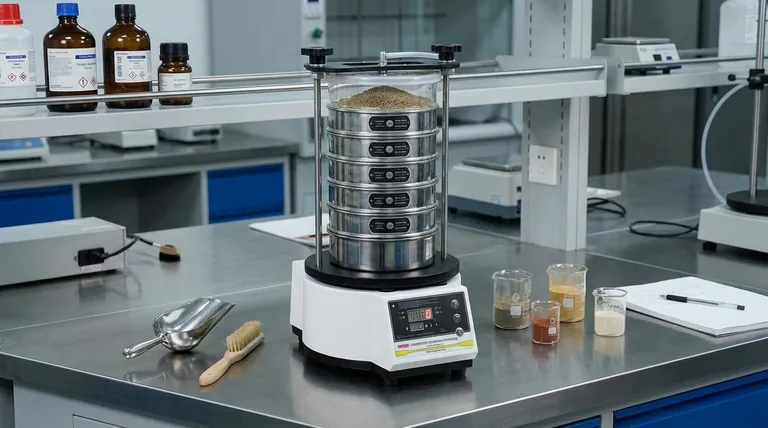
At its core, the sieving method separates a mixture of particles based on their size. You achieve this by passing the material over or through a surface with specific-sized openings, known as a sieve or screen, and applying motion to allow smaller particles to pass through while retaining the larger ones.

Sieving is a straightforward mechanical process that leverages a single physical property: particle size. The method's success depends entirely on the relative movement between the particles and the sieve, ensuring each particle has an opportunity to either pass through a mesh opening or be retained.
How do you use sieving method? A Step-by-Step Guide to Accurate Particle Separation

The Core Principle: How Sieving Works

Sieving operates on a simple, yet powerful, mechanical sorting principle. It doesn't involve complex chemistry or physics, but rather the interaction between a particle and a physical barrier.

The Role of the Sieve Mesh

The heart of the method is the sieve mesh, a screen typically made of woven wire with precisely sized and spaced openings, called apertures.

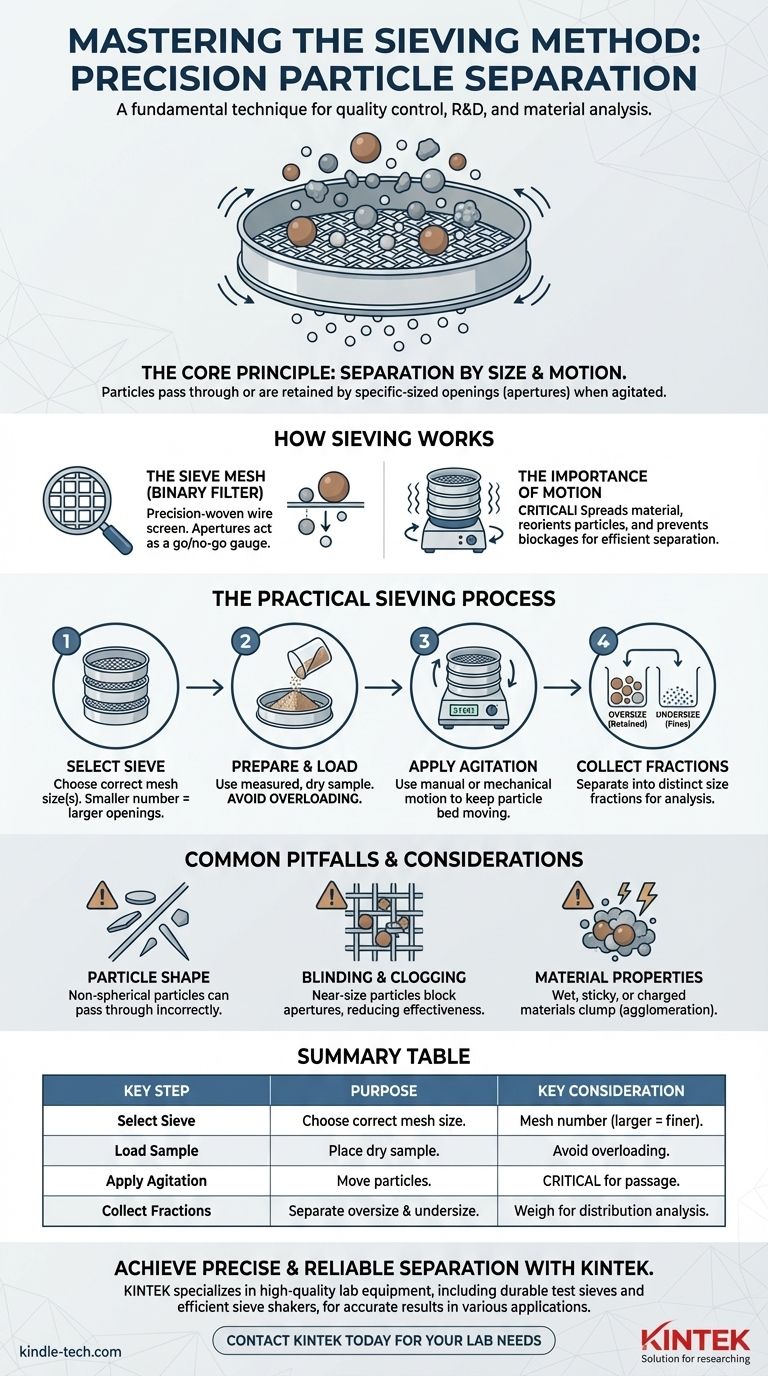
This mesh acts as a binary filter. If a particle is smaller than the aperture in all its dimensions, it has the potential to pass through. If it is larger, it will be retained on the sieve's surface.

The Importance of Motion

Simply placing material on a sieve is not enough. Motion is critical to ensure an effective separation.

This motion, whether it's a vertical tap, a horizontal shake, or a machine-driven vibration, serves two key purposes. First, it spreads the material across the entire sieve surface. Second, it continually reorients the particles, giving each one multiple opportunities to approach an aperture and pass through if it is small enough. This agitation prevents particles from piling up and blocking each other.

The Practical Sieving Process

Whether you are in a lab, a kitchen, or an industrial plant, the fundamental steps of sieving are universal.

Step 1: Select Your Sieve

The most critical decision is choosing a sieve with the correct mesh size for your goal. A smaller mesh number corresponds to larger openings, while a larger mesh number means smaller, finer openings. For analytical work, a stack of sieves with progressively finer mesh sizes is often used.

Step 2: Prepare and Load the Sample

Place a measured amount of your dry, granular material onto the top sieve. Do not overload the sieve, as this will hinder particle movement and lead to poor separation efficiency.

Step 3: Apply Agitation

Begin the agitation process. This can be done manually by shaking and tapping the sieve or by placing it in a mechanical sieve shaker for a set duration. The goal is to keep the particle bed moving.

Step 4: Collect the Fractions

Once the process is complete, you are left with two or more fractions. The particles that were retained on the sieve surface are called the oversize fraction. The particles that passed through the mesh are the undersize or "fines" fraction.

Common Pitfalls and Considerations

While the principle is simple, several factors can affect the accuracy and efficiency of sieving.

Particle Shape Can Be Deceiving

Sieving is most effective for particles that are roughly spherical. Long, needle-like, or flat, flaky particles can pass through the mesh end-on or diagonally, even if their total volume or mass is much larger than a spherical particle that would be retained.

The Risk of Blinding and Clogging

Blinding occurs when particles that are very close in size to the mesh openings become lodged in the apertures, blocking other particles from passing through. This significantly reduces the sieve's effectiveness over time.

Material Properties Matter

Sieving works best with dry, free-flowing materials. Wet, sticky, or electrostatically charged particles tend to clump together, a process called agglomeration. These clumps behave like larger particles and will not separate correctly.

Making the Right Choice for Your Goal

You can apply the sieving method for vastly different purposes, from simple sorting to precise particle size analysis.

  • If your primary focus is basic separation: Use a single sieve with a mesh size that cleanly divides the components you want to keep from those you want to discard.
  • If your primary focus is quality control or analysis: Use a calibrated stack of sieves with varying mesh sizes and a mechanical shaker to determine the particle size distribution within a sample.
  • If your primary focus is industrial processing: Use large-scale screening equipment designed for high throughput and resistance to blinding to continuously classify or scalp material.

By understanding these principles, you can use sieving as a precise and predictable tool for managing and analyzing particulate materials.

Summary Table:

Key Sieving Step Purpose Key Consideration
Select Sieve Choose correct mesh size for separation goal. Mesh number (larger = finer openings).
Load Sample Place a measured, dry sample onto the sieve. Avoid overloading for efficient separation.
Apply Agitation Shake or use a sieve shaker to move particles. Critical for giving particles a chance to pass through.
Collect Fractions Separate oversize (retained) and undersize (passed) particles. Weigh fractions for particle size distribution analysis.

Achieve precise and reliable particle separation in your laboratory.

The sieving method is fundamental for quality control, R&D, and material analysis. KINTEK specializes in providing high-quality lab equipment, including durable test sieves and efficient sieve shakers, designed to deliver accurate and repeatable results for your specific application—from pharmaceuticals and chemicals to construction materials.

Let our experts help you select the perfect sieving equipment for your needs. Contact KINTEK today to discuss your laboratory requirements and enhance your particle analysis workflow.

Visual Guide
How do you use sieving method? A Step-by-Step Guide to Accurate Particle Separation Visual Guide

Related Products

People Also Ask

Related Products

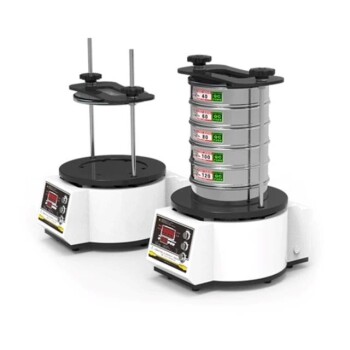
Laboratory Test Sieves and Vibratory Sieve Shaker Machine

Laboratory Test Sieves and Vibratory Sieve Shaker Machine

Efficiently process powders, granules, and small blocks with a high-frequency vibration sieve. Control vibration frequency, screen continuously or intermittently, and achieve accurate particle size determination, separation, and classification.

Three-dimensional electromagnetic sieving instrument

Three-dimensional electromagnetic sieving instrument

KT-VT150 is a desktop sample processing instrument for both sieving and grinding. Grinding and sieving can be used both dry and wet. The vibration amplitude is 5mm and the vibration frequency is 3000-3600 times/min.

Laboratory Vibratory Sieve Shaker Machine Slap Vibrating Sieve

Laboratory Vibratory Sieve Shaker Machine Slap Vibrating Sieve

KT-T200TAP is a slapping and oscillating sieving instrument for laboratory desktop use, with 300 rpm horizontal circular motion and 300 vertical slapping motions to simulate manual sieving to help sample particles pass through better.

Laboratory Wet Three-Dimensional Vibratory Sieve Shaker Machine

Laboratory Wet Three-Dimensional Vibratory Sieve Shaker Machine

The wet three-dimensional vibrating sieving instrument focuses on solving the sieving tasks of dry and wet samples in the laboratory. It is suitable for sieving 20g - 3kg dry, wet or liquid samples.

Custom PTFE Teflon Parts Manufacturer for PTFE Mesh F4 Sieve

Custom PTFE Teflon Parts Manufacturer for PTFE Mesh F4 Sieve

PTFE mesh sieve is a specialized test sieve designed for particle analysis in various industries, featuring a non-metallic mesh woven from PTFE filament. This synthetic mesh is ideal for applications where metal contamination is a concern . PTFE sieves are crucial for maintaining the integrity of samples in sensitive environments, ensuring accurate and reliable results in particle size distribution analysis.

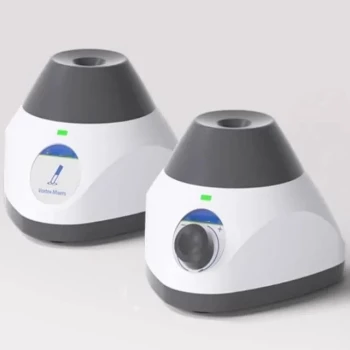
Laboratory Vortex Mixer Orbital Shaker Multifunctional Rotation Oscillation Mixer

Laboratory Vortex Mixer Orbital Shaker Multifunctional Rotation Oscillation Mixer

The inching mixer is small in size, mixes quickly and thoroughly, and the liquid is in a vortex shape, which can mix all the test solutions attached to the tube wall.

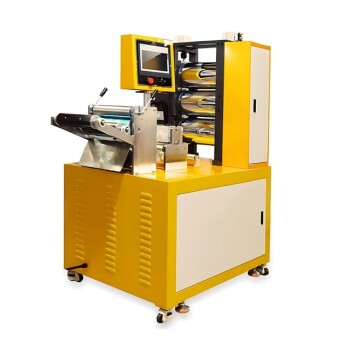
Small Lab Rubber Calendering Machine

Small Lab Rubber Calendering Machine

Small lab rubber calendering machine is used for producing thin, continuous sheets of plastic or rubber materials. It is commonly employed in laboratories, small-scale production facilities, and prototyping environments to create films, coatings, and laminates with precise thickness and surface finish.

Automatic Laboratory Heat Press Machine

Automatic Laboratory Heat Press Machine

Precision automatic heat press machines for labs—ideal for material testing, composites, and R&D. Customizable, safe, and efficient. Contact KINTEK today!

Lab Internal Rubber Mixer Rubber Kneader Machine for Mixing and Kneading

Lab Internal Rubber Mixer Rubber Kneader Machine for Mixing and Kneading

Lab internal rubber mixer is suitable for mixing, kneading and dispersing various chemical raw materials such as plastics, rubber, synthetic rubber, hot melt adhesive and various low-viscosity materials.

Double Plate Heating Press Mold for Lab

Double Plate Heating Press Mold for Lab

Discover precision in heating with our Double Plate Heating Mold, featuring high-quality steel and uniform temperature control for efficient lab processes. Ideal for various thermal applications.

Metallographic Specimen Mounting Machine for Laboratory Materials and Analysis

Metallographic Specimen Mounting Machine for Laboratory Materials and Analysis

Precision metallographic mounting machines for labs—automated, versatile, and efficient. Ideal for sample prep in research and quality control. Contact KINTEK today!

Single Punch Tablet Press Machine and Mass Production Rotary Tablet Punching Machine for TDP

Single Punch Tablet Press Machine and Mass Production Rotary Tablet Punching Machine for TDP

Rotary tablet punching machine is an automatic rotating and continuous tableting machine. It is mainly used for tablet manufacturing in the pharmaceutical industry, and is also suitable for industrial sectors such as food, chemicals, batteries, electronics, ceramics, etc. to compress granular raw materials into tablets.

Rubber Vulcanizer Vulcanizing Machine Plate Vulcanizing Press for Lab

Rubber Vulcanizer Vulcanizing Machine Plate Vulcanizing Press for Lab

The Plate vulcanizing press is a kind of equipment used in the production of rubber products, mainly used for the vulcanization of rubber products. Vulcanization is a key step in rubber processing.

Single Punch Electric Tablet Press Machine Laboratory Powder Tablet Punching TDP Tablet Press

Single Punch Electric Tablet Press Machine Laboratory Powder Tablet Punching TDP Tablet Press

The single-punch electric tablet press is a laboratory-scale tablet press suitable for corporate laboratories in pharmaceutical, chemical, food, metallurgical and other industries.

Desktop Fast Laboratory Autoclave Sterilizer 35L 50L 90L for Lab Use

Desktop Fast Laboratory Autoclave Sterilizer 35L 50L 90L for Lab Use

The desktop fast steam sterilizer is a compact and reliable device used for rapid sterilization of medical, pharmaceutical, and research items. It efficiently sterilizes surgical instruments, glassware, medicines, and resistant materials, making it suitable for various applications.

Heated Hydraulic Press Machine with Integrated Manual Heated Plates for Lab Use

Heated Hydraulic Press Machine with Integrated Manual Heated Plates for Lab Use

Efficiently process heat-pressing samples with our Integrated Manual Heated Lab Press. With a heating range up to 500°C, it's perfect for various industries.

Custom PTFE Teflon Parts Manufacturer for Culture Dish and Evaporation Dish

Custom PTFE Teflon Parts Manufacturer for Culture Dish and Evaporation Dish

The PTFE culture dish evaporating dish is a versatile laboratory tool known for its chemical resistance and high-temperature stability. PTFE, a fluoropolymer, offers exceptional non-stick properties and durability, making it ideal for various applications in research and industry, including filtration, pyrolysis, and membrane technology.

Customizable High Pressure Reactors for Advanced Scientific and Industrial Applications

Customizable High Pressure Reactors for Advanced Scientific and Industrial Applications

This laboratory-scale high-pressure reactor is a high-performance autoclave engineered for precision and safety in demanding research and development environments.

Custom PTFE Teflon Parts Manufacturer for PTFE Measuring Cylinder 10/50/100ml

Custom PTFE Teflon Parts Manufacturer for PTFE Measuring Cylinder 10/50/100ml

PTFE measuring cylinder are a rugged alternative to traditional glass cylinders. They are chemically inert over a wide temperature range (up to 260º C), have excellent corrosion resistance and maintain a low coefficient of friction, ensuring ease of use and cleaning.

Small Jaw Crusher for Laboratory and Small Mines Efficient Flexible Affordable Laboratory Ore Crusher Coal Crusher

Small Jaw Crusher for Laboratory and Small Mines Efficient Flexible Affordable Laboratory Ore Crusher Coal Crusher

Discover the small jaw crusher for efficient, flexible, and affordable crushing in labs and small mines. Ideal for coal, ores, and rocks. Learn more now!


Leave Your Message