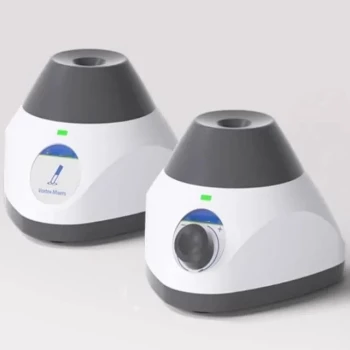
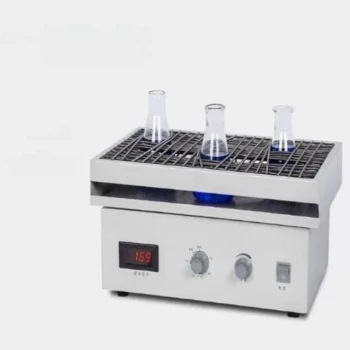
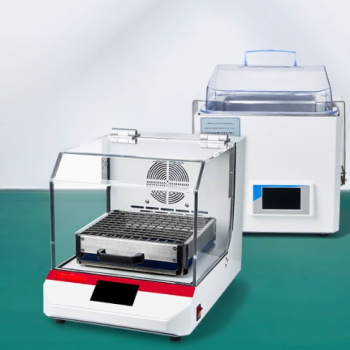
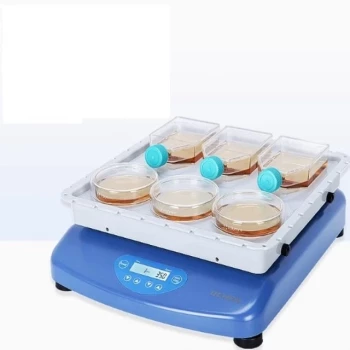
A constant temperature shaker ensures experimental accuracy by creating a controlled environment that simultaneously stabilizes thermodynamic conditions and eliminates physical mass transfer limitations. By providing continuous mechanical power, the device keeps solid-phase materials—such as catalysts and slow-release agents—fully suspended while maintaining the precise thermal environment required for consistent reaction rates.
Core Takeaway: Accuracy in antibiotic degradation relies on distinguishing true chemical kinetics from physical limitations. A constant temperature shaker achieves this by removing diffusion resistance and sedimentation variables, ensuring data reflects the actual reaction rate rather than how fast reactants can find each other.
The Dual Mechanism of Accuracy
To understand why this equipment is critical, you must look at the two distinct forces at play: thermodynamic control and mechanical dynamics.
Stabilization of Thermodynamics
Chemical degradation reactions are highly sensitive to thermal fluctuations. A constant temperature shaker ensures that degradation occurs under stable thermodynamic conditions.
By maintaining a specific, set temperature, the device prevents environmental variables from altering the reaction rate during the experiment. This consistency is required to generate reproducible kinetic data that accurately reflects the degradation process.
Suspension of Solid Phase Materials
In many antibiotic degradation setups, catalysts (such as Fe@N-BC) or slow-release materials are solid particles introduced into a liquid solution.
Without continuous agitation, these materials would settle, reducing the surface area available for the reaction. The shaker provides continuous mechanical power to keep these materials in a suspended state, ensuring the catalyst is always active and available to the reactants.
Overcoming Physical Barriers
Beyond simply keeping materials moving, the shaker addresses the microscopic physical barriers that often skew experimental data.
Eliminating Diffusion Limitations
In a static environment, a "water film" or diffusion layer can form around solid particles, slowing down the movement of pollutants from the bulk liquid to the catalyst surface.
The shaker creates a forced convection environment. This mechanical force overcomes water film diffusion resistance, ensuring that the rate of degradation is limited by the chemical reaction itself, not by how slowly molecules drift through the liquid.
Maximizing Contact Frequency
For degradation to occur, the antibiotic pollutants, released persulfates, and catalysts must physically collide.
The constant temperature shaker maximizes the contact frequency between these three components. By homogenizing the mixture, it ensures that the measured kinetic data is representative of the system's true potential, rather than an artifact of poor mixing.
Common Pitfalls to Avoid
While a constant temperature shaker is essential, improper use can still lead to data inaccuracies.
The Risk of Improper Agitation Speeds
While mixing is vital, the rotation speed must be optimized for the specific materials used.
If the speed is too low, macroscopic mass transfer limitations may persist, leading to an underestimation of the reaction rate. Conversely, excessive speeds could theoretically damage fragile catalyst structures or create vortexes that alter the effective volume, though the primary goal remains eliminating diffusion resistance.
Thermal Lag
It is critical to ensure the liquid medium has reached the set temperature before initiating the reaction.
Starting the experiment while the solution is still equilibrating to the shaker's temperature introduces a variable temperature gradient. This invalidates the assumption of constant thermodynamic conditions and renders the initial kinetic data unusable.
Making the Right Choice for Your Goal
When designing your experimental protocol, align your equipment settings with your specific analytical focus.
- If your primary focus is obtaining intrinsic kinetic data: Ensure the agitation speed is high enough to completely eliminate liquid film mass transfer resistance, isolating the chemical reaction rate.
- If your primary focus is simulating environmental persistence: Prioritize precise thermal regulation to mimic specific environmental temperatures, as this dictates the thermodynamic parameters of the adsorption or degradation process.
Ultimately, the constant temperature shaker transforms a chaotic mixture into a controlled system, allowing you to measure the chemistry rather than the physics of the container.
Summary Table:
| Factor | Influence on Accuracy | Shaker's Role |
|---|---|---|
| Thermodynamics | Temp fluctuations alter reaction rates | Maintains stable, uniform thermal conditions |
| Mass Transfer | Sedimentation reduces active surface area | Continuous mechanical power keeps solids suspended |
| Diffusion | Liquid films create physical barriers | Forced convection overcomes water film resistance |
| Mixing | Poor contact leads to inconsistent data | Maximizes collision frequency between reactants |
| Reproducibility | Environmental variables skew results | Standardizes conditions for reliable kinetic data |
Elevate Your Research Precision with KINTEK
Don't let physical limitations compromise your kinetic data. KINTEK specializes in high-performance laboratory equipment designed for the most demanding research applications. Whether you are optimizing antibiotic degradation or conducting complex chemical synthesis, our comprehensive range of constant temperature shakers, homogenizers, and cooling solutions ensures your experimental conditions remain perfectly controlled.
From high-temperature furnaces and vacuum reactors to specialized electrolytic cells and precision hydraulic presses, KINTEK provides the tools researchers need for breakthrough results. Ensure the accuracy of your next experiment—Contact KINTEK today for a customized equipment solution!
References
- Zhixin Hu, Shengke Yang. A Novel Double-Coated Persulfate Slow-Release Material: Preparation and Application for the Removal of Antibiotics from Groundwater. DOI: 10.3390/w17010010
This article is also based on technical information from Kintek Solution Knowledge Base .
Related Products
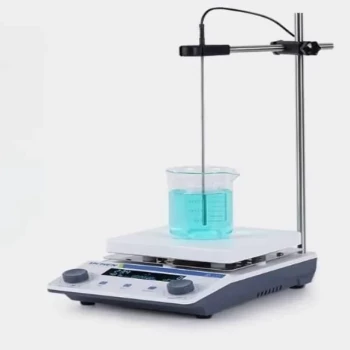
- Laboratory Small Constant Temperature Heated Magnetic Stirrer Heater and Stirrer
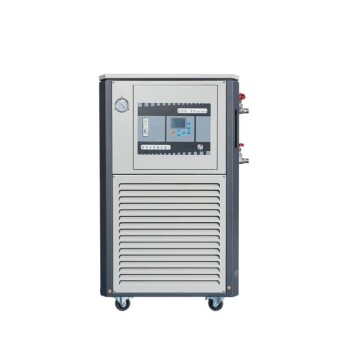
- High Temperature Constant Temperature Heating Circulator Water Bath Chiller Circulator for Reaction Bath
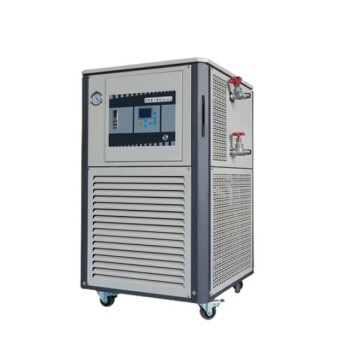
- 5L Heating Chilling Circulator Cooling Water Bath Circulator for High and Low Temperature Constant Temperature Reaction
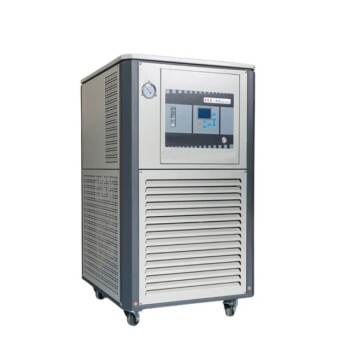
- 50L Chiller Water Bath Cooling Circulator Low Temperature Constant Temperature Reaction Bath
- 10L Heating Chilling Circulator Cooling Water Bath Circulator for High and Low Temperature Constant Temperature Reaction
People Also Ask
- What role does a magnetic stirrer with heating play in ZnO nanoparticle synthesis? Precision Control for Quality Results
- What role does a constant temperature heating magnetic stirrer play in MFC-HAp synthesis? Achieve Material Homogeneity
- What is the function of a laboratory magnetic stirrer in Ni–Cr–P electrodeposition? Optimize Ion Transport & Coating
- Why is a laboratory magnetic stirrer required for benzoic acid esters? Boost Reaction Speed & Yield with High RPM
- What role does a laboratory magnetic stirrer play in TiO2 and TiO2-Ag sol preparation? Master Chemical Kinetics