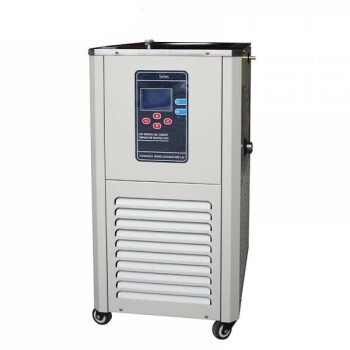
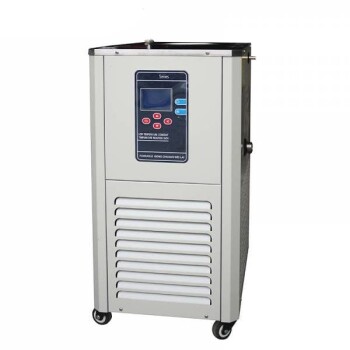
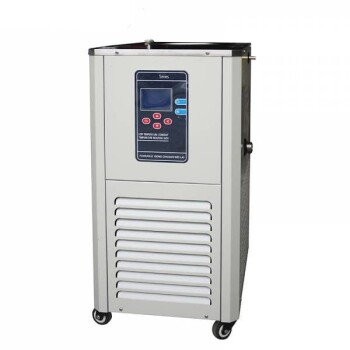
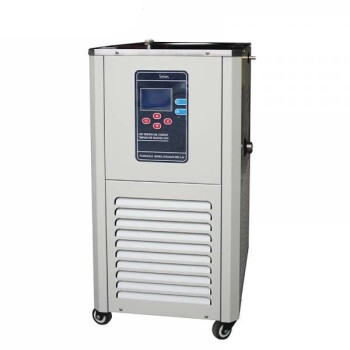
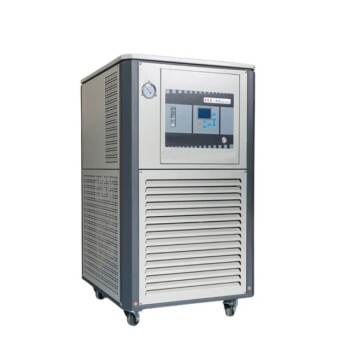
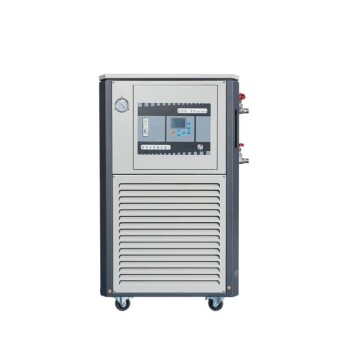
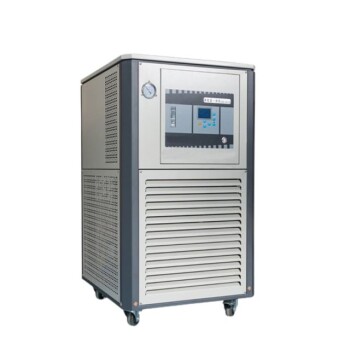
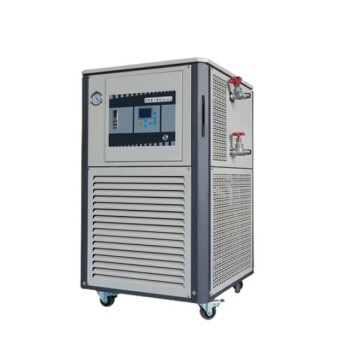
A constant temperature water bath serves as the critical regulatory mechanism for the Successive Ionic Layer Adsorption and Reaction (SILAR) preparation of BiOBr/TiO2NTs. By maintaining a precise, stable 40°C environment, it governs the reaction kinetics of Bismuth (Bi) and Bromine (Br) ions, which are highly sensitive to thermal fluctuations. This stability is the fundamental requirement for ensuring that BiOBr is deposited uniformly onto Titanium Dioxide (TiO2) nanotubes, preventing structural defects that would compromise the material's quality.
Temperature control is the primary driver of material consistency in SILAR synthesis. By locking the reaction environment at 40°C, the water bath ensures the formation of a tight heterojunction interface, which is directly responsible for efficient electron transfer and superior photocatalytic performance.
Controlling Reaction Kinetics
The Role of Thermal Stability
The adsorption and reaction rates of chemical precursors are rarely static; they fluctuate with temperature changes. In this specific synthesis, the Bismuth and Bromine ions are highly sensitive to such variations.
Preventing Rate Fluctuations
A constant temperature water bath eliminates environmental variables. By holding the reaction at 40°C, you ensure that the rate at which ions adsorb onto the substrate remains steady throughout the entire process.
Ensuring Structural Uniformity
Achieving Layer-by-Layer Precision
The SILAR process relies on the cumulative deposition of material. A stable thermal environment allows BiOBr to grow in a controlled, layer-by-layer fashion.
Uniform Coverage
Without precise temperature control, deposition becomes erratic. The constant water bath ensures that the BiOBr coating covers the TiO2 nanotubes evenly, rather than clumping or leaving gaps.
Optimizing Electronic Properties
Formation of a Tight Heterojunction
The ultimate goal of this synthesis is not just coverage, but connection. The controlled deposition facilitates the creation of a tight heterojunction interface between the BiOBr and the TiO2.
Enhancing Electron Transfer
The quality of this interface dictates the material's performance. A tight junction promotes the effective transfer of photogenerated electrons under visible light, maximizing the catalytic efficiency of the final product.
Understanding the Trade-offs
The Cost of Thermal Drift
It is important to recognize that the system has little tolerance for error. Because the ion reaction rates are so sensitive, even minor deviations from the 40°C setpoint can disrupt the uniformity of the layers.
Dependency on Equipment Precision
The process quality is entirely dependent on the reliability of the water bath. If the equipment cannot maintain the target temperature within a tight margin, the resulting heterojunction will be loose or defective, significantly reducing electron transfer capabilities.
Making the Right Choice for Your Goal
To maximize the quality of your BiOBr/TiO2NTs preparation, apply these principles:
- If your primary focus is Structural Integrity: Prioritize the stability of the water bath to ensure uniform, layer-by-layer deposition on the nanotubes.
- If your primary focus is Photocatalytic Efficiency: Ensure strict adherence to the 40°C setpoint to guarantee a tight heterojunction interface for optimal electron flow.
Precision in temperature control is the invisible foundation that transforms raw chemical precursors into a high-performance functional material.
Summary Table:
| Feature | Impact on BiOBr/TiO2NTs Quality |
|---|---|
| Precise 40°C Stability | Regulates sensitive Bismuth and Bromine ion reaction kinetics. |
| Thermal Uniformity | Ensures consistent layer-by-layer deposition on TiO2 nanotubes. |
| Interface Control | Facilitates the formation of tight heterojunctions for electron transfer. |
| Structural Integrity | Prevents clumping and defects in the final photocatalytic material. |
Elevate Your Synthesis Precision with KINTEK
Achieving the perfect 40°C environment for SILAR preparation requires equipment you can trust. KINTEK specializes in high-performance laboratory solutions designed for researchers who demand excellence. From our precision constant temperature water baths and cooling solutions to our advanced high-temperature furnaces (muffle, tube, vacuum) and electrolytic cells, we provide the tools necessary to ensure material consistency and superior photocatalytic performance.
Don't let thermal drift compromise your heterojunction quality. Contact KINTEK today to discover how our comprehensive range of laboratory equipment and consumables can optimize your research outcomes.
References
- Prita Amelia, Jarnuzi Gunlazuardi. Development of BiOBr/TiO2 nanotubes electrode for conversion of nitrogen to ammonia in a tandem photoelectrochemical cell under visible light. DOI: 10.14710/ijred.2023.51314
This article is also based on technical information from Kintek Solution Knowledge Base .
Related Products
- High Temperature Constant Temperature Heating Circulator Water Bath Chiller Circulator for Reaction Bath
- 50L Chiller Water Bath Cooling Circulator Low Temperature Constant Temperature Reaction Bath
- 10L Chilling Circulator Cooling Water Bath Low Temperature Constant Temperature Reaction Bath
- 30L Chiller Water Bath Cooling Circulator Low Temperature Constant Temperature Reaction Bath
- 40L Chiller Water Bath Cooling Circulator Low Temperature Constant Temperature Reaction Bath
People Also Ask
- What is the necessity of a circulating water bath in chlorate production? Optimize Yield & Purity with Precision
- How do constant temperature circulators impact weight-loss immersion tests? Ensure Precision in Corrosion Analysis
- How does a constant temperature circulator support the leaching reaction of gold scrap? Optimize Gold Recovery Results
- Why is a constant temperature water bath used for precursor storage in CVD? Achieve Stable Nanocrystalline SiC Deposition
- Why is a high-precision constant temperature water bath necessary for anaerobic digestion? Ensure Success at 37±0.02°C