Hydrothermal Liquefaction (HTL) turns a feedstock's moisture content from a liability into a functional asset. Rather than requiring an energy-intensive drying stage, the system utilizes the water present in the lignin as both a solvent and a reaction medium. By operating at temperatures between 300 to 400 °C and pressures of 5 to 20 MPa, HTL converts wet lignin directly into bio-oil.
By keeping water in a subcritical liquid state under high pressure, HTL eliminates the need for preliminary drying. This approach significantly simplifies the biofuel production process and reduces the overall costs associated with feedstock pretreatment.
The Mechanics of Wet Processing
Leveraging High Pressure
The core mechanism of an HTL system is its ability to maintain high pressure (5–20 MPa) inside the reactor.
This pressure is critical because it keeps the water in a liquid or subcritical state, even when heated to temperatures as high as 400 °C.
Water as a Reactive Solvent
In this specific environment, water behaves differently than it does at standard ambient conditions.
It functions not just as a carrier, but as a highly reactive solvent. This allows the system to process the wet lignin directly, bypassing the conventional requirement to evaporate moisture before processing.
Chemical Transformation of Lignin
Enhanced Ionic Properties
Under these high-temperature and high-pressure conditions, water exhibits a very high ionic product.
This alters the chemical environment, enabling the water to act as a catalyst that accelerates the breakdown of the biomass.
Thermochemical Depolymerization
The pressurized water promotes specific chemical reactions, such as hydrolysis, decarboxylation, and deamination.
These reactions facilitate the depolymerization of macromolecular organic matter. Consequently, the complex lignin structure is efficiently broken down and converted into biocrude oil, biochar, and syngas.
Understanding the Trade-offs
Equipment Demands
While HTL saves money on pre-drying, it shifts the engineering burden to the reactor vessel itself.
Maintaining pressures up to 20 MPa at 400 °C requires robust, high-cost materials capable of withstanding extreme physical stress and potential corrosion.
Complexity vs. Efficiency
The elimination of the drying stage simplifies the process flow, but increases the complexity of the reaction environment.
Operators must strictly control temperature and pressure ratios to ensure the water remains in the correct subcritical state for optimal conversion.
Making the Right Choice for Your Goal
HTL is specifically engineered to capitalize on the moisture content of biomass, making it a distinct choice compared to dry processing methods like pyrolysis.
- If your primary focus is processing high-moisture feedstocks: HTL is the superior choice, as it eliminates the energy and financial costs associated with pre-drying.
- If your primary focus is process simplification: HTL offers a streamlined workflow by converting raw, wet biomass directly into bio-oil in a single reaction stage.
Ultimately, HTL succeeds by embracing the physics of subcritical water to process wet lignin where other systems would fail.
Summary Table:
| Feature | HTL Processing Condition | Benefit for Wet Lignin |
|---|---|---|
| Operating Temperature | 300°C to 400°C | Facilitates rapid depolymerization |
| Operating Pressure | 5 to 20 MPa | Maintains water in subcritical liquid state |
| Water Role | Solvent & Catalyst | Eliminates the need for energy-intensive drying |
| Chemical Reactions | Hydrolysis & Decarboxylation | Breaks down complex macromolecules into biocrude |
| Primary Output | High-energy Bio-oil | Streamlined production from raw feedstock |
Transform Your Wet Biomass into Value with KINTEK
Don't let high moisture content stall your production. KINTEK specializes in advanced laboratory solutions, offering the robust high-temperature high-pressure reactors and autoclaves required to master Hydrothermal Liquefaction. Our precision-engineered systems are designed to withstand the extreme 20 MPa environments necessary for subcritical water processing, ensuring safety and efficiency for researchers and industrial developers alike.
Whether you are focusing on battery research, chemical depolymerization, or biofuel optimization, KINTEK provides the comprehensive range of reactors, hydrothermal synthesis tools, and essential consumables like ceramics and crucibles to drive your innovation forward.
Ready to upgrade your lab's capabilities? Contact our technical experts today to find the perfect high-pressure system for your lignin and biomass research!
References
- Engin Kocatürk, Zeki Candan. Recent Advances in Lignin-Based Biofuel Production. DOI: 10.3390/en16083382
This article is also based on technical information from Kintek Solution Knowledge Base .
Related Products
- Customizable Laboratory High Temperature High Pressure Reactors for Diverse Scientific Applications
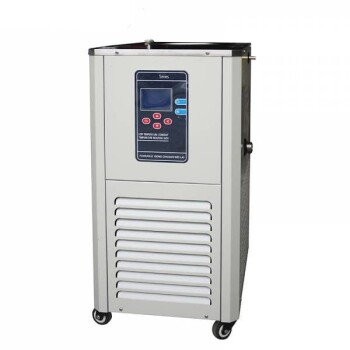
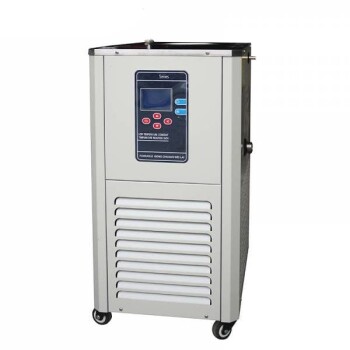
- High Temperature Constant Temperature Heating Circulator Water Bath Chiller Circulator for Reaction Bath
- 100L Heating Chilling Circulator Cooling Water Bath Circulator for High and Low Temperature Constant Temperature Reaction
- 5L Heating Chilling Circulator Cooling Water Bath Circulator for High and Low Temperature Constant Temperature Reaction
- 30L Heating Chilling Circulator Cooling Water Bath Circulator for High and Low Temperature Constant Temperature Reaction
People Also Ask
- How do high-pressure and high-temperature reactors ensure the effective treatment of lignocellulosic wastewater in WAO?
- What equipment is required for high-pressure high-temperature reactions? Master Extreme Chemistry Safely
- How do you control high pressure in a reactor? A Guide to Safe & Stable Operation
- How does initial oxygen pressure affect the wet oxidation of pharmaceutical sludge? Master Your Oxidation Depth
- Why is argon better than nitrogen for inert atmosphere? Ensure Absolute Reactivity & Stability