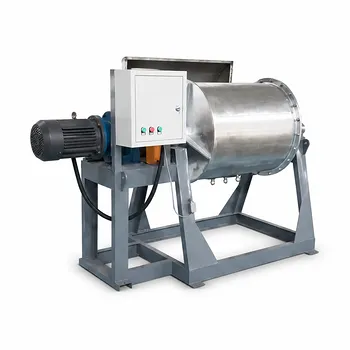
A Planetary Ball Mill drives mechanochemical dechlorination by utilizing high-speed rotation to generate intense impact and shear forces. This mechanical energy physically refines waste PVC and facilitates thorough contact with dechlorination agents, effectively breaking chemical bonds without the need for extreme external heating.
The core value of this process lies in its ability to substitute thermal energy with mechanical energy, enabling dechlorination at lower temperatures and preventing the formation of complex, toxic byproducts typical of thermal degradation.
Mechanisms of Energy Transfer
High-Energy Impact
Inside the mill, grinding balls within rotating bowls generate significant kinetic energy.
When these balls collide with the material, the high-energy impact physically pulverizes the PVC. This comminution process is the foundational step for increasing surface area.
Shear Forces and Refinement
Beyond simple impact, the rotation creates powerful shear forces.
These forces ensure the thorough refinement of the PVC mixture. This action is critical for exposing the material to the chemical agents introduced into the mill.
Facilitating the Chemical Reaction
Ensuring Thorough Contact
For dechlorination to occur, the PVC must interact intimately with agents such as calcium oxide or calcium hydroxide.
The ball mill ensures these agents are not just mixed but forced into contact with the PVC at a microscopic level. This proximity is essential for the reaction to initiate.
Breaking Chemical Bonds
The mechanical stress applied is sufficiently high to break the chemical bonds within the PVC structure.
This mechanochemical activation drives the dechlorination reaction forward efficiently. It allows the process to bypass the high energy barriers usually requiring intense heat.
Understanding the Trade-offs
Temperature and Byproducts
A major advantage of this method is the ability to operate at lower temperatures.
Traditional thermal degradation often results in complex, unwanted byproducts due to high heat. The planetary ball mill avoids this by relying on mechanical force rather than thermal intensity.
Operational Complexity
While efficient chemically, this process relies on specific mechanical conditions.
The effectiveness is dictated by the precise control of rotation speed and milling duration. Improper calibration can lead to insufficient bond breaking or excessive wear on the grinding media.
Making the Right Choice for Your Goal
To determine if a Planetary Ball Mill is the correct solution for your PVC treatment needs, consider your primary constraints:
- If your primary focus is minimizing toxic byproducts: The low-temperature operation of mechanochemical milling is superior to high-heat thermal degradation.
- If your primary focus is process integration: This method combines physical grinding and chemical reaction into a single, high-energy step, simplifying the workflow.
By leveraging mechanical force to drive chemical change, you achieve a cleaner, more controlled dechlorination process.
Summary Table:
| Feature | Mechanochemical Dechlorination | Traditional Thermal Degradation |
|---|---|---|
| Energy Source | High-energy impact and shear forces | External thermal heat |
| Operating Temp | Low / Ambient | High temperature |
| Byproducts | Controlled, minimal toxic output | Complex, often toxic emissions |
| Process Step | Integrated grinding and reaction | Separate shredding and heating |
| Key Outcome | Microscopic contact & bond breaking | Molecular breakdown via heat |
Upgrade Your Material Research with KINTEK Precision Solutions
Are you looking to optimize your mechanochemical processes or waste treatment research? KINTEK specializes in high-performance laboratory equipment designed for the most demanding applications. Whether you need advanced planetary ball mills for high-energy grinding, crushing and milling systems for material refinement, or high-temperature furnaces for thermal analysis, we provide the tools necessary to achieve consistent, scalable results.
From pellet presses for sample preparation to high-pressure reactors and PTFE consumables, our comprehensive portfolio supports researchers in developing cleaner, more efficient chemical processes.
Ready to enhance your lab's capabilities and achieve superior process control? Contact KINTEK today to discuss your equipment needs and discover how our expertise can drive your innovation forward.
References
- Guido Grause, Toshiaki Yoshioka. Feedstock recycling of waste polymeric material. DOI: 10.1007/s10163-011-0031-z
This article is also based on technical information from Kintek Solution Knowledge Base .
Related Products
- High Energy Planetary Ball Mill for Laboratory Horizontal Tank Type Milling Machine
- Laboratory Planetary Ball Mill Rotating Ball Milling Machine
- High-Energy Omnidirectional Planetary Ball Mill Milling Machine for Laboratory
- High Energy Planetary Ball Mill Milling Machine for Laboratory
- Laboratory Horizontal Planetary Ball Mill Milling Machine
People Also Ask
- What is the role of a planetary ball mill in sulfide-based solid-state batteries? Engineer High-Performance Cathodes
- What are the parameters of a planetary ball mill? Master Speed, Time, and Media for Perfect Grinding
- What is the function of a planetary ball mill for nanostructured eutectic steel? Essential Prep for High-Strength Alloys
- What role does a planetary ball mill play in the preparation of NASICON-type solid electrolytes like LATP and LAGP?
- What is the function of a planetary ball mill in solid-state electrolyte prep? Milling vs. SDS Methods Explained