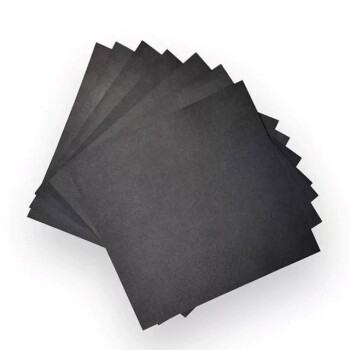
Graphite paper serves as a critical protective interface during the assembly and hot pressing of aluminum and high-entropy alloy (EHEA) composites. Functioning primarily as a consumable barrier, it is placed between the composite sample and the permanent graphite tooling to physically isolate the reactive metal matrix from the mold walls.
Core Takeaway While the graphite mold provides the structural containment and pressure transmission necessary for sintering, the graphite paper acts as the essential sacrificial layer. It prevents molten aluminum from fusing with the expensive mold tooling, ensuring the sample can be demolded cleanly without damaging the equipment or the composite surface.
The Mechanism of Isolation and Protection
Preventing Molten Adhesion
During the hot pressing process, the aluminum matrix reaches a molten or softened state. Without a barrier, aluminum has a strong tendency to adhere to or chemically react with the carbon in the graphite mold.
Acting as a Lubrication Medium
The primary reference identifies graphite paper as a "lubrication medium." This does not imply liquid lubrication, but rather a solid, low-friction interface that prevents mechanical locking between the sample and the punch or die.
Facilitating Demolding
By preventing direct contact between the metal and the mold, the paper ensures successful demolding. It allows the sintered composite to be ejected easily after the process, protecting the sample from cracking due to friction or sticking.
Why This Barrier is Essential (Context)
Withstanding High Pressure
As noted in the supplementary data, the molding process involves extreme mechanical pressures, often ranging from 50 MPa to 390 MPa. The graphite paper must be robust enough to maintain its integrity under this immense uniaxial load without tearing.
Protecting Precision Tooling
Graphite molds are precision-engineered to define the geometry and dimensional accuracy of the composite. They act as the primary load-bearing vessel. The graphite paper acts as a consumable shield, ensuring that the permanent mold is not degraded by metal infiltration, allowing the mold to be reused for multiple cycles.
Understanding the Trade-offs
The Risk of Discontinuity
While graphite paper is effective, it is a manual addition to the assembly. If the paper shifts or creates a gap during the loading of the powder, the molten aluminum will contact the mold, leading to immediate local bonding and potential damage to the mold surface.
Surface Finish Implications
Because the paper is a distinct layer between the mold surface and the powder, the final surface finish of the composite will reflect the texture of the paper rather than the polished surface of the mold.
Making the Right Choice for Your Goal
When integrating graphite paper into your hot pressing assembly, consider the following:
- If your primary focus is Mold Longevity: Prioritize the careful overlap and placement of the graphite paper to ensure zero direct contact between the aluminum powder and the mold walls.
- If your primary focus is Process Consistency: Treat the paper as a strict single-use consumable; re-using paper can introduce contaminants or tears that compromise the lubrication barrier.
Ultimately, graphite paper is the low-cost safeguard that enables the high-pressure sintering of reactive metals within expensive, precision graphite tooling.
Summary Table:
| Function | Key Role in Assembly | Benefit to Process |
|---|---|---|
| Isolation Barrier | Physically separates aluminum from mold walls | Prevents molten metal adhesion and mold damage |
| Solid Lubricant | Provides a low-friction interface | Enables easy demolding and prevents sample cracking |
| Sacrificial Layer | Acts as a single-use consumable | Protects expensive precision graphite tooling |
| Pressure Stability | Withstands loads from 50 MPa to 390 MPa | Maintains integrity under extreme sintering conditions |
Optimize Your Sintering Process with KINTEK Precision
Maximize the lifespan of your lab equipment and ensure the integrity of your material composites with KINTEK’s specialized solutions. Whether you are working with high-temperature furnaces, hydraulic pellet presses, or advanced crushing and milling systems, we provide the high-quality consumables and machinery required for professional-grade research.
Why choose KINTEK?
- Comprehensive Range: From graphite tooling and PTFE products to alumina ceramics and crucibles.
- Precision Engineering: High-performance furnaces (Vacuum, CVD, Dental) and high-pressure reactors designed for extreme environments.
- Expert Support: We help laboratory professionals and manufacturers select the right tools for reactive metal processing and battery research.
Contact KINTEK today to upgrade your lab assembly!
Related Products
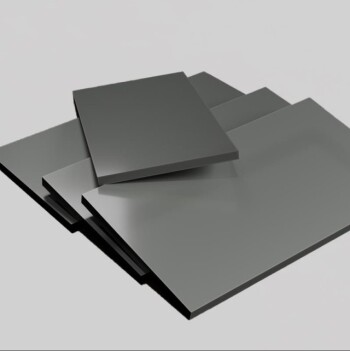
- Carbon Graphite Plate Manufactured by Isostatic Pressing Method
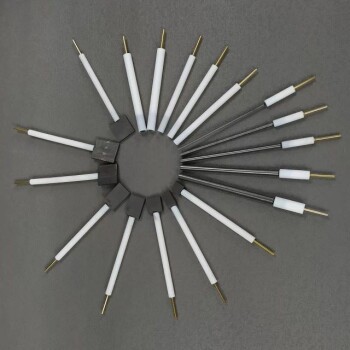
- Graphite Disc Rod and Sheet Electrode Electrochemical Graphite Electrode
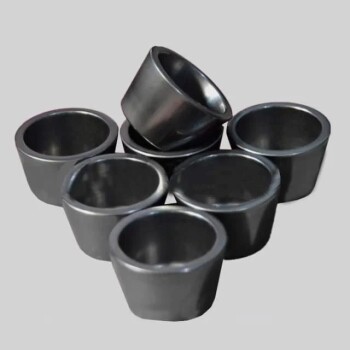
- High Purity Pure Graphite Crucible for Electron Beam Evaporation
- High Purity Pure Graphite Crucible for Evaporation
- Graphite Vacuum Furnace High Thermal Conductivity Film Graphitization Furnace
People Also Ask
- What is the process of isostatic graphite manufacturing? Achieve Unmatched Material Uniformity and Performance
- What is isostatic graphite? The Ultimate Material for High-Tech and High-Temperature Applications
- What is the density of isostatic graphite? Unlock Superior Performance for Demanding Applications
- How big is the isostatic pressing market? A Deep Dive into the $1.2B+ Advanced Manufacturing Enabler
- Why Use an Isostatic or High-Precision Hydraulic Press for Li/LLZO/Li Batteries? Master Solid-State Interfaces