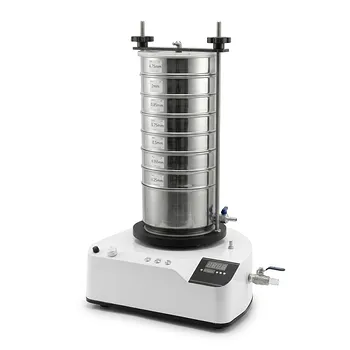
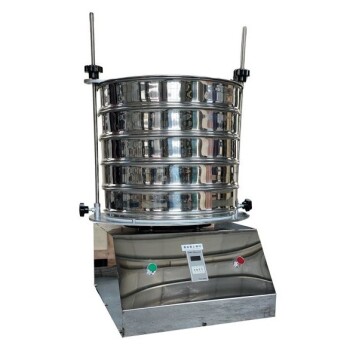
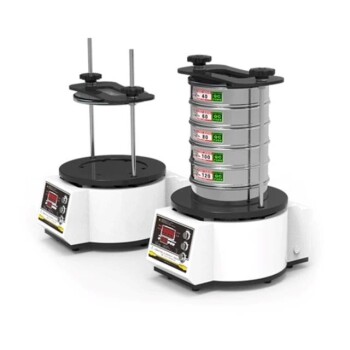
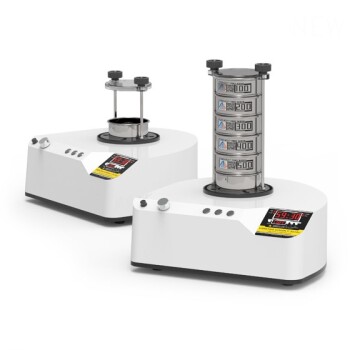
Standardizing activated carbon relies heavily on laboratory sieving equipment to isolate precise particle size fractions, typically ranging from 0.25 mm to 1.19 mm. This process ensures that every sample used in adsorption experiments has a consistent geometric surface area and uniform internal diffusion characteristics. By eliminating size as a variable, researchers can confidently attribute changes in adsorption performance to the material's chemical properties rather than its physical dimensions.
Precision sieving transforms heterogeneous ground carbon into a standardized technical medium, ensuring that kinetic and capacity data are both reproducible and comparable across different studies. This standardization is the foundation for accurately modeling how pollutants interact with porous carbon structures.
Controlling Diffusion Kinetics and Mass Transfer
Uniformity in Diffusion Path Length
The time it takes for a molecule to travel from the surface of a carbon particle to its inner pores is determined by the diffusion path length. Laboratory sieves allow researchers to collect particles of a uniform diameter, which ensures that these travel distances are consistent throughout the sample. This uniformity is critical for calculating intraparticle diffusion rates without interference from size variations.
Reducing External Mass Transfer Resistance
Smaller, sieved particles (often in the 45 to 150 µm range) increase the available contact area between the adsorbent and the liquid phase. This reduction in particle size lowers the external mass transfer resistance, allowing the adsorbate to reach the carbon surface more efficiently. By using standardized sieves, scientists can precisely tune this resistance to match specific experimental requirements.
Impact on Adsorption Speed
Consistency in particle size directly influences the adsorption kinetics, or the speed at which a material captures contaminants. When particles are standardized, the entire batch reacts at a predictable rate, preventing "fast" small particles and "slow" large particles from skewing the kinetic data.
Optimizing Activation and Physical Properties
Enhancing Chemical Impregnation
In the production of modified carbons, raw materials are often sieved to below 425 micrometers before chemical treatment. This uniform size ensures that activating agents, such as phosphoric acid or potassium hydroxide, penetrate the material evenly. Consistent penetration leads to a more homogenous pore size distribution and a higher quality final product.
Managing Flow Resistance and Pressure Drop
In practical applications like wastewater treatment, the physical specification of the carbon (such as 8x30 mesh) is vital. Laboratory sieving equipment allows researchers to simulate these industrial sizes to study flow resistance and pressure drop. This ensures that the carbon developed in the lab will function effectively in large-scale filtration columns.
Increasing Geometric Specific Surface Area
Mechanical grinding followed by precision sieving increases the geometric specific surface area of the adsorbent. By capturing specific fine fractions, researchers can maximize the contact area for challenging molecules like methylene blue or fluoride ions. This process is essential for achieving the high capture rates required for modern environmental remediation.
Understanding the Trade-offs and Limitations
Material Loss and Yield Efficiency
Precision sieving is inherently a reductive process that discards particles falling outside the target aperture range. This can lead to a significant decrease in material yield, which may be a concern when working with expensive precursors or limited laboratory samples.
The Risk of Attrition
Extended sieving or aggressive mechanical shaking can cause particle attrition, where carbon granules break down into even smaller "fines." If not carefully managed, this can subtly change the size distribution during the standardization process itself, potentially introducing new variables into the experiment.
Balancing Kinetics and Practicality
While very fine particles offer superior adsorption speeds, they are often impractical for real-world use due to clogging and high pressure drops. Researchers must balance the desire for optimized laboratory performance with the physical constraints of the systems where the activated carbon will ultimately be deployed.
Applying Sieving Standards to Your Research
When preparing activated carbon for adsorption studies, your choice of sieving parameters should align with your specific research objectives.
- If your primary focus is fundamental kinetic modeling: Use narrow, fine sieve ranges (e.g., 45-150 µm) to minimize mass transfer resistance and isolate internal diffusion effects.
- If your primary focus is industrial application testing: Standardize your carbon to common commercial sizes, such as 8x30 mesh, to accurately measure pressure drop and flow characteristics.
- If your primary focus is chemical modification or activation: Sieve your raw precursor to a uniform size (e.g., <425 µm) before impregnation to ensure consistent chemical penetration and pore development.
By integrating precision sieving into your workflow, you ensure that your adsorption data is a true reflection of the material's chemical efficacy, providing a robust foundation for scientific advancement.
Summary Table:
| Application Area | Benefit of Precision Sieving | Typical Size/Parameter |
|---|---|---|
| Diffusion Kinetics | Ensures uniform path length & lowers mass transfer resistance | 45 – 150 µm |
| Chemical Activation | Promotes even impregnation & homogenous pore distribution | < 425 µm |
| Industrial Modeling | Accurate simulation of flow resistance & pressure drop | 8 x 30 mesh |
| Data Reproducibility | Standardizes geometric surface area across samples | 0.25 – 1.19 mm |
Elevate Your Adsorption Research with KINTEK Precision
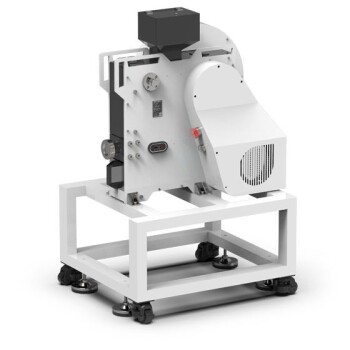
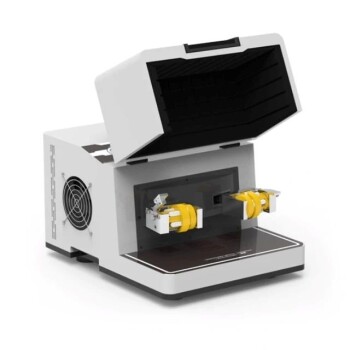
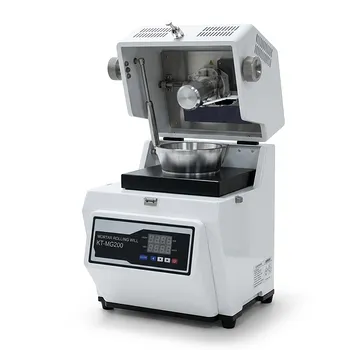
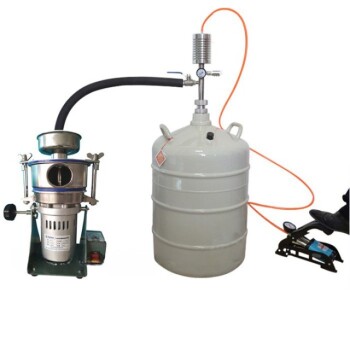
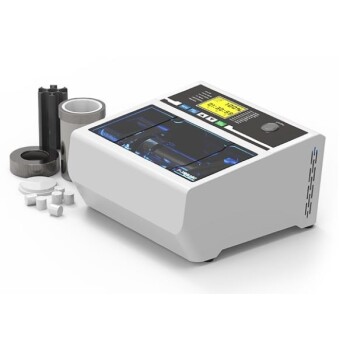
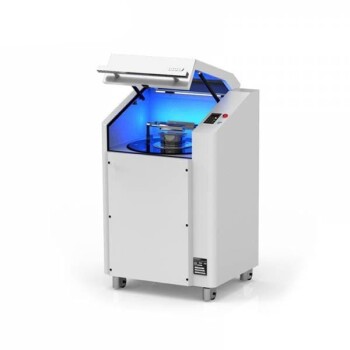
Achieving reproducible data in activated carbon studies starts with uncompromising material standardization. KINTEK specializes in providing high-performance laboratory equipment designed to meet the rigorous demands of material science. Our precision sieving equipment and crushing and milling systems allow you to isolate exact particle fractions, ensuring consistent diffusion kinetics and optimized surface areas for every experiment.
Beyond particle size control, KINTEK offers a comprehensive suite of tools for carbon research, including:
- High-Temperature Furnaces: Perfect for activation, carbonization, and chemical vapor deposition (CVD).
- Chemical Reactors & Autoclaves: For advanced chemical impregnation and hydrothermal carbonization.
- Analytical Consumables: High-purity ceramics, crucibles, and PTFE products to maintain sample integrity.
Don't let physical variables compromise your chemical insights. Partner with KINTEK for reliable, high-quality laboratory solutions that drive scientific advancement.
Contact our technical experts today to find the perfect equipment for your workflow!
References
- Iloh Emmanuel Onyema. Percentage adsorption of Glipizide (GLI) from deionized water and sPLW using OAC, HAC, and BAC prepared with velvet tamarind shell. DOI: 10.5281/zenodo.7810424
This article is also based on technical information from Kintek Solution Knowledge Base .
Related Products
- Laboratory Vibratory Sieve Shaker Machine for Dry and Wet Three-Dimensional Sieving
- Laboratory Test Sieves and Sieving Machines
- Laboratory Vibratory Sieve Shaker Machine Slap Vibrating Sieve
- Laboratory Wet Three-Dimensional Vibratory Sieve Shaker Machine
- Laboratory Test Sieves and Vibratory Sieve Shaker Machine
People Also Ask
- How does a laboratory vibratory sieve shaker facilitate the microstructural study of gas-atomized alloy powders?
- What role does a laboratory vibrating sieve shaker play in the LiFePO4 powder processing workflow? Ensure Batch Quality
- Why use a vibratory sieve shaker for PET powder? Achieve Precise Particle Size Control for Chemical Research
- What is the principle of vibratory sieve shaker? Achieve Accurate Particle Size Analysis
- What is the function of a vibratory sieve shaker? Achieve Precise Particle Size Analysis