The integration of thermocouples with automatic temperature control systems is the definitive factor in securing reliable reduction kinetics data. By capturing real-time temperature data from inside the reactor and feeding it to a regulation system, this combination mitigates the thermal fluctuations that otherwise distort analysis. This precise control is the only way to ensure the stable conditions required for calculating activation energy and validating reaction models like the Avrami I equation.
Reduction kinetics are highly sensitive to thermal variations. Precise hardware integration ensures constant temperature testing, which is the mathematical prerequisite for determining correct reaction models and activation energies.
Achieving Thermal Stability
Real-Time Data Acquisition
Thermocouples provide critical input by measuring the temperature directly inside the tubular reactor.
Unlike external measurements, this offers an immediate and accurate reading of the actual environment surrounding the reactant material.
Automatic Regulation
This real-time data is fed into an automatic regulation system.
The system uses this feedback to continuously adjust the heating elements. This creates a closed loop that maintains the target temperature, countering any thermal drift or reaction heat.
Why Precision Matters for Kinetics
High Sensitivity to Variables
Reduction kinetics are highly sensitive to temperature changes.
Even minor deviations from the setpoint can alter the reaction rate. Without tight control, the data collected becomes a reflection of temperature noise rather than the chemical process itself.
Enabling Isothermal Testing
The combination of sensors and controllers allows for constant temperature testing across a specific range.
Tests can be reliably conducted at intervals between 623 K and 923 K. This broad yet controlled range is essential for characterizing how the material behaves under different thermal stress levels.
Deriving Accurate Parameters
Calculating Activation Energy
Reliable temperature control is the foundation for calculating activation energy.
Activation energy calculations rely on comparing reaction rates at different, distinct temperatures. If the temperature fluctuates during a test, the resulting calculation will be mathematically flawed.
Validating Reaction Models
Precise thermal baselines allow researchers to fit their data to theoretical frameworks.
This consistency is necessary for determining the appropriate reaction models. For example, verifying that a process follows the Avrami I equation requires data collected under strictly controlled isothermal conditions.
Understanding Operational Trade-offs
Sensor Placement Criticality
The effectiveness of this system relies entirely on the thermocouple measuring the internal reactor temperature.
Placing sensors on the reactor exterior introduces a thermal lag. This disconnect results in the control system reacting to the wall temperature rather than the sample temperature, leading to kinetic errors.
Hardware Dependencies
While automatic regulation improves accuracy, it creates a dependency on sensor calibration.
A thermocouple that has drifted from its calibration will force the control system to maintain the wrong temperature perfectly. This introduces systematic errors into the activation energy calculations that statistical analysis cannot correct.
Making the Right Choice for Your Research
To ensure your kinetic study yields publishable and mathematically sound results, apply the following principles to your experimental design:
- If your primary focus is mathematical modeling: Ensure your thermal control loop is tight enough to eliminate noise, allowing for a clear fit to the Avrami I equation.
- If your primary focus is energetic analysis: Verify that your system can maintain stability at the extremes of the 623 K to 923 K range to accurately calculate activation energy.
Precise thermal control transforms raw data into a reliable map of chemical behavior.
Summary Table:
| Feature | Role in Reduction Kinetics | Impact on Data Accuracy |
|---|---|---|
| Internal Thermocouple | Real-time data acquisition from inside the reactor | Eliminates thermal lag for precise sample monitoring |
| Automatic Regulation | Closed-loop feedback for heating elements | Mitigates thermal fluctuations and prevents data distortion |
| Isothermal Stability | Maintains constant temperature (623 K - 923 K) | Mathematical prerequisite for Avrami I equation validation |
| Precise Setpoints | Consistent thermal baselines across test ranges | Enables accurate calculation of activation energy |
Elevate Your Kinetic Research with KINTEK Precision
Precise thermal control is the backbone of reliable scientific discovery. At KINTEK, we specialize in providing high-performance laboratory equipment designed to eliminate variables and deliver reproducible results. Whether you are validating reaction models or calculating activation energy, our comprehensive range of high-temperature tube furnaces, rotary reactors, and advanced vacuum systems provides the stability your study demands.
From high-temperature high-pressure reactors to precision crushing, milling, and sieving systems, KINTEK supports your entire workflow with industry-leading technology and essential consumables like ceramics and crucibles.
Don't let thermal drift compromise your data. Contact our technical experts today to find the perfect thermal regulation solution for your laboratory.
References
- Miroslav Sokić, Milorad Gavrilovski. Kinetics of NiO and NiCl<sub>2</sub> Hydrogen Reduction as Precursors and Properties of Produced Ni/Al<sub>2</sub>O<sub>3</sub> and Ni‐Pd/Al<sub>2</sub>O<sub>3</sub> Catalysts. DOI: 10.1155/2015/601970
This article is also based on technical information from Kintek Solution Knowledge Base .
Related Products
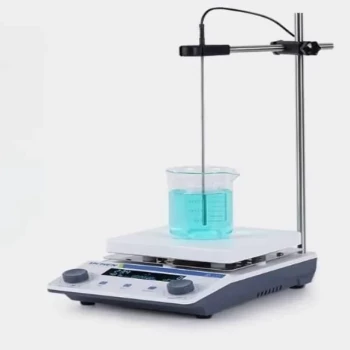
- Laboratory Small Constant Temperature Heated Magnetic Stirrer Heater and Stirrer
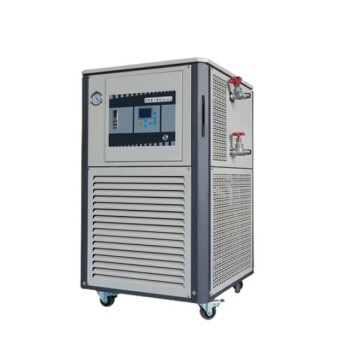
- 100L Heating Chilling Circulator Cooling Water Bath Circulator for High and Low Temperature Constant Temperature Reaction
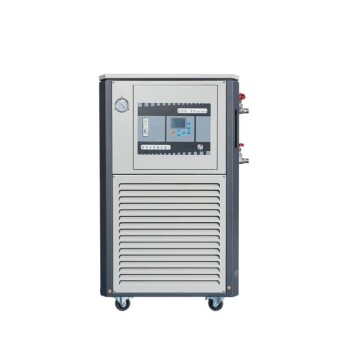
- 10L Heating Chilling Circulator Cooling Water Bath Circulator for High and Low Temperature Constant Temperature Reaction
People Also Ask
- What role does a magnetic stirrer with heating play in ZnO nanoparticle synthesis? Precision Control for Quality Results
- What role does a constant temperature heating magnetic stirrer play in MFC-HAp synthesis? Achieve Material Homogeneity
- What is the function of a laboratory magnetic stirrer in Ni–Cr–P electrodeposition? Optimize Ion Transport & Coating
- Why is a laboratory magnetic stirrer required for benzoic acid esters? Boost Reaction Speed & Yield with High RPM
- What role does a laboratory magnetic stirrer play in TiO2 and TiO2-Ag sol preparation? Master Chemical Kinetics